Debunking the ‘Vote Chori’ Noise: Ten Hard Facts on SIR and the Election Commission
From a year-late timeline and a 20-year gap to the Supreme Court’s clear endorsement of the hard facts that dismantle the ‘Vote Chori’, ‘SIR Scam’ and ‘ECI Bias’ campaign.
Total Views |


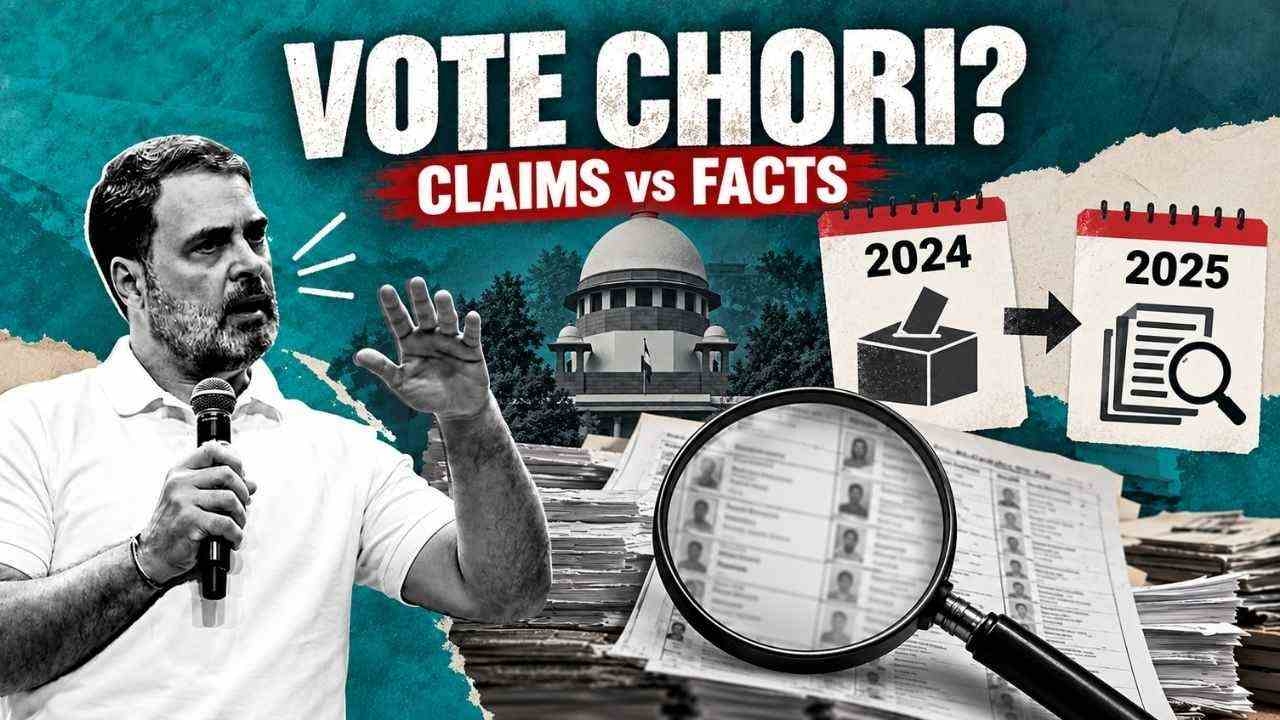
In the din of political rhetoric that has accompanied the Special Intensive Revision (SIR) of electoral rolls, a familiar chorus has grown louder: “Vote Chori,” “SIR Scam,” and “ECI Bias.” These slogans have been repeated with such frequency that they risk drowning out documented facts. A closer look at the record, the Supreme Court’s own findings, the timeline of events, and the actual electoral outcomes reveals a very different picture. Here are ten answers that cut through the fog.
First, the claim that 13 crore voters were deleted through SIR to help the BJP win in 2024 collapses under basic chronology. The 2024 general election was held in June 2024. The SIR process began only in June 2025. Those 13 crore names were never “deleted” from final rolls used in that election; they were names left out of draft rolls during the intensive revision predominantly of dead, duplicate, shifted, and long-absent voters. Eligible citizens retain the right to seek inclusion, and many have done so. A theory that requires the revision to have occurred a full year after the election it supposedly influenced is simply untenable.
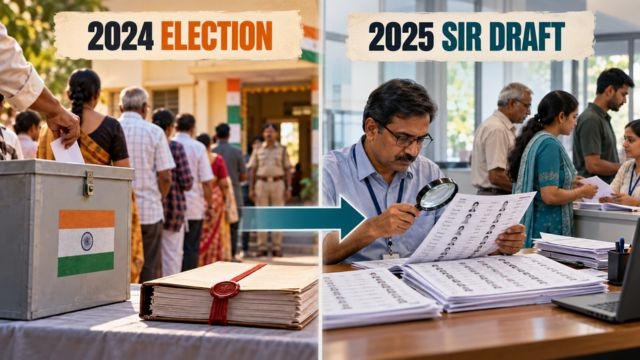
Second, SIR is no novel invention of the BJP. Intensive revision of electoral rolls has been a standard administrative practice since the 1950s. They were conducted in 1965-66, 1983-84, 1993, 1995, 2002 and 2003. Their consistent purpose has been to remove duplicates and shifted entries, verify eligibility, and maintain accurate rolls. Calling a routine constitutional exercise a sudden partisan “invention” ignores decades of electoral history.
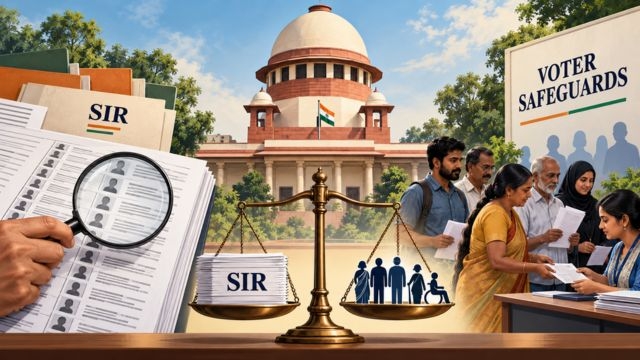
Third, the Supreme Court did not object to SIR. On 27 May 2026 it upheld the validity of the exercise, recognised the Election Commission’s power to conduct it, and simultaneously put in place safeguards to ensure that not a single eligible voter loses the franchise. That judicial endorsement is a rather large detail for critics to overlook.
Fourth, the timing of the current nationwide SIR has nothing to do with the BJP’s reduced tally of 240 seats in 2024. The previous nationwide intensive revision took place in 2002-04 more than two decades earlier. The intervening period saw COVID-related disruptions and the postponement of the 2021 Census. Political parties across the spectrum had themselves flagged the presence of dead voters, duplicates and shifted entries. The need for purification did not suddenly arise at the 240-seat mark.
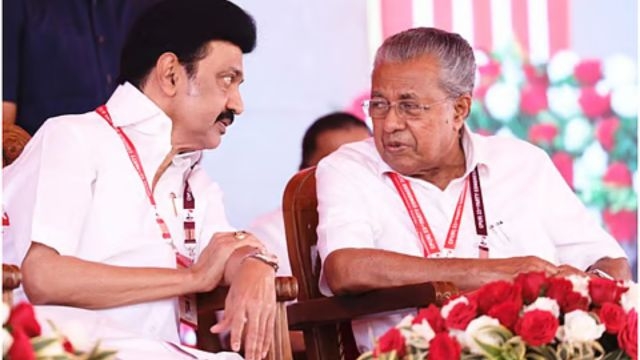
Fifth, the suggestion that SIR was designed to defeat regional satraps collapses when actual results are examined. In Tamil Nadu the BJP won a single seat while M.K Stalin lost his own constituency to TVK. In Kerala the BJP secured three seats; Pinarayi Vijayan retained his seat even as his government lost to the Congress-led UDF.
West Bengal’s SIR was conducted under close Supreme Court monitoring. No judicial finding has linked the revision to these outcomes. Meanwhile, the BJP has itself lost 27 Assembly elections since 2015, including in Karnataka and Himachal Pradesh while it was in power at the Centre. Some “masterplan.”
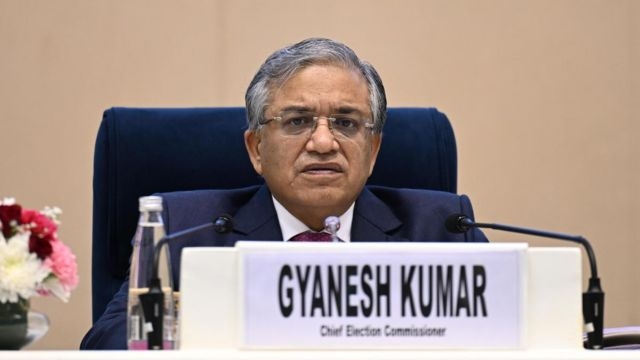
Sixth, the claim that BJP’s vote share rose in Maharashtra and Haryana after Gyanesh Kumar became Chief Election Commissioner is chronologically impossible. Haryana voted in October 2024 and Maharashtra in November 2024. Kumar assumed office only in February 2025. He was not even CEC when those elections were held.
Seventh, the BJP does not “always defend” the Election Commission. The party has raised objections to the SIR process in Congress-ruled states, formally approached the Commission in Karnataka, and alleged irregularities in the conduct of the revision. The notion of permanent collusion does not survive contact with the party’s own record of criticism.
Eighth, the government cannot simply appoint or remove the Chief Election Commissioner at will. Until 2023 appointments were made by the President on the advice of the government. The present selection committee comprises the Prime Minister, the Leader of the Opposition and a Union Cabinet Minister. Rahul Gandhi himself participated in the selection of Gyanesh Kumar. Removal of a CEC is protected by constitutional safeguards and requires a parliamentary process. It is not a hire-and-fire arrangement.
Ninth, while two Election Commissioners are reported to have raised internal concerns about aspects of the SIR, all three members of the Commission signed the final orders. The Election Commission has publicly stated that the ultimate decisions were unanimous.
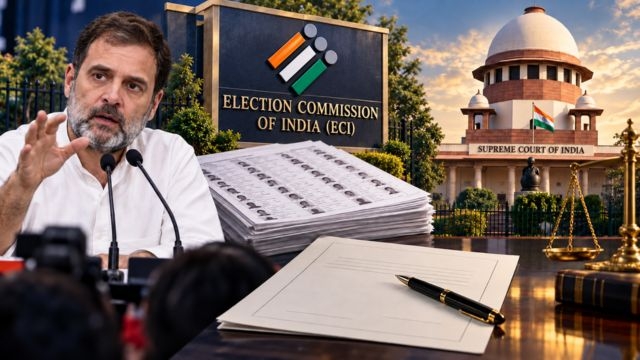
Tenth, Rahul Gandhi’s “Vote Chori” allegations remain uninvestigated for a simple reason: the Election Commission formally asked him to submit the claims in writing so that a detailed probe could be ordered. He declined. In the meantime the Supreme Court closely monitored the SIR, deputed judges to hear voter appeals in West Bengal, and even invoked Article 142 where necessary. Claims are easy; evidence is what matters.
Taken together, these facts demonstrate that the Special Intensive Revision is a long-overdue administrative correction of electoral rolls that had not undergone intensive scrutiny for over twenty years. The Supreme Court has affirmed its legality and the Commission’s authority while embedding protections for genuine voters.
Political parties of every hue have at different times complained about the very impurities the revision seeks to remove. The real test of democratic integrity is not the volume of slogans but the willingness to engage with the documented record. On that measure, the “Vote Chori” narrative still has a great deal of explaining to do.
Written by

Kewali Kabir Jain
Journalism Student, Makhanlal Chaturvedi National University of Journalism and Communication