China’s Healthcare Crisis: Hospital Workers Fight for Wages Under CCP Rule
Salary cuts, unpaid wages and disappearing bonuses have pushed medical workers to protest. For a government that promises security under Communist Party rule, the sight of hospital staff demanding their own earnings is deeply damaging.
Total Views |


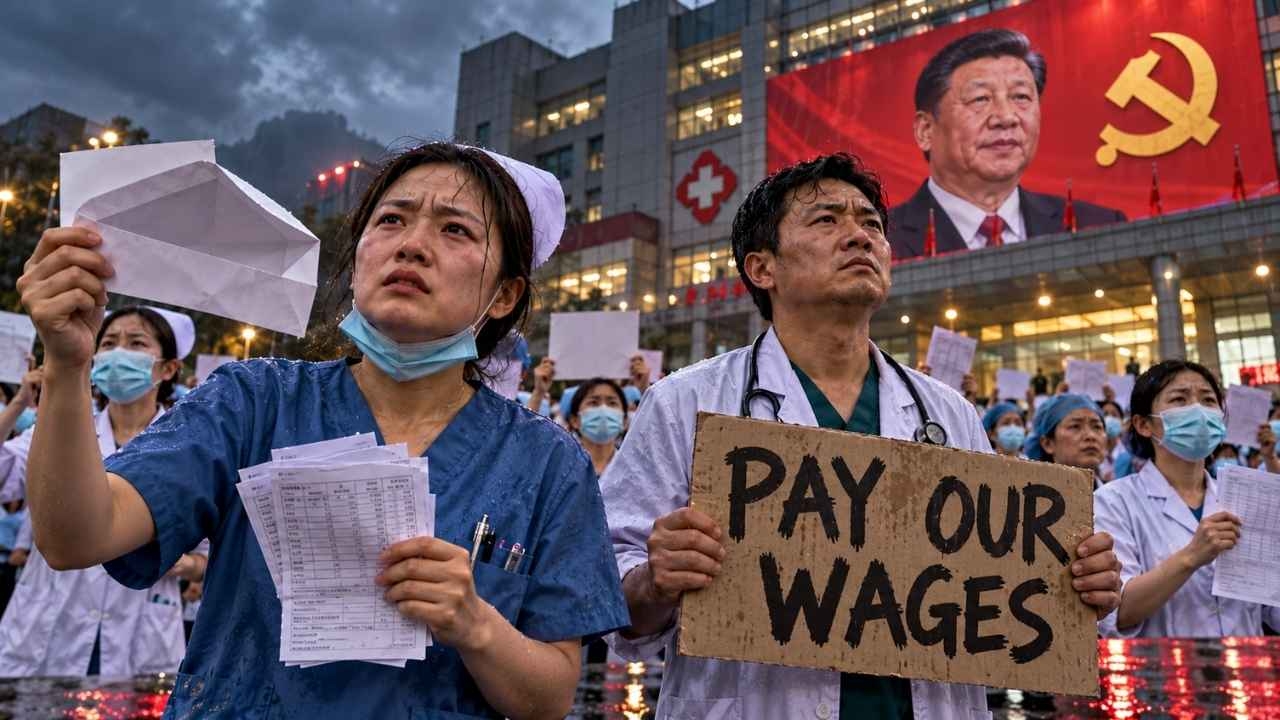
Hospital workers in parts of China are facing salary cuts, delayed wages and lost bonuses, according to a report. Protests over unpaid salaries show how financial pressure inside hospitals is reaching the people who care for patients.
The numbers tell a human story. At a public hospital in Hangzhou, Zhejiang province, nurses’ monthly base pay reportedly fell from 2,750 yuan to 2,200 yuan in August, a 20% cut. In Suzhou, a nurse’s base salary was reported to have dropped from around 3,700 yuan before the pandemic to about 1,700 yuan, while performance bonuses stopped.
These are reported accounts from particular hospitals, but for the workers affected, the loss is immediate: rent, food and family expenses still have to be paid.
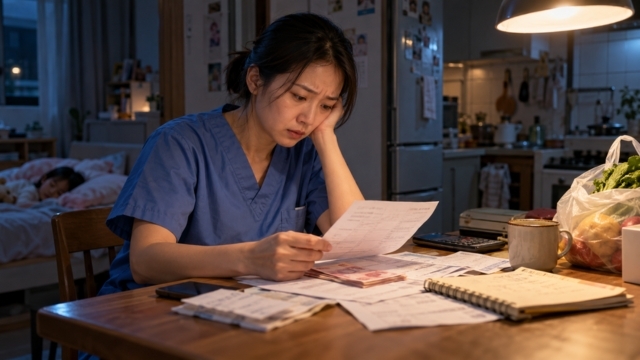
Elsewhere, workers say they have had to fight for wages already earned. Staff at Suihua People’s Hospital in Heilongjiang reportedly protested in November 2025 after some had gone five or six months without pay. Medical workers at Hedong Hospital in Linyi, Shandong province, were also seen demanding unpaid wages in April 2026.
Think about what that means. The people expected to arrive for a shift, care for the sick and keep a hospital running are being pushed to protest for their salaries? Being paid for work already done is a basic right. When healthcare staff must take to the streets to demand it, the problem cannot be dismissed as an accounting inconvenience.
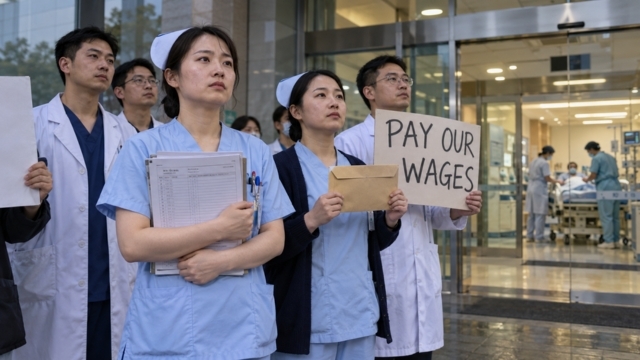
The pressure appears to extend beyond pay packets. According to reports unpaid social security contributions, medicine shortages and financial trouble at some hospitals. It says one hospital in Jiangxi dismissed its entire workforce after accumulating wage arrears, while a Shandong hospital entered bankruptcy liquidation in 2024 reportedly owing more than 600 employees eight months of pay.
That is where China’s Communist Party leadership requires scrutiny. Beijing projects an image of a state capable of planning, directing and delivering essential services. Yet in the reported cases, hospital employees have been left absorbing the shock of weak finances through lower wages and missed payments.
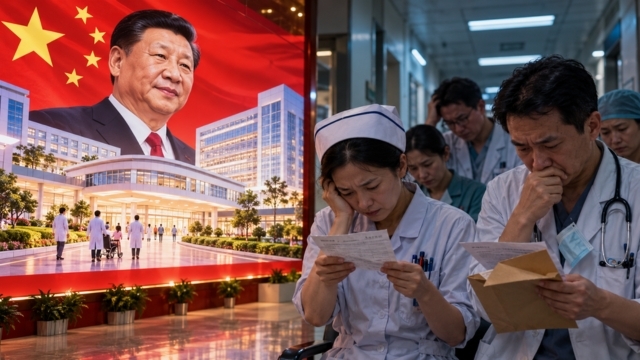
A system cannot claim success for its healthcare capacity while the people sustaining that capacity struggle to collect their pay.
Workers’ ability to defend themselves matters too. China’s unions operate under the All-China Federation of Trade Unions, which is tied to the Communist Party; workers cannot simply establish an independent union outside that structure. This makes the question of effective representation especially urgent when hospital staff face months of unpaid wages.
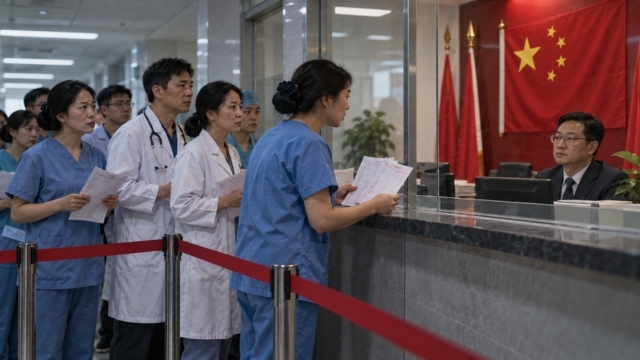
The Chinese Communist Party should answer - how many healthcare workers are owed wages, when will they be paid, and how will hospitals keep caring for patients while cutting the income of their staff?
Until those questions are answered, the image that endures is a stark one - people who spend their working days looking after others having to protest for the basic pay they are owed.
Written by

Mokshi Jain
Sub-editor