The root of all Ideological Conflicts : Cultural Marxism
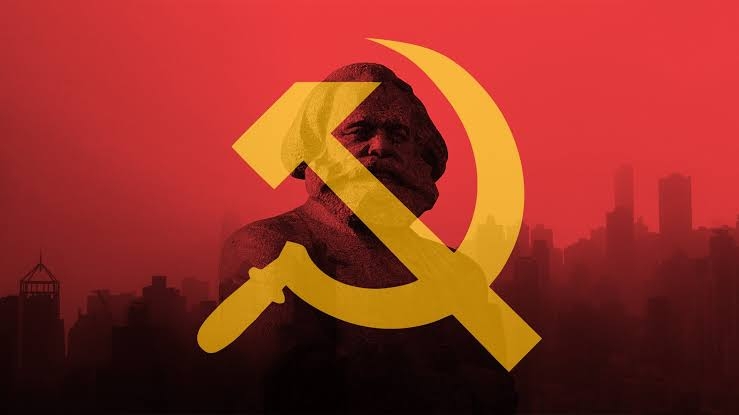
People who are wholly oblivious of the word Cultural Marxism may perceive it as an intellectual one ; however those who are acquainted with this term, also has the sense to identify it as a formidable challenge that is hard to be vanquished. Before delving into the world of cultural marxism, let's get a brief overview of the word Marxism.
Marxism lays down three substantial features :
1. It bifurcates the world into the parts, namely oppressor and oppressed.
2. It vehemently follows the three RRR — Rebel, Reject, Resist
3. Revolution can only be brought on the grounds of economy.
As widely acknowledged, Marxism stands as a failed ideology, marked by the collapse of the USSR— where it has flourished once upon a time —and a significant contributor to ideological erosion in America too. Subsequently, Western intellectuals have recognized the inadequacy of Marxist tenets in fomenting a mass revolution. Perceiving the impermanence of class struggles, these thinkers opted for the RRR formula, through cultural avenues to vehemently reject, resist, and rebel against societal norms like culture, family, traditions, festivals, morality, and Dharma (one's own duties), thereby leading the society towards a profound hollowness .The application of Marxist core principles —RRR— and the establishment of new systems through cultural means is termed as Cultural Marxism.
The ideology of Cultural marxism emerges in 1924 in Germany under the institute of social research — popularly known as Frankfurt School — it established under the guidance of Horkheimer.
The Frankfurt School presents an 11-point plan, the on-ground execution of which is discernible in the contemporary scenario of Bharat, these are as follows :
1. The creation of racism offences.
2. Continual change to create confusion.
3. The teaching of sex and homosexuality to children.
4. The undermining of schools’ and teachers’ authority.
5. Huge immigration to destroy identity.
6. The promotion of excessive drinking.
7. Emptying of churches.
8. An unreliable legal system with bias against victims of crime.
9. Dependency on the state or state benefits.
10. Control and dumbing down of media.
11. Encouraging the breakdown of the family.
From the above points mentioned we can observe that Cultural Marxism works on three dimensions :
• Creating other, an alternative, an option etc.
• Making a narrative out of this.
• Implementing the narratives through its agents.
The concept of "creating other" is evident in many instances like the discourse surrounding sexuality. Society & Dharam Shastras solely acknowledges two genders but why one shouldn't recognise additional gender identities ; this is cultural marxism.
Since the early 2000s, the LGBTQ community has actively advocated for their rights, often staging repetitive protests on university campuses and streets. These demonstrations sometimes involve inflammatory posters with derogatory language against Hinduism. The current situation has escalated to the point where the apex court is discussing and issuing verdicts on the matter. Homosexuality is just aberration and nothing but what are those influential forces who pressurized courts to give judgements in their 'favor' in some way or other.
Another example pertains to the uniform code in schools, challenging the rationale behind exclusive adherence to a standard attire for all students. The recent Kerala hijab controversy is a significant instance of dissent against established norms.
Furthermore, a distinctive perspective emerges when examining the portrayal of characters from epics, highly deviating from their original characterization. For instance, presenting Ravana as a hero, by citing his profound knowledge and scholarly expertise in the Vedas, stands in stark contrast to the historical reality, this is how they reshape the image of Ravana. This notion of "otherness" extends to dress categorization, which further goes on questioning why sarees are exclusively designated for women. Following this absurd otherness (wokeness), JNU students started to wear saree, well this can be termed as futile progressiveness.
Lastly, there's a trend of assigning alternative meanings to Bhartiya festivals. For instance, labelling Holi as a festival associated with sexual abuse and molestation or Diwali as a celebration contributing to pollution offers an unconventional perspective, challenging the joyous meaning associated with these festivities.
Now they move further in this direction by systematically constructing a narrative out of this 'otherness' and subsequently operationalising it via their agents. Cultural Marxism, also known as, critical theory has four prominent agents :
• Academics
• Mass Media
• Bollywood
• Formal Institutions
Let's delve into each sphere individually -
• Academics - One can observe the impact of this ideology i.e. cultural marxism in academics in chronological manner. It has some phases which were named by Prasanna Deshpande in his book 'Disindianising Indians' which are as follows :
1. The Colonial Phase: Post Independence Academics in India
2. The Pseudo Secularist Phase
3. The Critical Theory Phase.
4. Postmodernism.
5. Poststructuralism
6. The New Left: The Last Straw of Marxism
7. The Academic Mismatch
8. The New Left via Academics.
9. Cultural Studies.
10. Identity Politics Controlled by Academics.
The prominent ones are Poststructuralism, New Left, Academic Mismatch etc. According to Prasanna Deshpande Ji, "Poststructuralism has produced deconstruction as its interpretative engagement with a written text or cultural values. Deconstruction functions as a deterrent force against the central idea expressed or conveyed into a literary or informative text and culture. It resists the centrality of a particular meaning or interpretation of a literary, cultural or historical texts and 'deconstructs' them by using their indefinite (perceptively though) points or features against the commonly recognisable meaning. This being achieved, deconstructive approach to the understanding of the real nature of something requires us to substitute the primary meaning with the alternative understanding and foreground it radically as the subversive meaning of that text."
He further says -
The most fundamental premise of such a reading of cultural practices or cultural narratives is 'reading against the grain. We can see that Deconstruction treats culture as 'text'. Here are few examples of this :
1. Ekalavya is a victim as the upper caste' Dronacharya refused train him in archery.
2. Socialist renderings of Shivaji Maharaj. Shivaji was secular the western sense) and his image as a Hindu icon is a political manoeuvred trick of mainstream Hindu population.
3. Aurangzeb as a secular Leader.
4. Mahishasoor as a victim.
5 .Bali as a victim.
6. Ravana as a hero.
7. Sita as a victim.
8. Karna as a victim.
9. Indian Family is a Power Structure with Father or paterfamilias as the dominant and oppressive power centre. Women are 'suppressed within this system.
10.. Religious minorities as the perpetual victims of the cultural dominion of majority population.
11. Women, Dalits, and minorities of all types (sexual, religious. ethnic, and linguistic) are permanent victims. (Their distinctive cultural identity is suppressed).
12. Resistance of National Anthem (under the pretext of religious rights).
13. Resistance of National Song (under the pretext of minority."
Today, Unfortunately we all encounter these aforementioned instances in the 'intellectual framework' of students.
• Mass media - When mewat violence was erupted some months before, the left wing web media companies or one can say 'media jamaat' [The Wire, The Quint] vehemently emphasised the verity that it's the fault of Bajrang Dal. They spare no opportunity to name Muslim when they're the victims (hypothetically, as per media consensus). However, when these people are perpetrators, it all sum up to a mere mention of 'community' or 'mob.' Numerous online evidences asserted the fact that violence was entirely orchestrarted, pointing fingers at a specific community aiming to obstruct Bajrang Dal's procession. The Media Jamaat completely used here the 'Deconstruction' formula for creating an alternative meaning of the scenario or framing the most unpopular narrative to be in the centre.
The Ujjain rape case showcases this very same hypocrisy of media, as news portals shrewdly conceal the name of priest Rahul Sharma (who aided victimized little girl by giving food & clothes to cover her body and also hospitalized her after seeing her bleeding & half naked condition). Instead, they deliberately link the crime to Shakti worship, employing deconstruction theory once more to craft a narrative that associates followers of the Goddess with a perverse mentality. Moreover, amidst the Manipur violence a kuki women was being paraded naked (which is totally heinous and punishable) which was covered up by every news media houses out there ; but they deliberately haven't showed & highlighted (as horrible as the previous one) the incident that took place in West Bengal where a BJP candidate paraded naked with tore sareee & removed underwear, but this case was being totally hushed up with utmost power through the help of ecosystem working in the particular state. That's how, Cultural Marxism's theories performed well here too.
• Bollywood - Bollywood has depicted a direct connection of all inappropriate actions with Hinduism. For instance, in a web series 'City of Dreams' heinous crimes like rape are portrayed in association with a Hindu, showing that the perpetrator has a sacred mark (Tika) on the forehead and wears a 'Rudraksha Mala'. It is true that crime has no religion, but bollywood's mindset seems to be applicable only to Hinduism. This audacity could lead bollywood to undeniable intolerance if it continues to depict hindu community as a potential offender. Also, one can also observe Mughals glorification in one of the scenes of the then hit movie bemisaal. Along with that, pure hindi speaking character is always shown as weak and a subject to be mocked. The list is too long!
• Formal Institutions - Rendering a verdict without due consideration of evidence from both perspectives contravenes the procedural norms of the legal system — a principle widely acknowledged — stiil, diplomacy can be seen in Karnataka Hijab row & SSM i.e. Same-Sex Marriage verdicts. For instance, Justice Gupta upheld the Karnataka High Court order of March 15, 2022, which had directed that the ban on the hijab in State-run pre-university institutions be continued in the interests of unity, equality, and public order. On one hand, where Justice Gupta upheld Karnataka High Court’s view that the hijab was not an essential religious practice while on the other, Justice Dhulia felt that neither the petitioners nor the court should have even entered this debate." Why such diplomacy? Why there should be an alternative for school uniform, remember 'creating an alternative'??
On one side judiciary claims to rely on thorough legal analysis & constitutional principles to make decisions, emphasizing a commitment to impartiality and legal integrity rather than on specific, predetermined references ; while on other, when it comes to hindu sentiments, these parameters have always kept aside, why?
Analysing potential bias in the judiciary requires nuanced examination, along with this delving into the question of external influences demands rigorous scrutiny.
In this way, we have analysed and understood the root cause of all the problems emerging in the country, then what can be the solution. Well, sometimes applying enemies' tactics on enemies itself, can prove beneficiary for us. But for that, one needs meticulous identification of the problem.
In Maharbharata's Shālya Pārvā, there is a sequence of Gada fight between Duryodhan & Bheema. When the gada fight was not ending, Lord Shri Krishana signaled Bheem to attack on Duryodhan's thigh, although it is against the rules of battle, still Lord Shri Krishana himself commands to do that.
Yudhishthir — who is standing besides Shri Krishna — looked inquisitively at Shri Krishna, then he said to Yuddhisthira 'Mayavi Mayaya Vaddhyaha'. Deceit can only be defeated by deceit. So when it comes to solution (to defeat this ideology) this lesson of Lord Shri Krishna needs to be remember, always!
Article by

Janhavi Naik
Madhya Pradesh
Bachelor's in Sociology 2nd year Student