Is Marx Relevant in Bharat?
11 Nov 2025 16:47:29
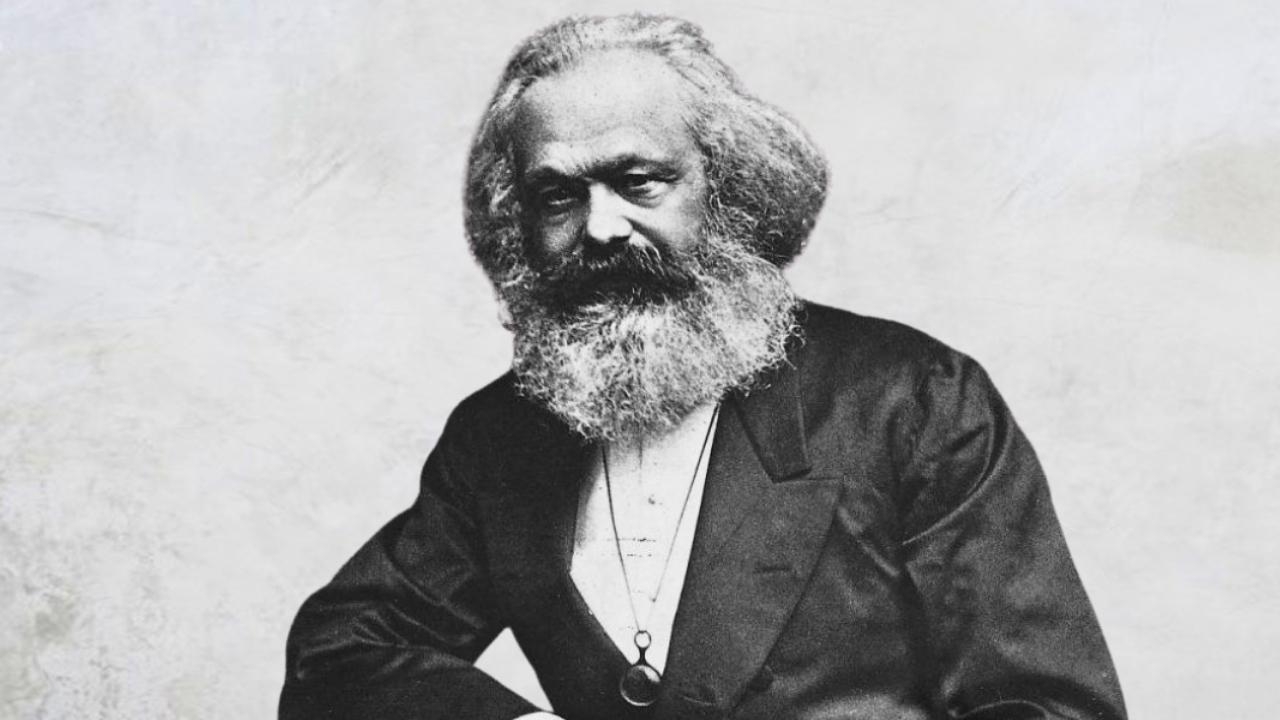
For decades, Bharat's intellectual discourse has grappled with Marxist ideology. Some have embraced it as a path to so-called social justice, while others have exposed it as fundamentally incompatible with Bharatiya civilisation. Electoral victories by communist parties in states like West Bengal have often been cited as evidence of Marxism's relevance. Yet a closer examination reveals no proletarian dictatorship, only organisational machinery built to win elections. Meanwhile, the violent manifestation of Marxism through Naxalism has left a trail of blood across the heartland, raising profound questions about this ideology's place in Bharat. This brings us to the central question: Is Marx really relevant in Bharat?
Understanding Marx's Ideology
Karl Marx, the 19th-century German philosopher and economist, developed an ideological framework centred on dialectical materialism and class struggle. According to Marx, all human history is the history of class conflict between those who own the means of production (the bourgeoisie) and those who sell their labour (the proletariat).
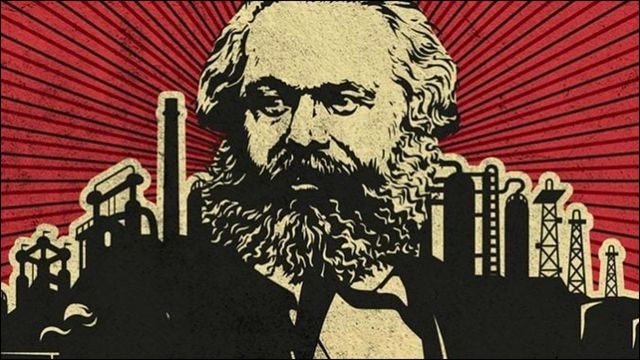
Marx believed that capitalism inherently exploits workers, alienating them from the fruits of their labour and concentrating wealth in fewer hands. He argued that this system contains internal contradictions that would inevitably lead to its collapse. Marx proposed a blood-soaked solution: the violent overthrow of the capitalist class by the working class, establishing a dictatorship of the proletariat and ultimately creating a classless communist society where resources are distributed according to the principle, “from each according to their abilities, to each according to their needs.” He identified nation and religion as tools of the bourgeoisie and called for the overthrow of the nation state.
After understanding Marx's ideology, we must turn to Bharat itself.
Understanding Bharat's Civilisational Ethos
Bharat represents one of the world's oldest continuous civilisations, with philosophical and spiritual traditions dating back thousands of years. At the heart of Bharatiya thought lies Dharma, a concept encompassing cosmic order, righteousness, duty, and the ethical path that sustains harmony in society and the universe.
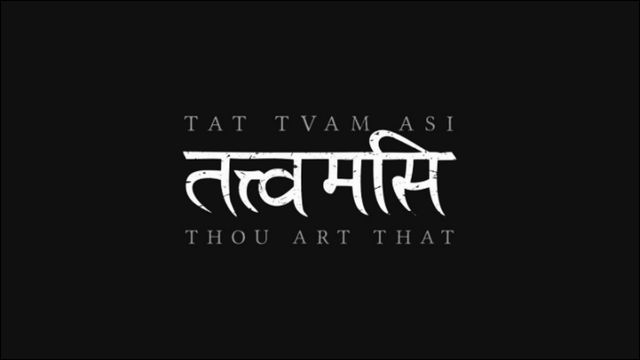
Unlike ideologies premised on conflict, Bharatiya civilisation emphasises harmony, seeing divinity in every living being, as expressed in the Vedic phrase “Tat tvam asi.” The ancient concept of Vasudhaiva Kutumbakam (the world is one family) reflects an inclusive, spiritual worldview that transcends material divisions.
In the 11th century, when the Arab scholar Sa’eed El-Ansalusi wrote The Categories of Nations, widely regarded as the first book on the history of science, he ranked Bharat as the most advanced nation in the sciences of the contemporary world. Kautilya’s Arthashastra, drawing from 112 earlier authorities, prescribed governance principles rooted in welfare, stating that kings must not impoverish their people and recognising Shudras as the backbone of productive capacity.
Even when caste rigidity created exploitation, reformers like Swami Vivekananda envisioned the rise of the Shudra through education and state patronage rather than violent insurgency. Bharatiya tradition prioritises evolutionary change over so-called revolutionary violence, ahimsa (non-violence) over class warfare, and spiritual liberation alongside material prosperity. Bharat has always overcome problems through peaceful solutions rather than violence, which means conflict cannot survive in Bharatiya society because of its great Sanskriti.
This raises a critical question: if Bharat is self-sufficient in handling every problem, is Marx really relevant for Bharat?
The Incompatibility: Philosophical Arguments
Marx's dialectical materialism is fundamentally incompatible with Bharatiya philosophy across multiple dimensions.
First, Marx's worldview is rooted in materialism, the belief that economic conditions and material realities are the sole drivers of history and human consciousness. Bharatiya tradition, by contrast, recognises both material and spiritual dimensions of existence, viewing the pursuit of artha (prosperity) and kama (desire) as legitimate but ultimately subordinate to dharma (righteousness) and moksha (liberation).
Second, Marx's emphasis on class conflict as the engine of progress stands in stark opposition to Bharat's emphasis on harmony and social cohesion. The principle of ahimsa, central to Bharatiya wisdom, advocates non-violence in thought, word, and deed. Bharat's independence movement succeeded through non-violent resistance, demonstrating the practical efficacy of these civilisational values.
Third, Marx's vision of the dictatorship of the proletariat contradicts Bharatiya tradition, which disapproves of dictatorship whether by king or class. Kautilya’s Arthashastra prescribed governance with the welfare of all subjects in mind, not the domination of one class over another.
The Incompatibility: Historical Evidence
Historical evidence further demonstrates Marx's irrelevance to Bharat. There was no so-called proletarian revolution in West Bengal despite 30 years of Marxist rule. Communist electoral successes resulted from organisational proliferation in villages, urban areas, police departments, and government offices, not from revolutionary consciousness among workers.
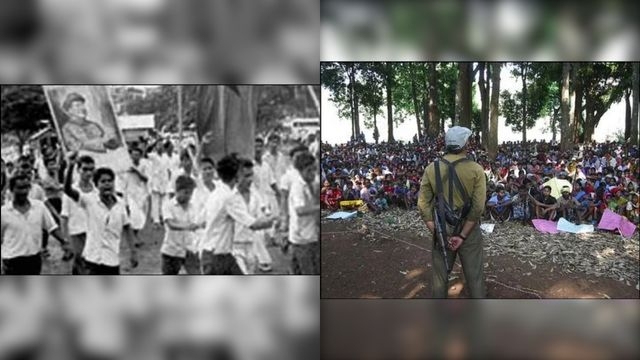
More damningly, the violent application of Marxism through Naxalism has produced nothing but devastation. From the 1967 Naxalbari uprising, these revolts spread to more than 150 districts by the mid-2000s, killing thousands of civilians and security personnel in the name of equality. They established Jan Adalats to execute innocents publicly, claimed to fight for the downtrodden, but perfected only extortion, abduction, and murder.
By 2025, robust security operations combined with focused development reduced the number of worst-affected districts to merely six, demonstrating that the Red Corridor dream now lies in ruins.
The Incompatibility: Ideological Collapse
The fragmentation of communist movements in Bharat reveals the ideological bankruptcy at their core. The Communist Party of India split in 1964 into CPI and CPI(M), followed by CPI(ML) and dozens of splinters, each claiming to be the true torchbearer of Marx, Lenin, or Mao’s legacy. One faction advocated working within the Constitution, while another denounced this as betrayal and demanded violent insurgency.
If Marxism is truly “scientific,” why has it produced only endless splits, contradictions, and chaos? Why did Marx’s predictions fail? If Marx failed in Europe, Lenin in Russia, and Mao in China, where millions starved under communist rule, what miracle could Marxists achieve in Bharat? The answer is clear: Marxism has nothing to offer Bharat because Bharatiya civilisation possesses its own time-tested frameworks for social justice and governance.
Conclusion
Marx's relevance in Bharat is not merely questionable; it is demonstrably non-existent. Philosophically, Marxist materialism and class warfare stand in direct opposition to Bharatiya spirituality and harmony. Historically, Marxist ideology has produced nothing in Bharat except organisational politics in some states and devastating violence through Naxalism.
None of Marxist theory leaves any room for proletarian dictatorship, and millennia-old Hindu spirituality has absorbed countless shocks without requiring dialectical conflict. What Bharat needs today is not imported ideologies but a rediscovery of traditional values such as respect for humanity as amritasya putrah (children of the immortal), recognition of divinity in every being, and the pursuit of both material prosperity and spiritual liberation.
Communism has failed everywhere it has been tried, leaving only dictatorship and devastation in its wake. In Bharat, it will perish not through revolution but through its own profound irrelevance.
Article by

Aadarsh Gupta
Young Researcher