The Forgotten Massacre of Mangarh
18 Nov 2025 15:30:46
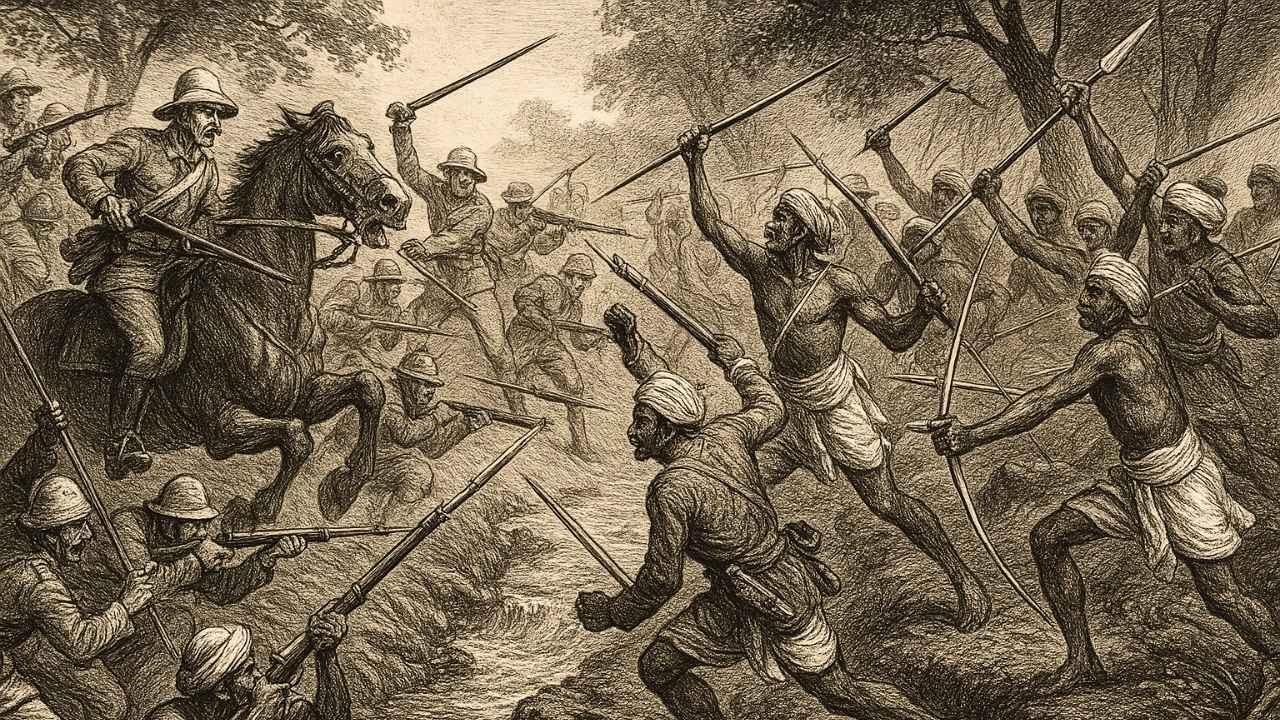
When the history of India’s freedom struggle was written, some chapters were deliberately pushed into the margins because they exposed the darkest face of British colonial rule.
One such tragic yet ignored episode is the Mangarh Massacre of 1913, often described as the Jallianwala Bagh of the Hills.
Six years before the infamous Jallianwala Bagh massacre of 1919, another brutal repression took place on the border of Rajasthan and Gujarat. While this tragedy never entered our history textbooks, more than 1,000 people, all from the Bhil community, were killed. Mangarh in the Aravali hills was washed in blood on 17 November 1913.
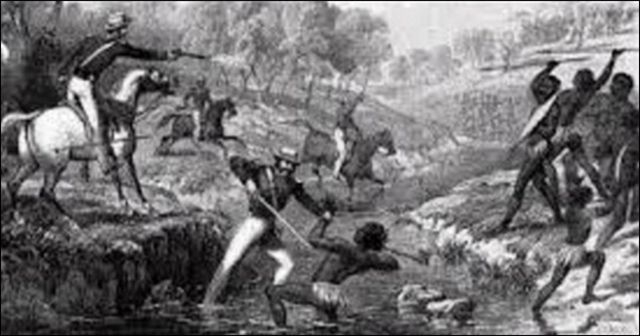
On the Mangarh Hill, situated on the Rajasthan Gujarat border, thousands of Bhils, Garasias and other forest dwelling communities had gathered under their spiritual guide and reformer Govind Guru.
Their only crime was the rise of social awareness, the rejection of exploitation, and the decision to stand against the injustices of the British Raj.
The Bhils, a Hindu vanvasi community spread across Maharashtra, Gujarat, Rajasthan and Madhya Pradesh, faced severe harassment under the old feudal order and British rule made their suffering worse. By the early twentieth century, the Bhils in Rajasthan and Gujarat often worked as bonded labourers. The great famine of 1899 to 1900 across the Deccan and the Bombay Presidency claimed more than six lakh lives and the tribals were among the worst affected. The princely states of Banswara and Santrampur were particularly devastated by the drought.
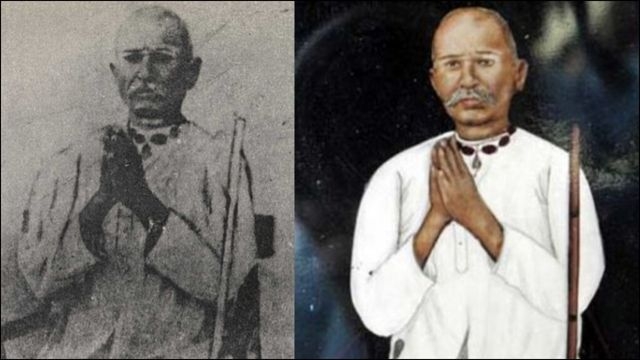
Govind Guru: A Spiritual Reformist and an Enemy of the Colonial State
Govind Guru was not leading a violent rebellion. He was leading a social renaissance among the Bhil community and teaching them to give up alcohol and addictions, to free themselves from debt and feudal exploitation, to adopt discipline, unity and self respect, and to stand against injustice with moral courage.
This awakening threatened not only the British but also the local princely elites who had long benefitted from the oppression of the tribal population. A disciplined and united vanvasi community was seen as a challenge to the colonial order.
The Failed Negotiations and the Final Assault
Fleeing an attempt by the ruler of Idar State to arrest him, Govindgiri Banjara and his loyal followers established a defensive encampment on a hillock in the Mangarh Hills on the border of the princely states of Banswara and Sunth.
Tensions rose quickly. On 31 October 1913, a group of his followers attacked the Gadhran police outpost, looted it, killed one constable and took another officer hostage. The next day, 1 November, another group attacked the Parbatgadh Fort in Sunth, though this attempt failed.
Independent bands of Bhil tribesmen operating from the Mangarh Hills then began raiding nearby villages in both Sunth and Banswara territories. Alarmed by the growing unrest, the authorities of the two princely states sent police forces to disperse the gathering, but negotiations failed.
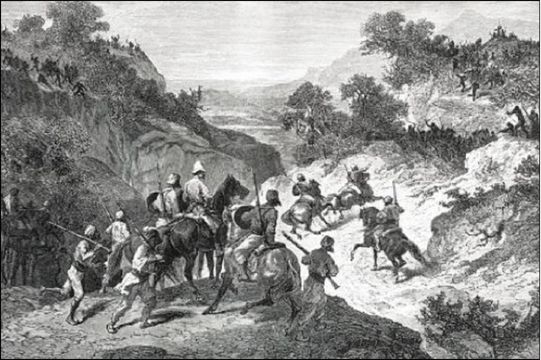
With the situation worsening, the rulers opted for a military response. Units of the Imperial Service Troops, supported by the Mewar Bhil Corps, surrounded and besieged the Bhil defensive position.
On 12 November 1913, Govindgiri and his deputy Punja Pargi, also known as Punja Dhirji, sent a delegation with a formal list of grievances to the British authorities. No negotiations took place. Instead, the commanding officer issued an ultimatum that the assembly must disperse by 15 November. The Bhils refused to abandon their position.
On 17 November 1913, combined Indian and British forces launched a full scale assault on the Bhil fortifications. In the aftermath, Govindgiri Banjara and Punja Pargi were captured along with about 900 followers, marking a decisive end to the standoff.
The Deliberate Erasure of the Vanvasi Resistance Movement from History
The Mangarh Massacre was deliberately ignored by communist historians because acknowledging it would weaken their monopoly over the freedom struggle and expose the fact that ordinary Indians, especially the vanvasi, fought British oppression long before the official narrative claims. Recognising Mangarh would reveal a united Hindu society challenging exploitative policies, which threatened vote based politics, Muslim appeasement and the caste based divisions created to weaken Hindu unity. By portraying vanvasi communities as permanently oppressed and by promoting distorted ideological movements such as Naxalism, the left ecosystem buried the real history of the Bhagat Movement, where 1,500 Bhils were massacred for demanding an end to unpaid labour and high taxes under the leadership of Govind Guru, a visionary who could have become a national figure against British tyranny. After Independence, Congress continued this erasure to protect the Nehruvian narrative and safeguard the political dominance of one dynasty, ensuring that generations grew up learning only a selective version of history. The silence surrounding Mangarh is not accidental. It is the outcome of a calculated intellectual strategy, and India must now reclaim this forgotten chapter of sacrifice and truth.
Article by
Kewali Kabir Jain
Journalism Student, Makhanlal Chaturvedi National University of Journalism and Communication