The Narrative Investigation - Exposing the “Green Mafia”: How Maoist and Conversion Networks Hijack India’s Environmental Movements

Across the mineral belts of central and eastern India, protests against mines and dams have long been framed as battles for ecological protection and tribal rights. But recent patterns reveal a deeper, coordinated effort at play.
In several high-stakes zones, local grievances are being shaped, amplified or redirected by a layered network of actors such as Maoist fronts, missionary-backed NGOs, urban advocacy groups and foreign-funded organisations.
For tribal communities at the centre of these agitations, the result is a cycle of confusion and fatigue. Many say they are caught between the government, Maoists and activist groups, each claiming to speak for them. Development stalls, trust erodes, and the space for genuine community-led decision-making shrinks. The pattern becomes clearest when examined through three major theatres of conflict: Bailadila, Niyamgiri and Hasdeo Arand.
How the “Green Mafia” Works
The network is not a formal alliance but a functional overlap of interests. On the ground, Maoist area committees move early, circulating pamphlets, calling village meetings, enforcing boycotts and threatening residents who cooperate with officials.
They frame every project as state overreach, using fear and influence to control the pace and direction of resistance.
Parallel to this, missionary-linked NGOs and certain foreign-funded advocacy groups provide legal assistance, documentation, travel support and broader visibility. Their involvement is often legal and above board, but in several instances their campaigns run alongside areas with known insurgent presence, creating a grey zone of influence and intent.
Government sources and independent trackers note that as Maoist territorial control has contracted, the group has increasingly concentrated on “mass front” mobilisation, especially around environmental issues. These fronts allow them to obstruct roads, delay surveys and prevent the establishment of state infrastructure that would otherwise weaken their foothold.
CASE STUDY 1: BAILADILA - Sacred Hills, Strategic Interests
Bailadila, the iron-ore-rich range in Dantewada, remains one of the clearest examples of overlapping influence. Mining has taken place here since the 1960s, but the 2019 announcement of a new contract for Deposit-13 triggered a sharp backlash. Thousands gathered in Kirandul, claiming violations of Gram Sabha consent and raising concerns about a sacred hill. Within days, the state halted operations pending review.
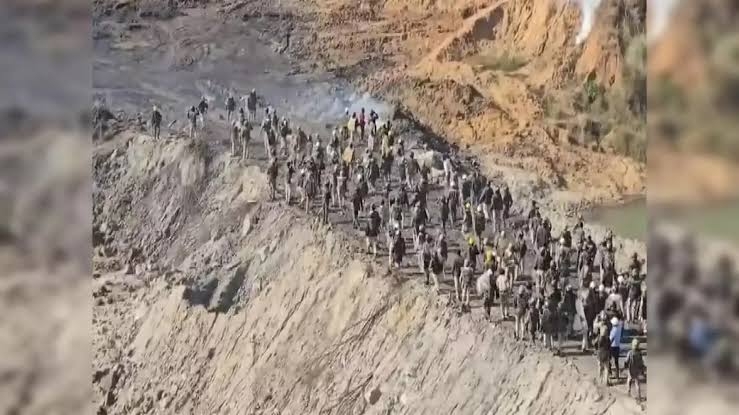
Subsequent reporting and security assessments show a confluence of forces behind the agitation. While many villagers opposed the project on religious or environmental grounds, Maoist-linked elements used the moment to enforce shutdowns and direct crowd mobilisation.
Political groups and NGOs quickly stepped in, reframing the agitation as a wider fight over resource control in Bastar. The stoppage froze a major industrial project that could have generated employment, and further deepened mistrust between the state and local communities.
CASE STUDY 2: NIYAMGIRI - A Judgment and Its Ripple Effects
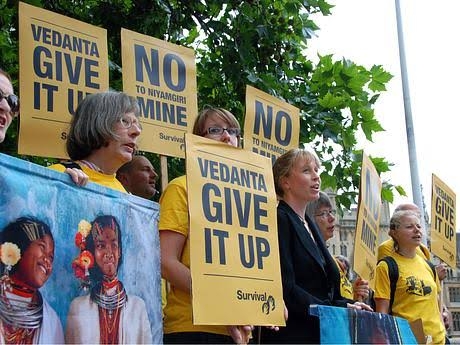
The Niyamgiri movement, culminating in the 2013 Supreme Court verdict that upheld Gram Sabha authority, remains a powerful example of tribal assertion. The Dongria Kondh’s rejection of bauxite mining was clear and unanimous. But the success also attracted a wave of outside involvement, national and international NGOs, advocacy campaigns and extensive media coverage, that turned a local rights struggle into a global narrative.

While Niyamgiri’s judgement was rooted in some community consensus, the model has since been replicated in conflicts where consensus is weaker. The “Niyamgiri template” of legal action, international pressure and sustained media mobilisation has become a playbook for both activists and, indirectly, groups that benefit from stalled development, including maoist networks seeking to preserve difficult terrain and community dependence.
CASE STUDY 3: HASDEO - Ecology, Coal and Escalating Tension
Hasdeo Arand, one of India’s most ecologically rich forests, has seen recurring protests since 2019 over coal mining and tree-felling. Villagers accused officials of manipulating Gram Sabha records and raised concerns about the region’s fragile ecology. Environmental groups amplified these charges, and as clearances moved forward, tensions escalated.
By 2024–25, confrontations between villagers and police intensified. So-called rights groups documented the use of force on protesters, while security assessments indicated Urban-Maoist operatives had taken advantage of the unrest, guiding roadblocks, influencing meetings and casting the agitation as part of a broader struggle against the state.
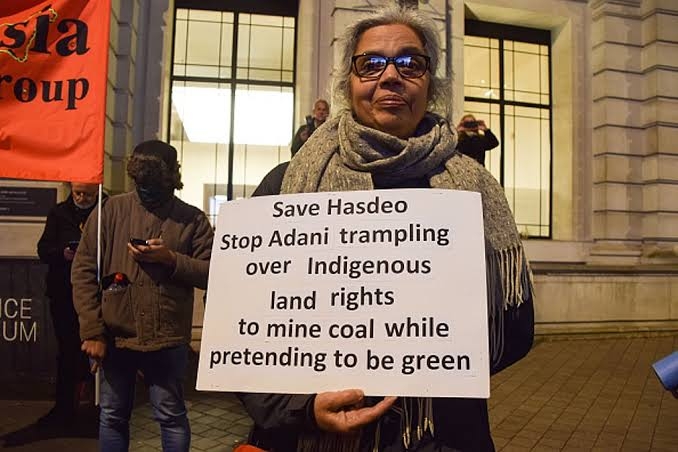
What began as an environmental dispute gradually widened into a contest for territorial influence, leaving local villagers to navigate both state pressure and separatists intimidation.
Sidebar: Data Snapshot - Timelines, FCRA Funding Patterns and Maoist Activity
Protest timelines show clear spikes around key administrative actions. Niyamgiri’s legal battle peaked in 2013; Bailadila’s agitation surged in mid-2019 and resurfaced in 2024; Hasdeo Arand saw repeated waves from 2019 to 2024, each linked to renewed clearances or tree-felling drives. The timing aligns closely with periods when Maoist activity in adjoining districts remains high, particularly in Chhattisgarh and Jharkhand.
FCRA data reveals that while the majority of NGOs operate legally, certain foreign-funded groups have channelled resources toward legal challenges, environmental research and public campaigns that directly intersect with protest hotspots.
The government’s tightening of FCRA norms since 2014, and subsequent cancellations of licences, have highlighted inconsistencies in fund utilisation.
Maoist activity maps compiled by the Ministry of Home Affairs show a contraction in the insurgency’s spread but a hardening of core strongholds. These strongholds overlap with mineral corridors, underscoring why protests in these regions often escalate faster, last longer and involve a broader coalition of actors than elsewhere.
Navigating the Line Between Protest and Capture
Our investigation relies on Government sources, field reports, court records and research based data. It confirms that maoist-linked groups have used environmental protests as a strategic shield; that foreign-funded activism has, at times, shaped the scale of these movements; and that political actors across the spectrum have sought to benefit from stalled projects.
However, it is equally important to clarify what the evidence does not show: not every protest is influenced by Maoists, not every NGO operates with hidden agendas, and not every act of dissent is a threat to the state.
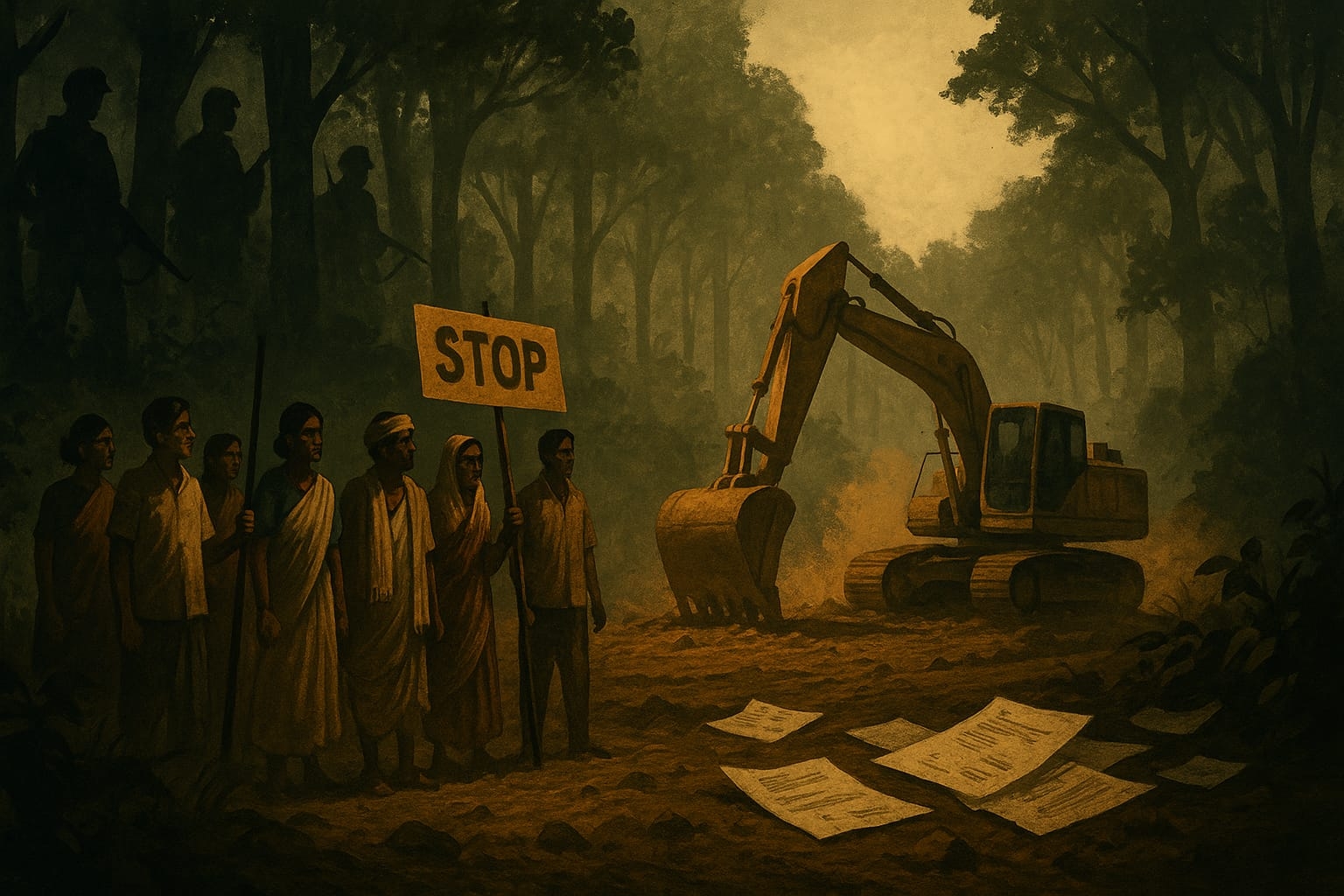
The challenge for policymakers lies in distinguishing between genuine grassroots movements and those redirected by actors with unrelated political motives. Effective consultation, transparent clearances and independent oversight can reduce suspicion and close the gaps insurgents exploit. Stronger financial scrutiny can identify questionable funding without undermining genuine civil-society work.
Reclaiming the Space for Genuine Environmental Politics
The conflicts in Bailadila, Niyamgiri and Hasdeo Arand demonstrate how easily environmental movements can become proxy arenas. The “Green Mafia” thrives in ambiguity, where some grievances are real, institutions are distrusted and information is contested. Combating this requires patience, transparency and a willingness to rebuild trust with communities who have too often been treated as either obstacles or instruments.

Environmental protection and tribal autonomy are essential pillars of modern governance. They cannot be allowed to become tools for insurgency, political opportunism or external influence. Restoring credibility in these processes means ensuring that the voices shaping these decisions belong to the people who live on the land, not to the networks that claim to speak for them.