The Enemy Hiding Behind the Screens: Warfare of Disinformation Against Bharat
06 Dec 2025 16:18:33
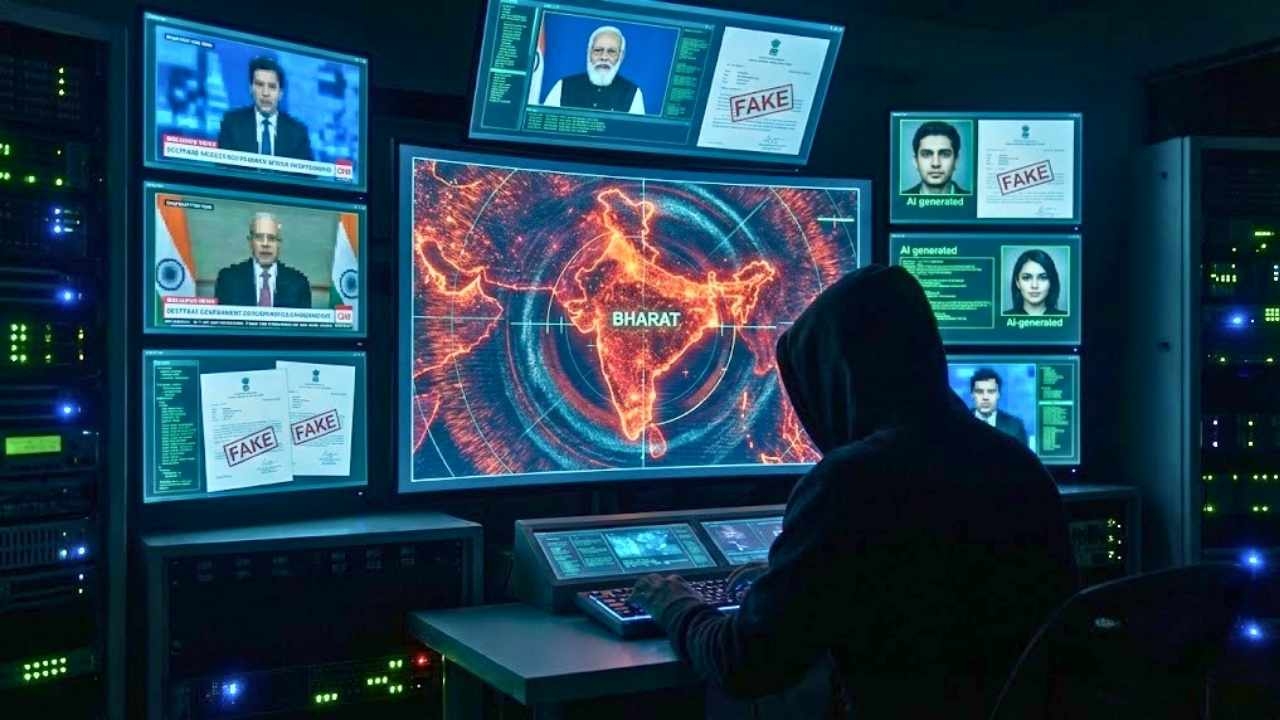
Recent events have once again exposed the sustained and malevolent campaign of disinformation warfare waged by foreign, predominantly Pakistan-based, media portals and influencers against Bharat. A closer look at these developments reveals a sophisticated and multi-pronged strategy that aims to sow political instability, undermine defence credibility and incite communal discord. This is not mere rumour-mongering. Rather, it is a calculated effort in hybrid warfare that targets the foundations of the Indian nation without guns and bombs.
A clear pattern has emerged that shows a deliberate attempt to attack the highest offices and key national figures through fabricated content. One of the most alarming instances was the digitally manipulated video that falsely attributed divisive statements to President Droupadi Murmu on Constitutional Day.
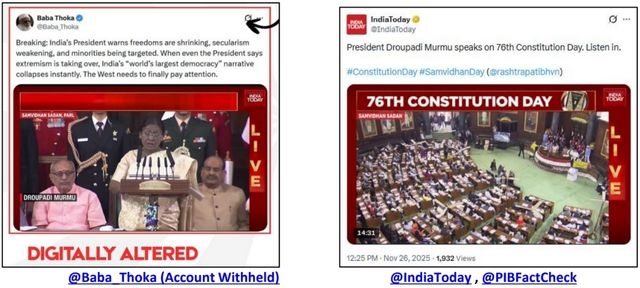
Fabricated Quotes: The fake claim suggested that the President spoke of shrinking freedoms, weakening secularism and minorities being targeted. This represents a textbook attempt to use a respected national voice to add false authority to an anti-Bharat narrative. The authentic speech fully refuted these fabrications.
Deepfakes of Union Ministers: A digitally altered video of External Affairs Minister S. Jaishankar was circulated, falsely claiming he admitted that India wanted to reduce damages against Pakistan. This attempted to project an image of military weakness that had no basis in reality.
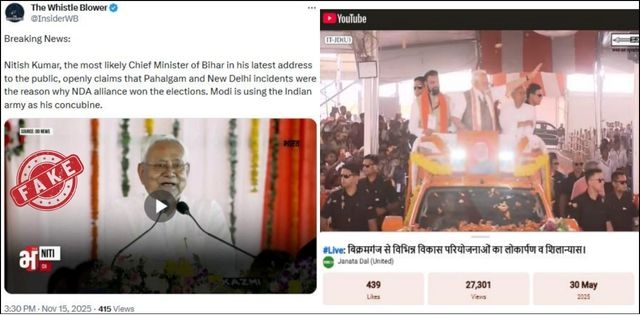
AI-Generated Smears: Another AI-generated video falsely portrayed Nitish Kumar making derogatory remarks, a deliberate effort to poison the political environment during a sensitive period.
Attempt to Attack India’s Defence Strategy
A significant part of the disinformation campaign focused on maligning India’s indigenous and acquired defence capabilities, particularly after the tragic but routine accident involving a Tejas jet at the Dubai Airshow.
The Tejas Tangle: Numerous false claims circulated online, alleging that Armenia had suspended negotiations for the LCA Tejas Mk1A after the crash, even though no such deal had ever existed. This was a calculated attempt to damage the global credibility of India’s defence exports. Further misinformation included claims about an oil leak at the Airshow, which was actually routine water drainage, as well as a fabricated statement attributed to the IAF Chief criticising the aircraft’s reliability.
The Rafale Refusal Hoax: A completely forged letter circulated which claimed that Dassault Aviation had refused India’s request for early delivery of Rafale jets for the Navy. This fake document attempted to portray India as desperate and denied by its strategic partners.
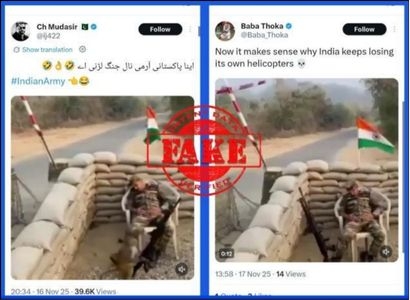
Mocking the Army: A fake AI-generated video showing a monkey firing a rifle was wrongly attributed to the Indian Army. This was an attempt to ridicule and undermine the professionalism of the Armed Forces.
The sheer volume and coordination behind these attacks that targeted both the Tejas and the Indian Armed Forces made it clear that this was a deliberate information operation designed to weaken public morale and international confidence in India’s military capabilities.
Targeted Attacks on Indian Harmony
The campaign also focused on exploiting internal vulnerabilities, a recognised tactic in psychological operations.
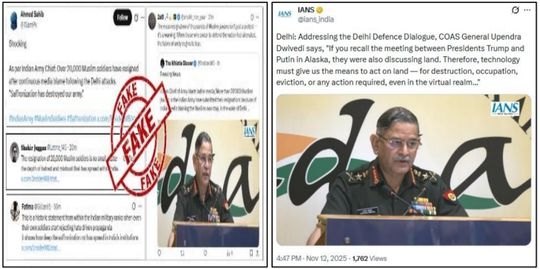
Communal Incitement: A doctored AI-generated video of Army Chief General Upendra Dwivedi was circulated, falsely claiming that he said 20,000 Muslim jawans had resigned after the Delhi attacks. This was a venomous attempt to spread communal tension within one of the nation’s most trusted institutions.
False-Flag Blasts: After the Delhi blast, propaganda accounts quickly pushed a false narrative that Bharat had orchestrated the incident as a false-flag operation. This was a cynical effort to erode public trust in security agencies.
Panic about Crashes: Claims that three IAF aircraft had crashed due to unknown electronic interference circulated immediately after a single confirmed routine accident, an attempt to create fear regarding air defence capabilities.
Authorities like PIB Fact Check and the IAF have consistently debunked these fake narratives and their work is commendable. However, the immense effort required to counter each falsehood highlights the scale of the threat.
The fact that much of the circulation and origination of this content traced back to Pakistan raises serious concerns about the control and manipulation of digital information. This concerted campaign, using AI-generated deepfakes and forged documents, shows a state-enabled attempt to weaponise information and wage a digital jihad against Bharat.
Article by

Kewali Kabir Jain
Journalism Student, Makhanlal Chaturvedi National University of Journalism and Communication