AR Rahman and the Intent of Victimhood in Bollywood
22 Jan 2026 18:37:04
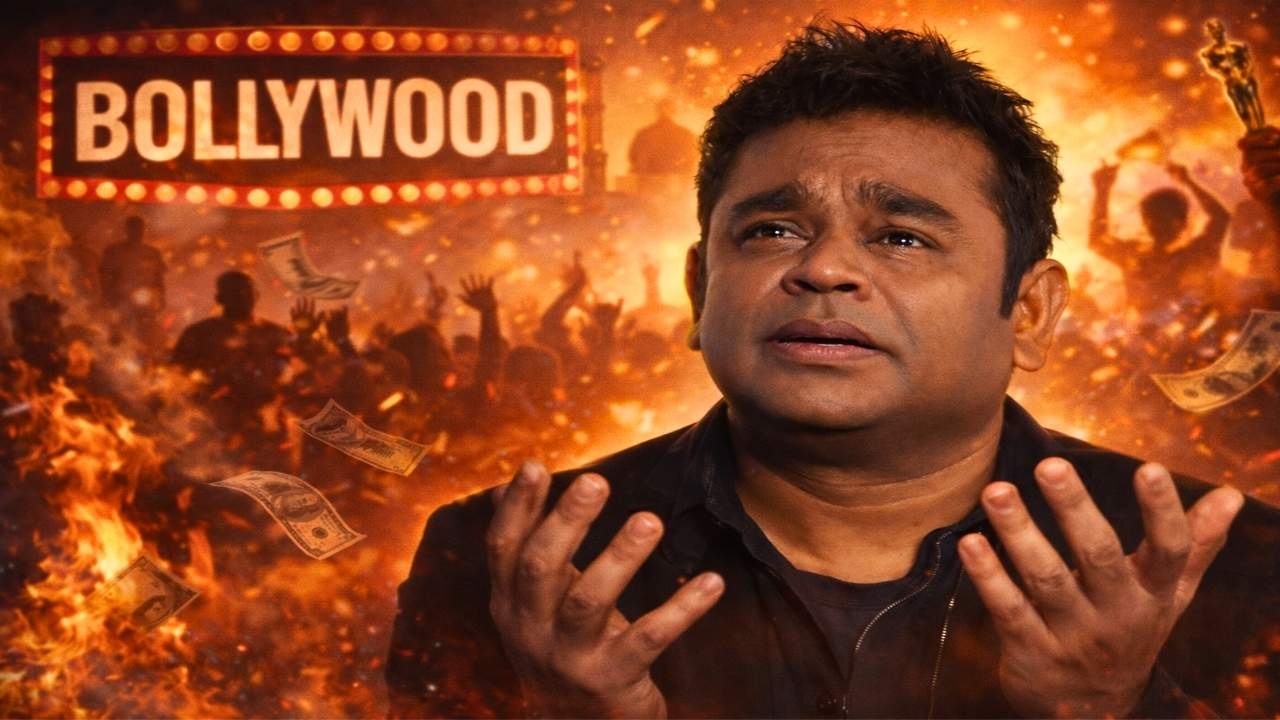
Oscar-winning composer AR Rahman has sparked widespread public outrage following remarks suggesting that the Hindi film industry, or Bollywood, may have developed a bias in its functioning. Rahman hinted that he was denied professional opportunities on communal grounds and projected himself as a victim, a familiar posture increasingly adopted by minority figures when faced with professional criticism or marginalisation.
In an interview with BBC Asian Network, Rahman stated that he had received fewer opportunities in Bollywood over the past eight years. He implied that this slowdown might be linked to shifts in power structures within the industry. Notably, he added that such instances were never conveyed to him directly but reached him through what he described as “Chinese whispers”.
Rahman further claimed that bias existed in Bollywood against Tamils or individuals from outside Maharashtra. While asserting that he had not personally faced overt discrimination, he alluded to subtle and systemic changes within the industry.
He said, “Maybe I never got to know of this, maybe it was concealed, but I didn’t feel any of this. Maybe in the past eight years, a power shift has happened, and people who are not creative have the power now. It might be a communal thing also, but it is not in my face. It comes to me as Chinese whispers that they booked you, but the music company went ahead and hired their five composers. I say good, I have more time to chill with my family. I am not in search of work. I want work to come to me. My sincerity to earn work, whatever I deserve, I get.”
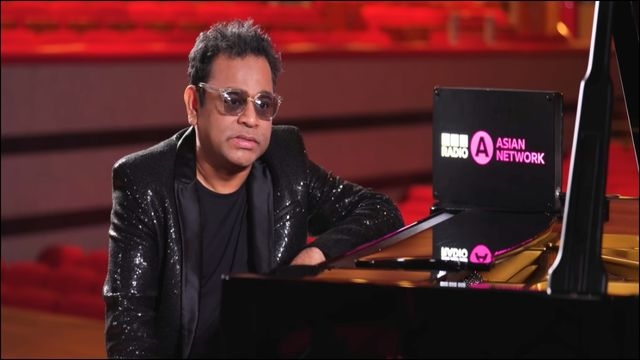
He further remarked, “Urdu was the mother of Hindi film music in the 1960s and 1970s. But for the past eight years, after a shift in power and possibly due to communal factors, I have stopped getting work.”
Rahman has previously said that it took him nearly seven years to feel at home in Hindi cinema. He made his Bollywood debut with Mani Ratnam’s 1991 romantic thriller Roja and went on to score the critically acclaimed trilogy of Roja, Bombay (1995), and Dil Se.. (1998). He also left a strong impression with Ram Gopal Varma’s Rangeela (1995), which marked a stylistic departure from his earlier work. However, it was Subhash Ghai’s 1999 romantic drama Taal that finally helped him shed the feeling of being an outsider.
The Claim Versus the Context
The suggestion that Bollywood has marginalised Rahman on communal grounds sits uneasily with the realities of his current professional standing. He is composing music for Nitesh Tiwari’s Ramayana, widely described as one of the most ambitious and culturally significant Hindu civilisational projects in Indian cinematic history. In addition, his collaboration with international composer Hans Zimmer on an India-centric project places him firmly at the centre of contemporary global cultural production.
These high-profile engagements challenge the narrative of exclusion and raise questions about the intent and timing of Rahman’s remarks.
AR Rahman: A Prey to Islam?
Born as A. S. Dileep Kumar on January 6, 1967, in Madras, now Chennai, Rahman was raised in a Tamil Hindu household. His father, R. K. Shekhar, was a respected composer in South Indian cinema. Following his father’s death, Rahman’s mother, Kareema Begum, formerly Kasturi, became the primary anchor of the family.
In the late 1980s, after a prolonged period of illness within the family and under the influence of a Sufi healer who had attended to his father during his final days, Rahman and his family embraced Islam and were converted from Hindu.
Rahman went on to redefine Indian film music, beginning with Roja (1992), and later earned two Academy Awards along with Grammy and Golden Globe honours. The Indian state recognised his contribution with the Padma Shri in 2000 and the Padma Bhushan in 2010.
Rahman’s Contentious Interventions
Rahman’s recent remarks are not an isolated episode. Over the years, several statements and incidents have placed him at the centre of public and ideological debate.
“This Is Not My India” (2017)
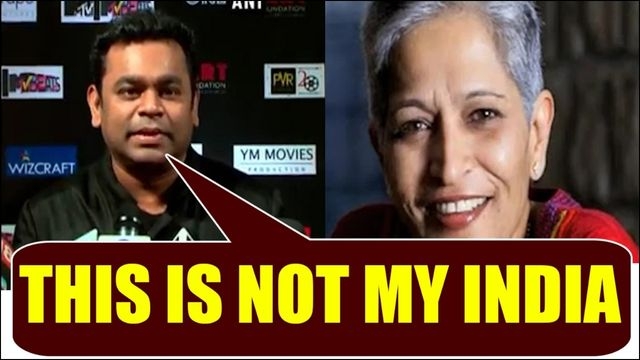
Following the killing of journalist Gauri Lankesh, Rahman stated publicly that such violence represented “not my India” and called for a more progressive and compassionate nation. While left-leaning groups applauded the sentiment, critics viewed it as a sweeping moral indictment of the country.
The Chhaava Debate (2026)
Commenting on the film depicting Chhatrapati Sambhaji Maharaj, Rahman described certain symbolic elements as “divisive” while simultaneously acknowledging the bravery portrayed in the narrative. Critics accused him of undermining Hindu historical representation even as he continued to benefit from projects rooted in the same civilisational tradition.
Language Controversy (2021)
At a promotional event for 99 Songs, Rahman briefly walked off stage after an anchor switched from Tamil to Hindi. This sparked allegations of anti-Hindi bias. Rahman later clarified that the moment was light-hearted and related to event protocol.
Religious Symbol Allegations
Tamil lyricist Piraisoodan alleged that he was asked to remove Vibuthi and Kumkum while visiting Rahman’s residence. This allegation intensified claims of intolerance towards Hindu religious symbols within Rahman’s personal space.
The Vande Mataram Episode
Journalist Swati Chaturvedi alleged that Rahman declined to sing Vande Mataram during an interview, triggering online debate over patriotism and intent.
Taken together, these episodes have contributed to a perception of ideological distance from Bharatiya civilisational expressions. This perception persists even as Rahman continues to work on projects deeply rooted in the same tradition, raising questions about whether such posturing is ideological conviction or merely a strategy to remain relevant and commercially secure.
Article by
Kewali Kabir Jain
Journalism Student, Makhanlal Chaturvedi National University of Journalism and Communication