Wikipedia: Editing the Truth?
Legal challenges, editorial scandals, and disputed history pages raise serious questions about whether Wikipedia functions as an open encyclopaedia or an unaccountable narrative gatekeeper.
Total Views |


For years, Wikipedia has projected itself as a neutral, crowdsourced encyclopaedia, a digital commons governed by facts, sources, and consensus. However, between 2020 and 2026, a growing number of controversies have raised uncomfortable questions about whether this neutrality is more aspirational than real. From covert public relations manipulation in London to the framing of Hindu-related events in India, these incidents collectively point to a deeper structural concern: the manner in which power, ideology, and editorial gatekeeping can shape what is presented as "knowledge".
This report compiles eleven such incidents that critics argue demonstrate bias, narrative manipulation, and a persistent anti-Hindu framing within Wikipedia's ecosystem.
1. Wikilaundering by Elites: The London PR Firm Expose
On 16 January 2026, an investigation by The Bureau Investigates accused the London-based public relations firm Portland Communications of covertly editing Wikipedia to sanitise the public images of billionaires, governments, and elite actors. According to the report, the edits were routed through Web3 Consulting using fake accounts, a practice commonly referred to as sockpuppetry.
At least 26 such accounts were subsequently banned. Qatar reportedly emerged as a major beneficiary, with criticism relating to migrant worker deaths and human rights abuses systematically softened or diluted. The controversy deepened due to Portland founder Tim Allan's proximity to political power, as he had served as communications chief to UK Prime Minister Keir Starmer.
Indian outlet OpIndia argued that Wikipedia's internal mechanisms, including restrictive definitions of "reliable sources", page protection, and enforced consensus, allow such bias to become permanent, effectively laundering reputations under the guise of neutrality.
2. ANI vs Wikipedia: When the Subject Fights Back
On 9 July 2024, India's leading news agency ANI filed a defamation suit against the Wikimedia Foundation in the Delhi High Court. ANI objected to its Wikipedia page describing it as a "propaganda tool for the incumbent central government", calling the claim false, malicious, and reputationally damaging.

ANI also alleged procedural bias. The page remained protected, preventing ANI from correcting the content, while anonymous editors continued to exert influence. Justice Subramonium Prasad questioned Wikipedia's argument that disclaimers absolve it of responsibility, remarking that calling oneself a "free encyclopaedia" does not place one above the law.
In November 2024, the Government of India issued a formal notice to Wikipedia, asking why it should not be treated as a publisher rather than a neutral intermediary, marking a significant moment in India's digital governance debate.
3. 'Jai Shri Ram' as a "War Cry": Faith Reframed

Ahead of the Ram Mandir Bhoomi Pujan, Wikipedia's page on the sacred chant "Jai Shri Ram" sparked widespread outrage. The chant was described as a "war cry", allegedly used against Muslims and primarily linked to the BJP, a characterisation critics saw as a distortion of a centuries-old religious invocation.
4. Godhra Train Burning: Courts vs "Disputed" Narratives
Despite multiple convictions upheld by the Gujarat High Court, Wikipedia's "Godhra train burning" page continued to state that the cause of the fire "remains disputed". Critics pointed out that 31 Islamists were convicted for arson, yet court verdicts, forensic reports, and police findings were consistently downplayed.
Instead, activist accounts and select "scholarly opinions" received prominence, while editors citing judicial records found themselves marginalised. This raised a fundamental question: when courts have delivered verdicts, who determines historical truth, the judiciary or Wikipedia editors?
5. Bengaluru Riots: Selective Neutrality
Wikipedia's coverage of the 11 August 2020 Bengaluru riots used vague terms such as "clashes" and "armed assailants", omitting the identity and motivation of the attackers. On-ground reporting indicated that violence erupted after a Facebook post allegedly insulting Prophet Muhammad, followed by attacks largely carried out by local Muslim youths.
By contrast, Wikipedia's article on the Delhi riots explicitly referred to "Hindu mobs attacking Muslims". When questioned on talk pages, editors claimed that "reliable sources" did not mention religion in the Bengaluru case, an explanation critics view as selective neutrality bordering on obfuscation.
6. Manipur Conflict: One Editor, One Narrative
The Manipur violence generated fresh controversy when editor "Kautilya 3" was accused of repeatedly framing the conflict as religious persecution by Meitei Hindus against Christian Kukis. Critics argued that complex ethnic, political, and historical factors were reduced to a single religious narrative.
Once such framing stabilises on Wikipedia, it is amplified by AI systems, search engines, and social media, demonstrating how a small number of editors can shape global perception.
7. Delhi Riots and the Power of "Master Editors"
The "North East Delhi riots" article, created by senior editor DBigXray, allegedly set the narrative tone from the outset. BJP leader Kapil Mishra was foregrounded as an instigator, while inflammatory speeches by other political figures were removed.
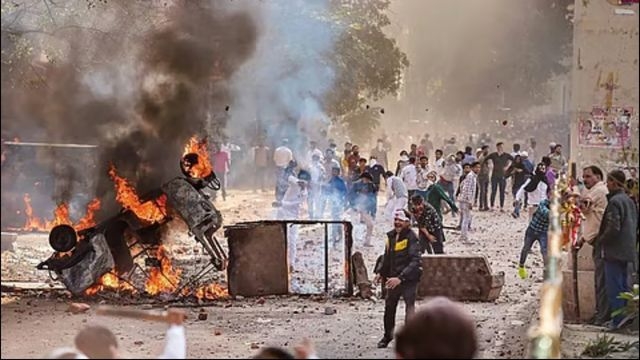
Acts of violence by anti-CAA mobs were softened, religious slogans were selectively omitted, and the page was semi-protected. Critics argue that this episode illustrates how editorial privilege, rather than genuine consensus, often determines narrative outcomes.
8. Noakhali Genocide: History Rewritten Overnight
In one of the most striking incidents, the Wikipedia page on the 1946 Noakhali riots was vandalised by swapping the terms "Hindu" and "Muslim", effectively reversing the roles of victim and perpetrator. The title was altered, and image captions were rewritten to malign Hindu organisations.
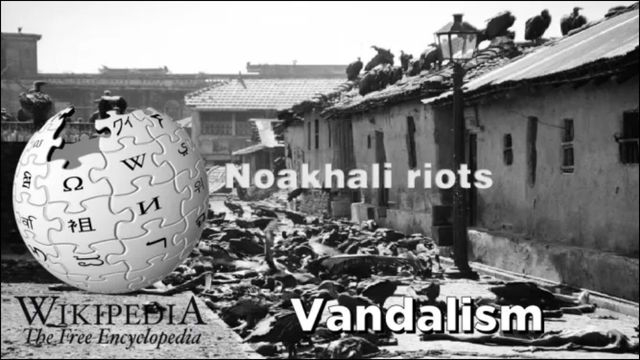
The edit was traced to an IP address in Dhaka, Bangladesh. Critics questioned how such severe distortions could appear, even temporarily, on a platform that claims rigorous moderation.
9. Tablighi Jamaat and COVID-19: Deletion by "Supervote"
A page detailing the role of Tablighi Jamaat in spreading COVID-19 in India was deleted despite a majority of editors favouring its retention. An administrator invoked a "supervote", overriding the apparent consensus.
Critics highlighted the inconsistency, noting that similar pages exist for Pakistan. The episode reinforced concerns that ideological discretion can override documented public health information.
10. Branding OpIndia as "Fake News"
A previously neutral page on OpIndia was deleted and later recreated with heavily negative descriptors such as "fake news" and "hate-spreading". The sources cited were almost exclusively left-leaning fact-checkers, while rebuttals or counter-evidence received little to no consideration.
Critics argue that this pattern demonstrates how Wikipedia's authority can be weaponised against ideological opponents through editorial activism.
11. Whitewashing Pornhub
Finally, Wikipedia's handling of Pornhub attracted criticism when references to the "Traffickinghub" petition and child abuse allegations were removed on the grounds of insufficient notability. The same editor reportedly specialises in sanitising pornography-related pages.
This raised a broader concern: when financial, ideological, or institutional interests align, even serious allegations can disappear from the public record.
Collectively, these eleven incidents have fuelled an ongoing debate about whether Wikipedia's model of open editing truly guarantees neutrality, or whether it enables entrenched power structures and ideological preferences to shape global understanding, particularly in relation to Hindu history, politics, and society.
Report by

Kewali Kabir Jain
Journalism Student, Makhanlal Chaturvedi National University of Journalism and Communication