How Bharat’s Education System Was Recast in 2025 Through Literacy, Reform and Civilisational Confidence
By aligning states, institutions and policy under NEP 2020, 2025 saw Bharat recast education as a strategic tool for skills, values and long-term national growth.
Total Views |


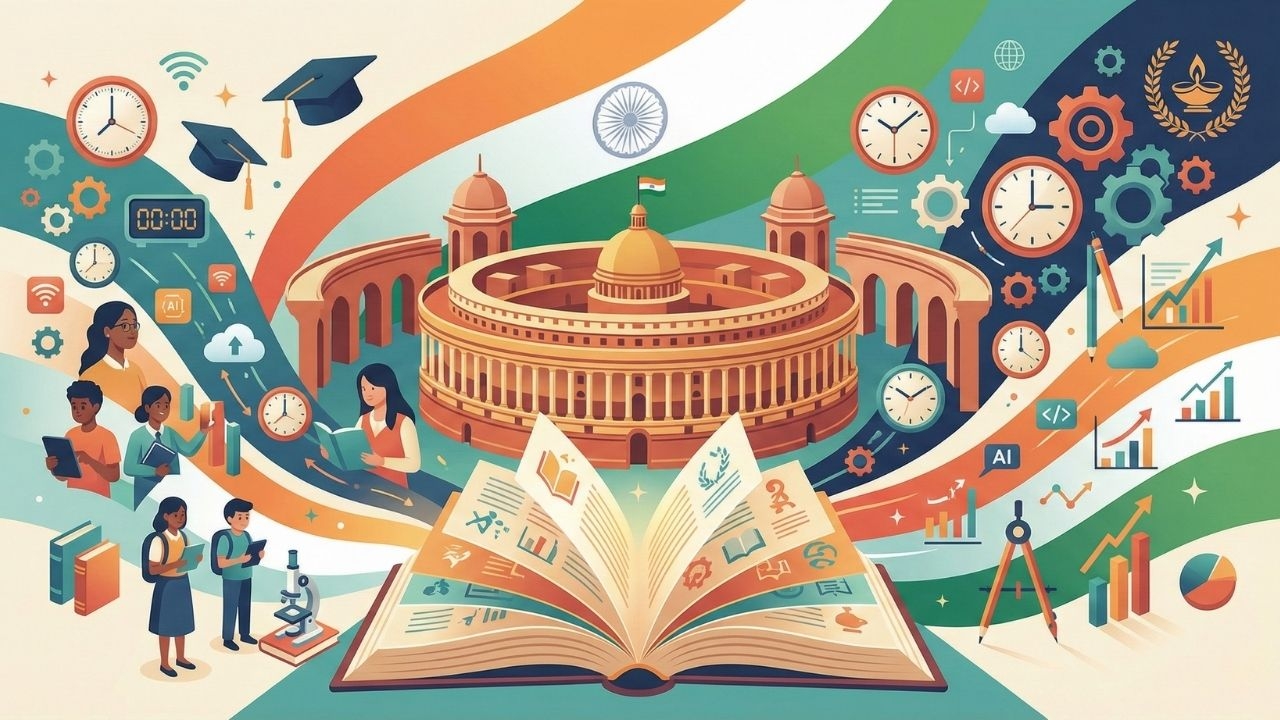
By 2025, Bharat’s education landscape had undergone a structural and ideological transformation. The shift extended beyond achieving near-universal literacy in multiple states to rewriting curricula, expanding global academic footprints, and embedding technology and Indian knowledge systems into classrooms. The current government’s approach signalled a decisive move away from incremental reform towards systemic change.
Universal Literacy: States Lead, Centre Enables
A historic milestone was reached on 23 June 2025 when Tripura was declared a fully literate state, becoming the third in the country after Mizoram and Goa. The announcement, made by the Ministry of Education in the presence of Chief Minister Manik Saha, underscored the effectiveness of targeted adult literacy interventions. More than 23,000 non-literate adults were identified and supported through structured programmes, demonstrating the impact of last-mile governance.
Earlier, Mizoram had set the national benchmark on 20 May 2025 by becoming India’s first fully functionally literate state under the ULLAS Nav Bharat Saaksharta Karyakram. Door-to-door surveys, strong community mobilisation, and outcome-driven administration enabled the state to cross the literacy threshold, as confirmed by official surveys.
Goa followed on 30 May 2025, achieving a literacy rate of 99.7 percent, well above the benchmark set by the Centre. By September, Himachal Pradesh became the fourth fully literate state, reinforcing a clear pattern. When states align closely with centrally supported schemes and focus on implementation, measurable outcomes follow.
Collectively, these achievements reflect the Centre’s renewed emphasis on adult education, verification-based assessment, and delivery at the grassroots level. This approach marks a departure from earlier eras where literacy claims often remained symbolic rather than substantive.
Systemic Reform Under NEP 2020
The National Education Policy 2020 remains the ideological foundation of these reforms. Throughout 2025, multiple initiatives advanced its long-term vision.
The Central Board of Secondary Education mandated annual STEM-focused training for teachers and principals, embedding continuous professional development into the school system. The introduction of the APAAR ID as a lifelong digital academic identifier streamlined student records and aligned education administration with the broader Digital India framework.
Another significant reform involved the decision to conduct Class 10 board examinations twice a year from 2026. This move directly addressed exam-related stress while preserving academic standards and offering students greater flexibility.
In higher education, the Viksit Bharat Shiksha Adhishthan Bill, 2025 proposed replacing fragmented regulatory bodies such as the UGC and AICTE with a single statutory authority. The objective was to grant institutions greater academic autonomy while ensuring transparency and accountability. Although long debated and previously resisted, the reform finally moved from concept to legislation.
Expanding Capacity, Not Just Rhetoric
Critics have often accused governments of prioritising announcements over capacity creation. However, data from 2025 presents a different picture.
Over the past decade, IIT seats doubled to 1.35 lakh, supported by infrastructure investments exceeding ₹1,830 crore in the 2024–25 financial year alone. In medical education, the National Medical Commission approved 10,650 new MBBS seats, raising the total to 1.37 lakh and aligning with the Prime Minister’s commitment to add 75,000 medical seats.
In a major policy reversal, 17 foreign universities received approval to establish campuses in India. This decision addressed decades of academic outflow and positioned Bharat as an emerging global education hub. At the same time, IIM Ahmedabad announced its first overseas campus in Dubai, signalling growing confidence in Indian institutions exporting educational excellence rather than seeking external validation.
Technology, AI and the Future Workforce
Recognising that basic literacy is insufficient in a technology-driven economy, the Union Budget 2025 allocated ₹500 crore to an AI Mission in Education, including the establishment of a dedicated Centre of Excellence.
Key initiatives included the SOAR programme for skilling in artificial intelligence readiness, the launch of the NIELIT Digital University, and nationwide digital platforms targeting 40 lakh learners by 2030. India’s second-place ranking in the QS World Future Skills Index under the “Future of Work” category further validated the strategic direction of these reforms.
Reclaiming Civilisational Confidence Through Education
Beyond infrastructure and employability, the government placed strong emphasis on cultural and civilisational grounding in education.
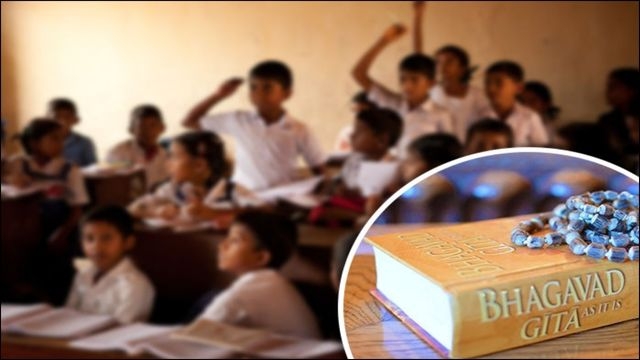
Chapters from the Shrimad Bhagavad Gita were introduced into Gujarat textbooks, while Uttarakhand mandated daily recitation of Gita shlokas in schools. Delhi University launched a comprehensive Indian Knowledge System book series, supported by initiatives such as the Gyan Bharatam portal and large-scale manuscript digitisation to preserve India’s intellectual heritage.
NCERT textbook revisions, including the removal of selectively glorified medieval narratives and the inclusion of national heroes, reflected a deliberate effort to present history through an Indian perspective rather than a colonial or ideological lens.
Regulation With Accountability
The government also moved decisively to regulate sectors that had long remained unchecked.
The Rajasthan Coaching Centres Bill, 2025 sought to address student exploitation and mental health concerns in coaching hubs. The Delhi School Fee Regulation Act, 2025 curtailed arbitrary fee increases and strengthened parental safeguards. Reforms in madrasa and minority education in states such as Uttarakhand and Uttar Pradesh aimed to integrate modern curricula while improving institutional oversight.
Education as Nation-Building
Taken together, the developments of 2025 reveal a coherent and intentional philosophy. The current government views education not merely as a welfare service, but as a strategic instrument of nation-building rooted in Indian values, enabled by technology, regulated through accountability, and expanded to ensure inclusion.
From Tripura’s last-mile literacy drive to global campuses and AI-enabled classrooms, Bharat’s education journey is being reshaped with clarity of purpose. Supporters argue that this progress is not accidental, but the result of a government willing to combine reform, resolve, and civilisational confidence to ensure education for all, rather than for a privileged few.
Article by

Kewali Kabir Jain
Journalism Student, Makhanlal Chaturvedi National University of Journalism and Communication