ECI Fact Checks Congress's Fallacy: Chidambaram’s SIR “Abandonment” Claim Collapses Under Scrutiny
Congress leader confuses routine SSR with SIR, inflates SC notice into ‘retreat’, and recycles unverified deletion numbers ECI’s statutory duty continues unhindered
Total Views |


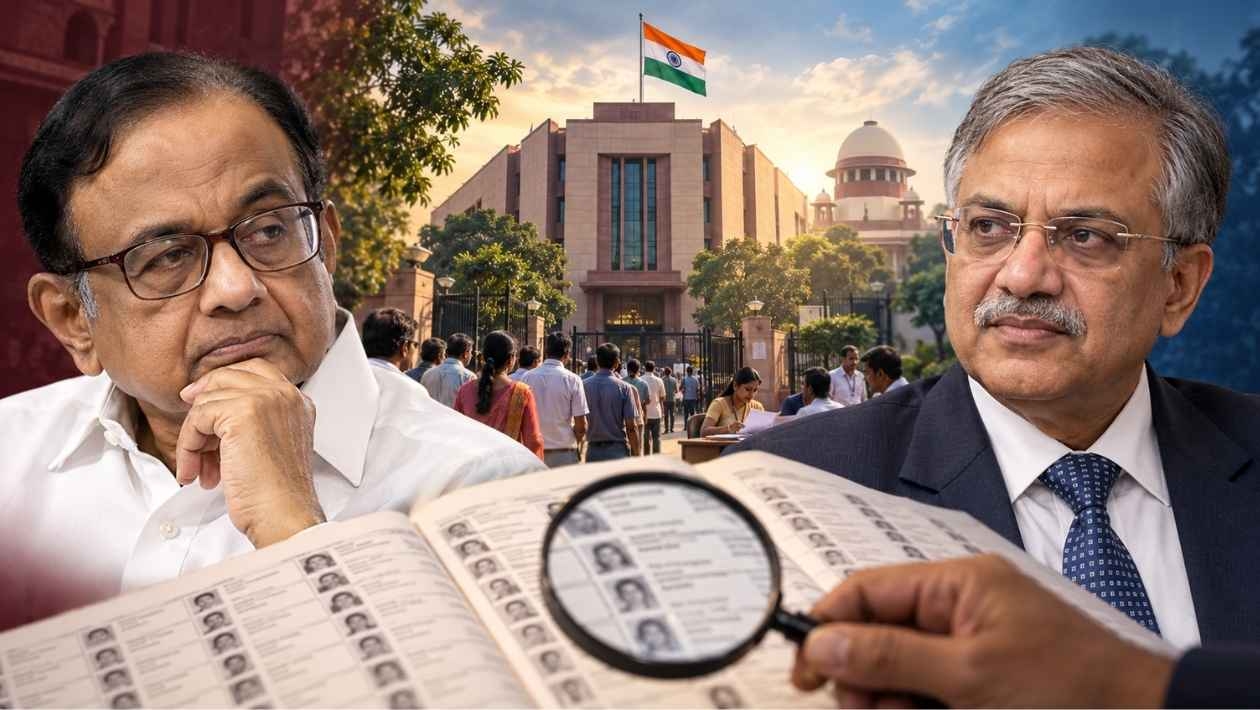
P. Chidambaram’s claim that protests and Supreme Court scrutiny forced the Election Commission to abandon SIR in 17 States and Union Territories faces challenge, with the article distinguishing routine SSR announcements from cancellation of SIR.
Congress leader and former Union Minister P. Chidambaram has once again resorted to selective outrage and rhetorical flourishes to cast doubt on the Election Commission of India’s integrity. In a recent social media post, he claimed that after protests and a Supreme Court notice, the ECI under Chief Election Commissioner Gyanesh Kumar had “abandoned” the Special Intensive Revision (SIR) in 17 remaining States and Union Territories, settling instead for the “customary” Special Summary Revision (SSR). He further alleged that 13.3 crore names were deleted without due process and demanded that the CEC be “surcharged” for double expenditure. The facts, official distinctions, and the Commission’s own position tell a markedly different story, one of routine institutional functioning, not political retreat.
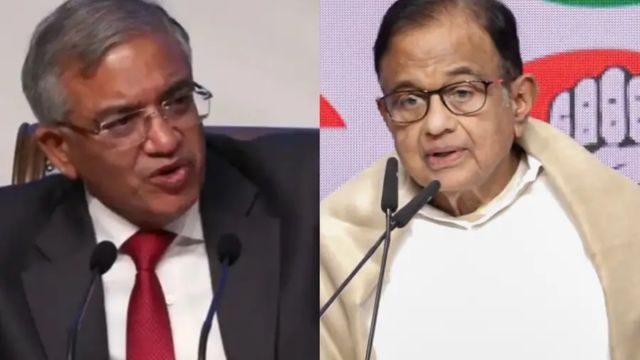
SIR and SSR Are Not the Same Exercise
The fundamental error in Chidambaram’s narrative is the deliberate conflation of two distinct processes. Special Summary Revision is the regular, annual exercise conducted under the Representation of the People Act, 1950, to update electoral rolls. It allows eligible citizens to register, removes the names of the deceased or those who have permanently shifted, and typically uses 1 January as the qualifying date. It is a standard housekeeping measure that every Election Commission undertakes to keep rolls accurate ahead of elections.
Special Intensive Revision, by contrast, is a more focused, intensive drive ordered when circumstances demand deeper scrutiny often involving house-to-house verification or additional documentation checks. Announcing SSR in 17 States and UTs does not, by any stretch of logic or law, amount to cancelling or abandoning SIR. Treating the two as interchangeable is either a misunderstanding or a calculated attempt to manufacture a narrative of ECI “surrender.”
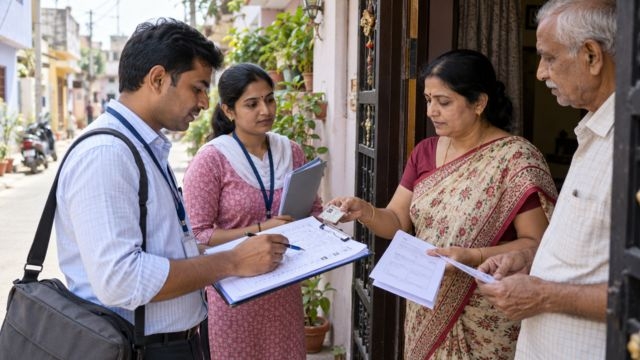
ECI sources have clarified that SIR has not been scrapped in any State or Union Territory. The intensive exercise has already been completed in the first two phases across multiple States and UTs, including several that face Assembly polls in early 2027. What remains is the regular summary revision required by statute and past practice. Section 21 of the Representation of the People Act empowers the Commission to revise rolls in the manner it deems fit; nothing in the recent announcements suggests a departure from that mandate under political pressure.
Supreme Court Notice Is Not a Verdict
Chidambaram’s attempt to link the SSR announcement to a Supreme Court notice is equally misleading. Issuing notice and seeking the Commission’s response is a standard judicial procedure. It does not constitute a finding that SIR was illegal, nor does it validate any allegation of mass illegal deletions. Until the Court delivers a reasoned order, political leaders do not get to treat a notice as a conviction. Presenting it as such is classic Opposition theatre: amplify process into persecution.
The claim of 13.3 crore deletions “without due process” is a serious charge that demands documentary evidence, not press-conference assertions. Electoral rolls are dynamic; names of the dead, migrants, and duplicate entries are routinely removed after prescribed procedures. Dramatic numbers thrown into the public domain without corresponding official records or court findings only serve to erode public trust in constitutional institutions, an outcome that benefits those who thrive on institutional distrust.
Protecting the Integrity of the Rolls Is Not “Discrimination”
The charge that 20 States were somehow “discriminated against” under SIR is particularly rich coming from a senior Congress leader. The Commission schedules intensive revisions based on administrative readiness, electoral calendar, and the need to clean rolls before polls. States heading into Assembly elections naturally receive priority attention. Far from discrimination, this is responsible election management. After any intensive clean-up, further drives to enrol genuine left-out voters are not evidence of illegality; they are evidence of the Commission’s dual responsibility to exclude the ineligible and include the eligible.
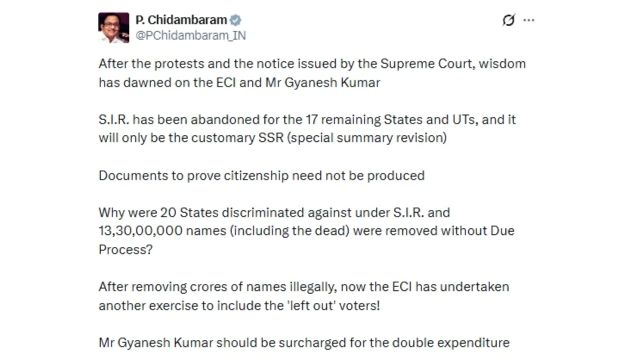
Demanding that the Chief Election Commissioner be “surcharged” for expenditure incurred in successive revision exercises reveals more about the speaker’s mindset than about the Commission’s finances. Maintaining accurate electoral rolls is a constitutional duty. The cost of that duty cannot be weaponised every time political parties dislike the outcome of a clean-up.
Institutional Continuity Over Partisan Drama
India’s electoral machinery has, over decades, conducted summary revisions, intensive revisions, and continuous updates under successive governments of every political colour. The current ECI is simply discharging that mandate. Attempts to portray every technical announcement as a political climb-down after “protests” only cheapen public discourse and distract from the real work of ensuring that every eligible citizen’s name is on the roll and every ineligible name is off it.
Political parties are free to scrutinise the Commission’s decisions. They are not free to rewrite the distinction between statutory processes, inflate a court notice into a judicial rebuke, or convert routine roll maintenance into a conspiracy theory.
The facts remain clear: SIR has not been abandoned; SSR is proceeding as a separate, necessary exercise; and the Supreme Court has so far only issued notice. Anything beyond that is political interpretation, not established fact.
Written by

Kewali Kabir Jain
Journalism Student, Makhanlal Chaturvedi National University of Journalism and Communication