Madras High Court Upholds OCI Cancellation Over Unauthorised Missionary Preaching Says Prior Permission Is Mandatory
Madras High Court ruled that OCI cardholders need prior permission for missionary preaching, even when no religious conversion is proved.
Total Views |


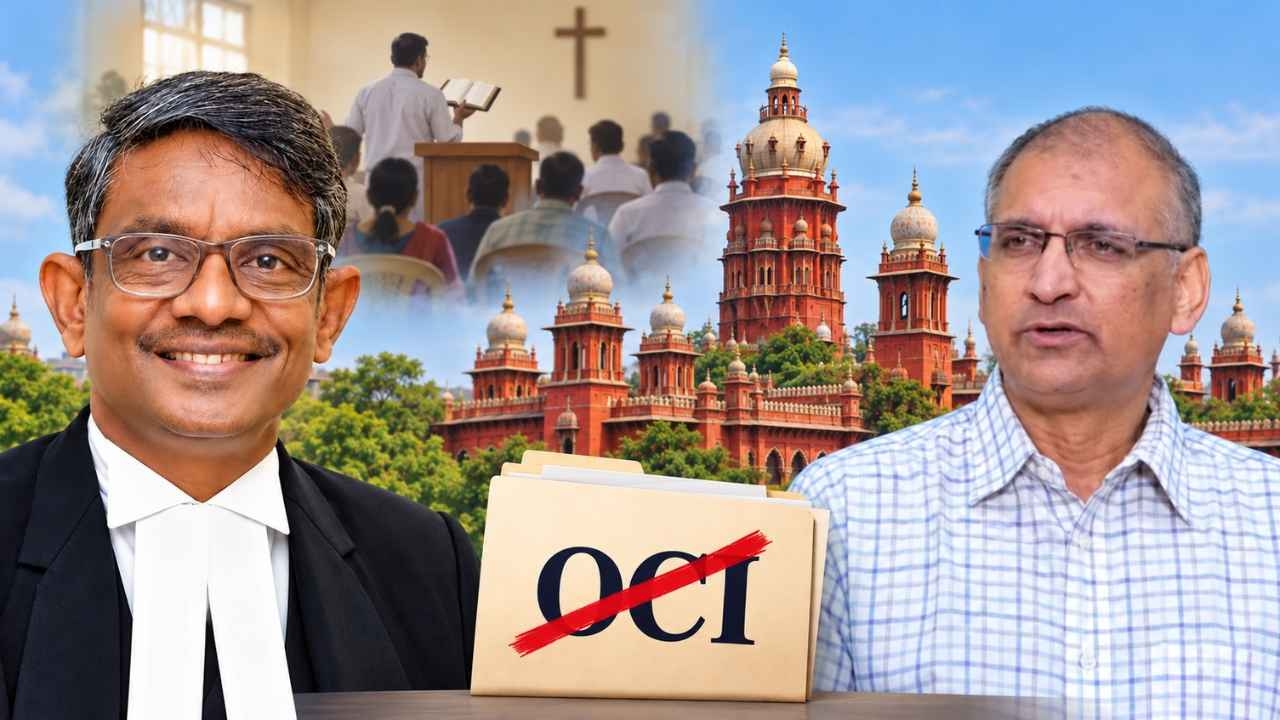
The Madras High Court has upheld the cancellation of an American citizen’s Overseas Citizen of India (OCI) registration for undertaking missionary activities in India without obtaining the requisite permission, ruling that the regulatory requirement extends to religious preaching even when no specific conversion is established.
Justice D. Bharatha Chakravarthy dismissed a writ petition filed by John Daniel, an American citizen of Indian origin, challenging the 4-September-2026, order cancelling his OCI registration under Sections 7D(da) and 7D(e) of the Citizenship Act, 1955. The Court held that preaching and activities intended to spread the message of a religion could constitute missionary activity requiring prior permission under the applicable government notification.
The judgment, reported in John Daniel v. Union of India and Others (Neutral Citation: 2026:MHC:4303), clarifies the conditions governing OCI privileges in relation to missionary activities.
OCI Privileges Subject to Conditions
The Court referred to Section 7B of the Citizenship Act and the Central Government’s notification S.O. 1050(E), which governs specified activities undertaken by OCI cardholders. Under the framework considered by the Court, special permission must be obtained from the competent authority, including the Foreigners Regional Registration Officer or the concerned Indian Mission, before undertaking missionary, public, mountaineering or journalistic activities.
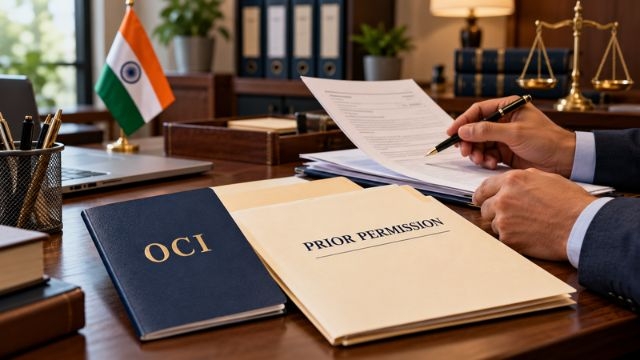
The Bench observed that OCI registration carries specified privileges but remains subject to statutory conditions and restrictions. Undertaking missionary activities without the required permission could therefore attract cancellation under Section 7D(da) of the Act.
The Court stated that activities involving preaching and spreading the message of God fall within the meaning of missionary activity and consequently require prior permission.
Material Indicated Religious Meetings in Tamil Nadu and Andhra Pradesh
Daniel, who received OCI registration in February 2015, maintained that he visited India primarily to meet his aged mother and other relatives. He denied engaging in missionary activities or promoting religious conversions and disputed the authorities’ allegations concerning his association with the Laymen’s Evangelical Fellowship International.
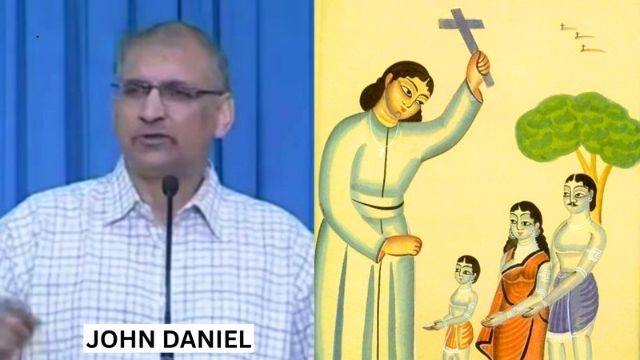
A show-cause notice issued in September 2025 alleged that he had conducted religious lectures, prayers and missionary activities in parts of Tamil Nadu and Andhra Pradesh without the necessary permission.
The Union authorities relied on posters, online material and information concerning religious meetings addressed by Daniel between 2017 and 2019. The material included advertisements inviting members of the public to attend religious gatherings.
The High Court found that the material indicated that Daniel had addressed congregations and meetings at various locations in the two States. It declined to treat the material as fabricated or concocted.

The Court emphasised that the question of compliance with the permission requirement was distinct from whether a particular religious conversion had been proved.
“It is not only for conversion, but even to be a missionary preaching his religion, it is only a prior permission that is mandated,” the Bench observed.
Court Rejects Plea for Further Opportunity of Hearing
Daniel also contended that the authorities had not adequately identified the incidents and evidence relied upon against him and that material subsequently produced before the High Court had not been supplied to him, affecting his opportunity to respond.
He relied on the Delhi High Court’s decision in Ashok Swain v. Union of India and Others (2025), concerning the disclosure of relied-upon material and the opportunity to answer allegations.
The Madras High Court observed that the principles of natural justice must be applied in light of the circumstances of each case. It noted that Daniel had made a categorical denial of any missionary activity in India rather than disputing individual incidents identified by the authorities.
Finding that this denial was inconsistent with the material before it, the Court rejected his plea for a further detailed opportunity to respond. It held that relief under Article 226 of the Constitution could not be extended in the circumstances of the case.
Madras HC Ruling Follows the recent case Involving OCI Cardholders’ Missionary Activities in Pune, Maharashtra
The Madras High Court ruling comes amid other reported cases involving OCI cardholders accused of undertaking religious activities without the required permission.
In August 2026, Pune Police registered an FIR against Pankaj James Devnoor, a UK-based OCI cardholder, over allegations that he attempted to attract people to Christianity during a religious programme in the city’s Guruwar Peth area. According to reports, the complainant alleged that Devnoor used Hindu devotional terminology and musical traditions while preaching Christianity to an audience of around 80-100 people. Devnoor was granted interim anticipatory bail, the case remained under investigation.
OCI Registration Cancellation Upheld
The Madras High Court dismissed the writ petition and upheld the cancellation of Daniel’s OCI registration. It clarified, however, that he remained free to apply for a regular visa to visit his mother and could undertake religious meetings or missionary activities in India after obtaining the requisite official permission.