Why Does Father Want to Hide the Identity?
Father Ran Zen Center While Concealing Identity: Madras High Court Rejects FCRA Registration
Total Views |


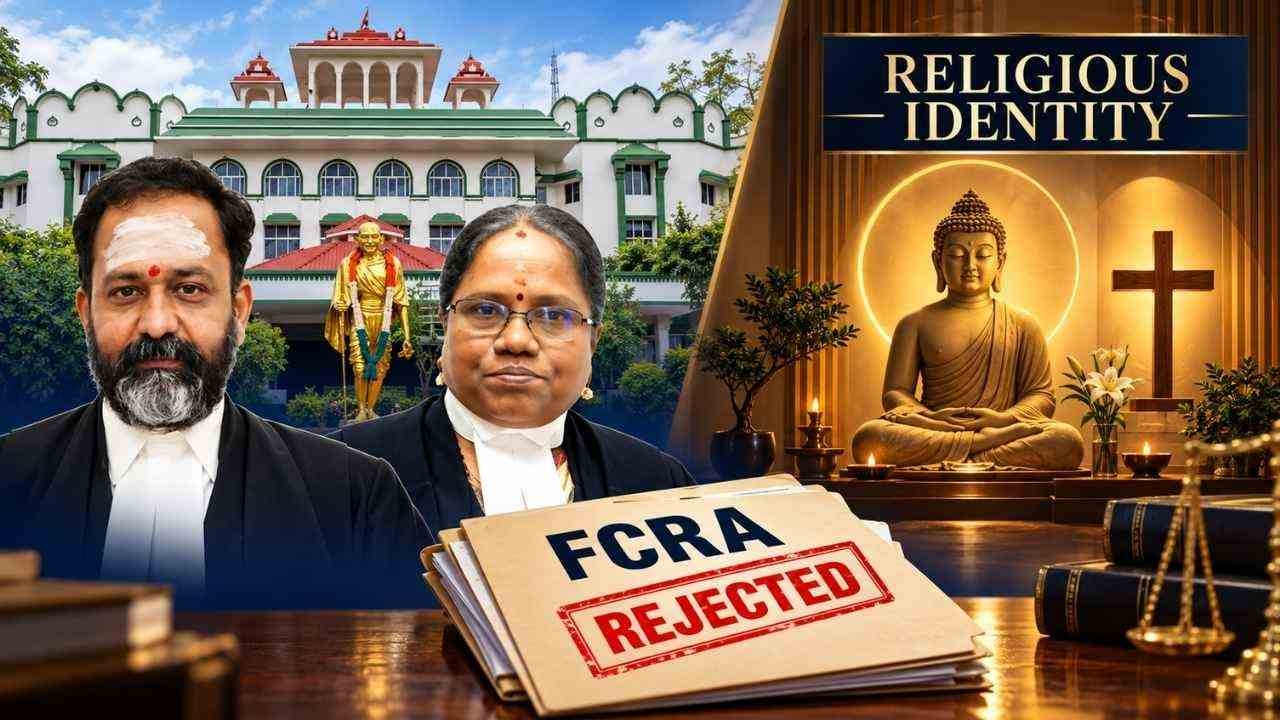
The Madurai Bench of the Madras High Court has upheld the Central Government’s decision to reject the Foreign Contribution Regulation Act (FCRA) registration application of the Kodaikanal-based Conizon Public Charitable Trust. This trust operates a Zen meditation center and a Montessori school.
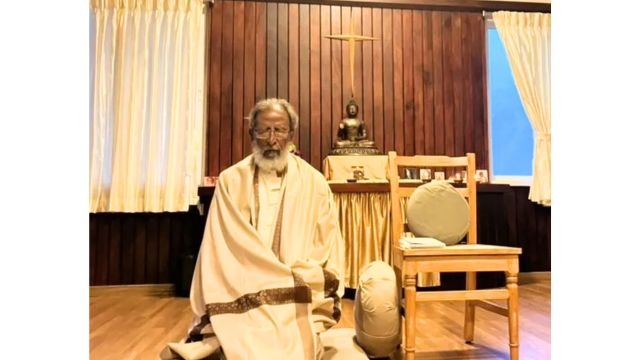
The Court explicitly noted that the trust’s key figure and “moving spirit”, Rev. Fr. Ama Samy S.J., is an ordained Christian father. Yet, the trust did not truthfully disclose its religious nature in the application. While claiming to follow Zen Buddhist philosophy, a Christian cross was prominently displayed alongside a statue of Buddha at the center. The Court viewed this as a concealment of identity and a failure to provide adequate information.
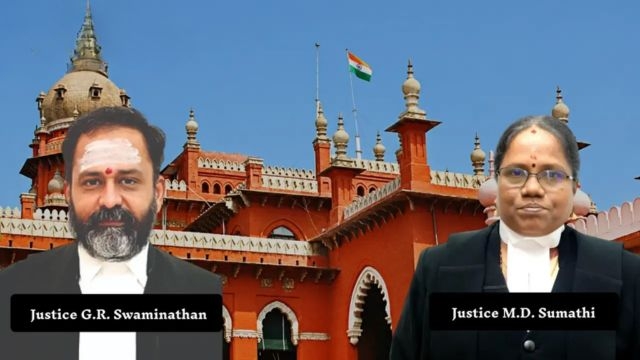
A bench comprising Justice G.R. Swaminathan and Justice M.D. Sumathi remarked, “One cannot keep a card hidden up one’s sleeve. This is not a game of hide-and-seek.” The Court further observed that Christianity is a Messianic religion, and its theological mission is to bring everyone into the fold of Jesus Christ. “Hinduism is inclusive, whereas Abrahamic religions are exclusive by nature,” the court observed.
The court clarified that religious organizations whose activities do not affect the country’s secular framework and social harmony may be granted FCRA registration. However, registration should not be granted to organizations that facilitate conversion from one religion to another; this rule applies to all religions. The court further stated that while it was not directly accusing this specific trust of conversion activities, registration could be denied due to the concealment of identity in the application.
Significant Ruling by the Madras High Court:
FCRA Registration Denied to Conzion Trust – The Madurai Bench of the Madras High Court upheld the Central Government’s decision to reject the FCRA registration application of the Kodaikanal-based Conzion Public Charitable Trust. The trust operates a Zen meditation center and a Montessori school. The court noted that the trust had not provided accurate information regarding its religious nature; although it claims to follow Zen Buddhist philosophy, the key figure behind it is an ordained Christian priest (Rev. Fr. Ama Samy S.J.).
_202610091632063592_H@@IGHT_360_W@@IDTH_640.jpg "3 image (3)")
A Christian cross was prominently displayed alongside a statue of Buddha at the center. A bench comprising Justice G.R. Swaminathan and Justice M.D. Sumathi stated that religious organizations whose activities do not adversely affect the country’s secular framework and social harmony may be granted FCRA registration; however, organizations involved in converting individuals from one religion to another should not be granted such registration. This rule applies to all religions.
The court surprises us!
The Court further observed, “Hinduism is inclusive, whereas Abrahamic religions are exclusive by nature. Christianity is a messianic religion, and its theological mission is to bring everyone into the fold of Jesus Christ.” The Court clarified that it was not accusing the specific trust in question of conversion activities but was articulating a general principle. The trust was established in 2021 and is registered under the Income Tax Act; it had applied for FCRA registration, which was rejected by the Ministry of Home Affairs.
_202610091632263592_H@@IGHT_360_W@@IDTH_640.jpg "4 image (3)")
The High Court dismissed the appeal on October 6, 2026. This decision underscores the need for stricter scrutiny and greater transparency regarding religious organizations that receive foreign funding. The Court also clarified that there is no inherent right to receive foreign contributions; it is merely a privilege. The trust was established in 2021 and is registered under the Income Tax Act. It had applied for FCRA registration, which was rejected by the Ministry of Home Affairs.
The High Court dismissed the appeal on October 6, 2026, stating that there is no inherent right to receive foreign contributions; it is merely a privilege. This decision underscores the necessity for organizations receiving foreign funds to maintain complete transparency regarding their religious identity and activities.
The court has taken a strict view of instances where entities operate by concealing a pastor’s identity or functioning in a mixed manner.