TVK Government Files Review Against SC’s One-Time Permission for Karthigai Deepam at Thiruparankundram
State challenges limited festival permission citing communal harmony even as court restricted order to one day under official supervision
Total Views |


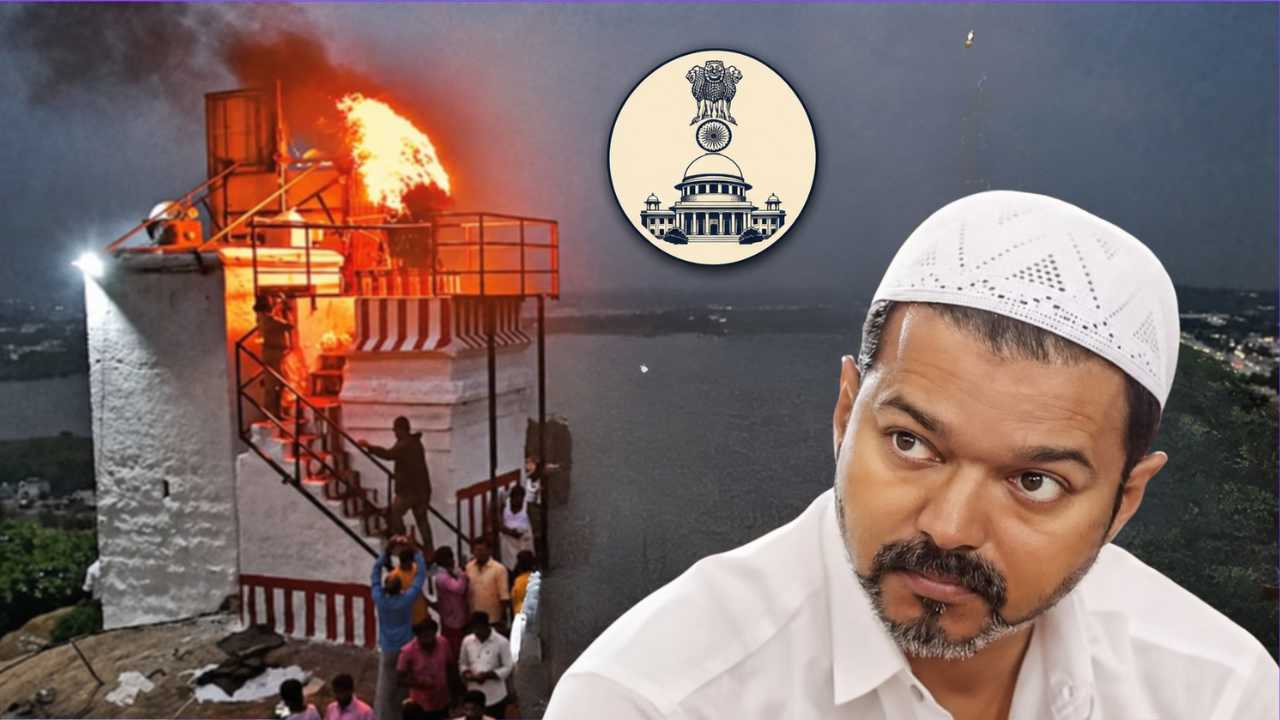
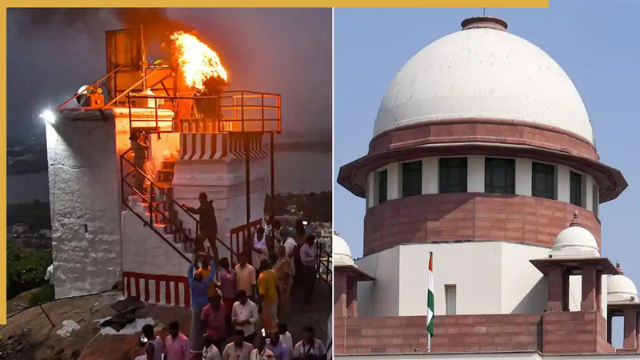
On 22 November 2026, the Tamil Nadu government led by Chief Minister C. Joseph Vijay of the Tamilaga Vettri Kazhagam moved a review petition in the Supreme Court seeking to overturn the apex court’s 20 November order that permitted the lighting of the Karthigai Deepam at the Deepathoon on Thiruparankundram Hill. The court had allowed the ritual for 24 November only, restricting participation to authorised temple officials and government personnel and making clear that the permission conferred no permanent right, custom or claim over the site.
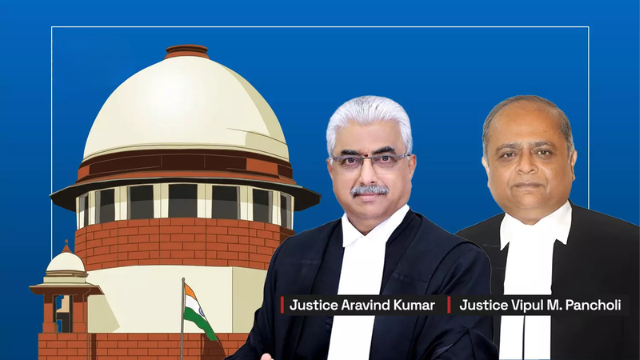
A bench of Justices Aravind Kumar and Vipul M. Pancholi had granted the limited relief after noting that denying the lighting on the festival day itself would leave the devotees with no meaningful remedy later. The order was expressly confined to this year’s observance and declined to adjudicate larger questions of title or established practice.
The state government’s petition, filed through the Hindu Religious and Charitable Endowments Department, argues that an interim direction of this nature effectively grants final relief. It cites provisions of the Tamil Nadu Hindu Religious and Charitable Endowments Act, 1959, particularly those vesting administration in temple trustees and empowering the Joint Commissioner to decide questions of established usage. The petition maintains that no documentary proof of historical practice at the specific pillar has been placed on record and warns that even a one-time lighting could be read as judicial endorsement of future claims. It also flags the pillar’s proximity to the Sikandar Badusha Dargah and the risk to communal peace.
Political reactions reflected divisions across party lines. The DMK pressed the TVK government to clarify its next steps, while the government’s allies raised concerns over the Supreme Court’s order. Congress spokesperson Manickam Tagore framed the issue as an attempt by Hindu organizations and the central government to disturb peace in the state, echoing the same line the party had taken when it was part of the earlier DMK government.
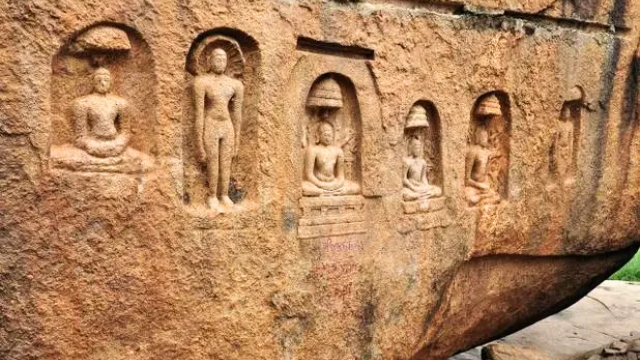
The hill itself has long housed multiple religious markers with the Subramaniya Swamy Temple dedicated to Lord Murugan at the base, Jain caves and inscriptions near the summit. Litigation over the Deepathoon began after devotees sought to light the ceremonial lamp there and met resistance from both local Muslim groups and the state. A single judge of the Madras High Court had earlier directed the temple administration to light the lamp; a division bench upheld that direction. The present Supreme Court order arises from the state government’s appeals against those High Court findings.
The government’s insistence on blocking even a strictly time-bound, court-supervised ritual raises an obvious question. The Supreme Court carefully limited its order to a single day observance under official supervision and disclaimed any larger recognition of rights. Yet the state still chose to challenge it hours before the festival. The stated concerns statutory process, lack of documentary proof, and communal harmony do not fully explain the urgency. The same political forces that invoke harmony when a Hindu ritual is at stake have shown little hesitation in expanding minority-focused welfare schemes, including tuition support for Muslim girl students, enhanced Waqf scholarships, and funding for infrastructure on minority properties.
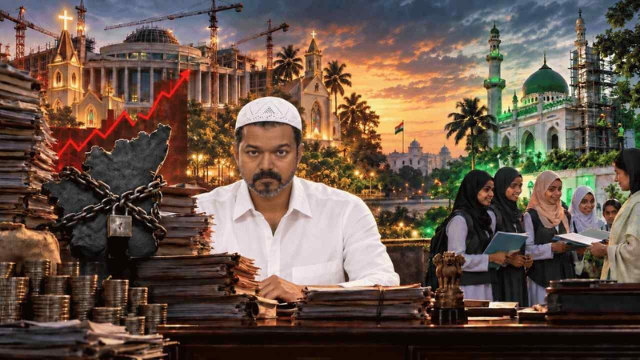
This episode fits a longer pattern in Tamil Nadu politics. Parties that present themselves as secular routinely treat any assertion of Hindu religious practice near sites claimed by other communities as a threat to social order, while demanding that Hindu traditions yield. The argument that Hindus must surrender claimed rights to prevent possible unrest is presented as responsible governance. It is, in practice, a selective standard that places the burden of restraint almost entirely on one community.
The Supreme Court’s narrow permission for 24 November was an attempt to preserve the ritual without prejudging the larger dispute. The state government’s decision to fight even that limited allowance reveals how deeply the politics of competitive minority accommodation has penetrated Tamil Nadu’s mainstream parties.
Written by
Kewali Kabir Jain
Journalism Student, Makhanlal Chaturvedi National Journalism and Communication University