Clerics Bow to Radical Pressure: Kashmir’s Religious Leaders Seek Allah’s Forgiveness for Standing During Vande Mataram at Official Waqf Event
Islamist backlash forces Kashmiri clerics to repent for respecting the national song at government Waqf function attended by Union Minister
The Narrative World 27-Nov-2026
Total Views |


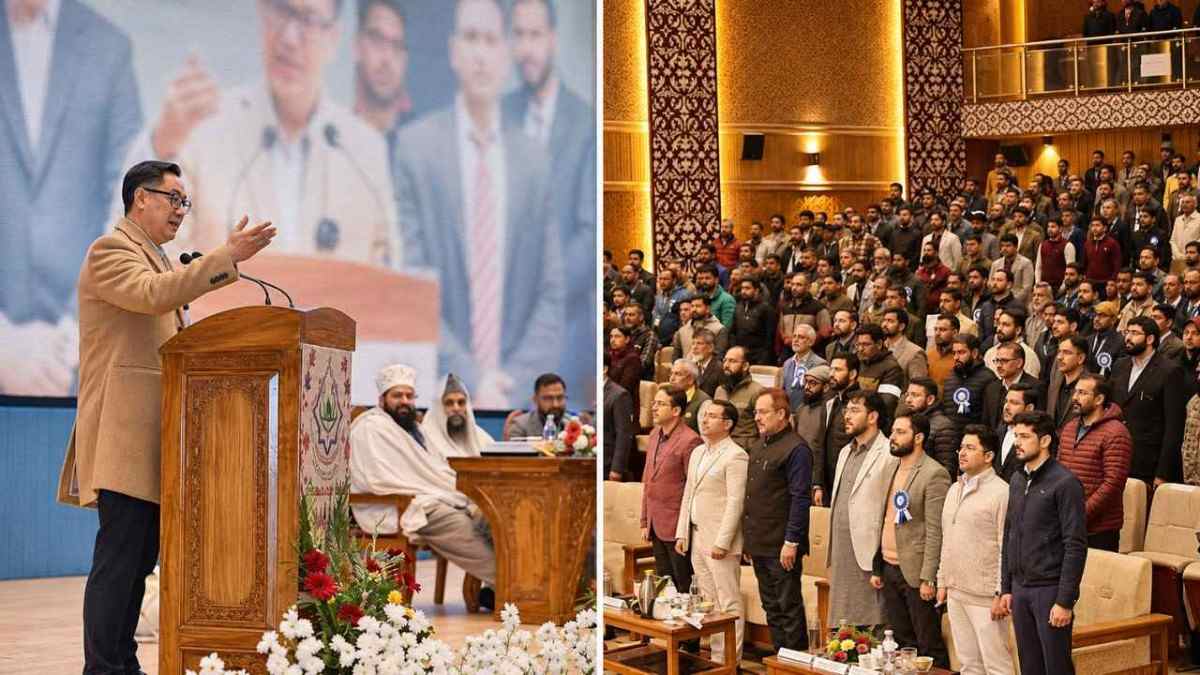
Several Muslim clerics in Kashmir sought Allah’s forgiveness in a November 25 statement after facing criticism for standing during India’s national song – ‘Vande Mataram’, at a Waqf Day event held in Srinagar on November 23.
In a telling display of the deep ideological fault lines that continue to challenge India’s national unity, several Muslim clerics in Jammu and Kashmir have publicly repent for the “sin” of standing when the national song Vande Mataram was played at an official government function. The first-ever Waqf Day celebration in Srinagar, organised under the leadership of BJP leader and J&K Waqf Board chairperson Darakhshan Andrabi, became the latest flashpoint after Islamist voices declared the mere act of respect for the national song an offence against their faith.
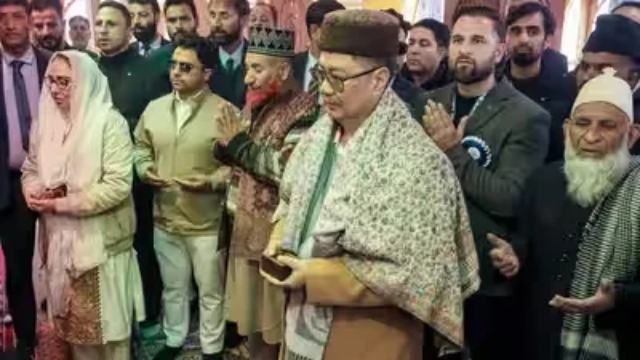
The event, held on 23 November 2026 at Sher-e-Kashmir University of Agricultural Sciences and Technology, was attended by Union Minority Affairs Minister Kiren Rijiju. As mandated by a January 2026 government order requiring the full six-stanza Vande Mataram to be played before the national anthem at specified official functions with the audience expected to stand, the national song was duly rendered. Several clerics present on the dais and in the audience complied.
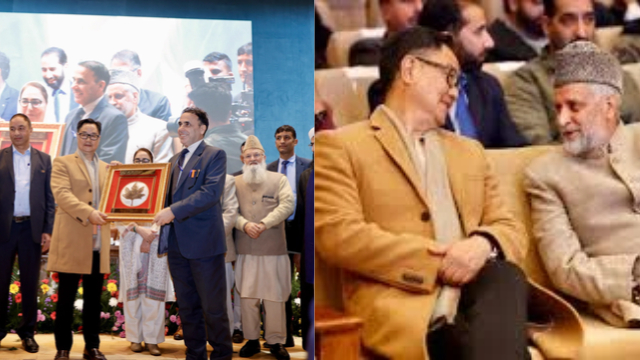
Within days, the backlash from within their own community proved intense. On 25 November, the clerics issued a collective statement expressing regret. They declared that if their participation had hurt anyone’s religious sentiments, they “sincerely repent before Allah” and prayed that their repentance be accepted. They further recited the Kalima as a reaffirmation of faith. The list of those who felt compelled to apologise included Mufti Syed Basharat, Mufti Farooq, Mufti Inayatullah Qasmi, Maulana Farooq, Moulana Basharat Saqafi, Pir Syed Ejaz, Maulana Zakir, Abdul Rashid Dawoodi, and imams associated with the Dastgeer Sahib and Hazratbal shrines.
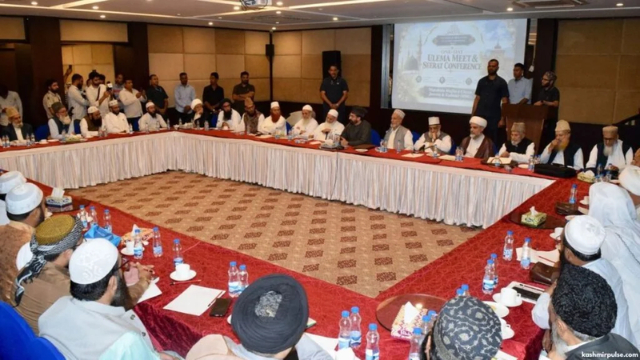
Their act of public contrition was promptly applauded by hardline voices. Maulana Rahmatullah, head of Darul Uloom Raheemiyyah, one of Kashmir’s largest seminaries, congratulated the clerics for their “immediate repentance” and claimed Allah must be pleased with them.
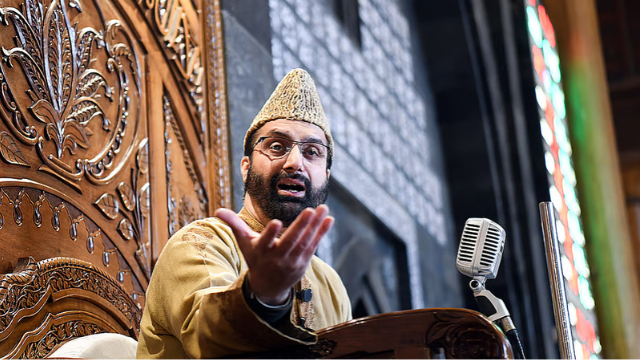
The sharpest institutional condemnation came from the Mutahida Majlis-e-Ulema (MMU), the umbrella body of religious organisations headed by Mirwaiz Umar Farooq. The MMU asserted that there can be “no compromise on Tawheed” and religious freedom. In its statement, the organization drew a rigid distinction between permissible love for the homeland and what it called the “worship or deification” of the motherland. Any such expression, it insisted, is “un-Islamic and impermissible for Muslims.” The body further warned religious leaders to uphold these principles “irrespective of any pressure, position or consideration” and indicated it was exploring legal options and preparing a formal representation to the authorities.
This episode exposes a persistent and deliberate refusal by a section of the religious leadership to accept the foundational symbols of the Indian Republic. Vande Mataram is the national song of a sovereign nation that has constitutionally guaranteed equal citizenship and religious freedom to all. The recent strengthening of the Prevention of Insults to National Honour Act, which now makes obstruction of the singing of Vande Mataram punishable with up to three years’ imprisonment, reflects the state’s determination to treat national symbols with the seriousness they deserve.
That clerics felt compelled to seek divine forgiveness merely for standing during the national song while an official Union minister was present reveals the depth of the ideological capture that still operates in parts of Kashmir. Respect for the symbols of the nation is not optional for those who claim to be Indian citizens, nor can it be subordinated to an exclusivist interpretation of faith that treats the motherland as a rival to God.
The organisers of the Waqf Day event, by conducting the function in accordance with national protocol, acted correctly. The subsequent spectacle of public repentance only underscores how far certain sections remain from internalising the idea of a shared national identity.
Written by
Kewali Kabir Jain
Journalism Student, Makhanlal Chaturvedi National Journalism and Communication University

नैरेटिव डेस्क
नैरेटिव डेस्क