Building an AI-Ready Generation: Inside Northeast Bharat’s Bold Education Push
State-led initiatives across Nagaland, Assam and Arunachal Pradesh are integrating AI, robotics and drone training into schools to strengthen skills and future employability.
Total Views |


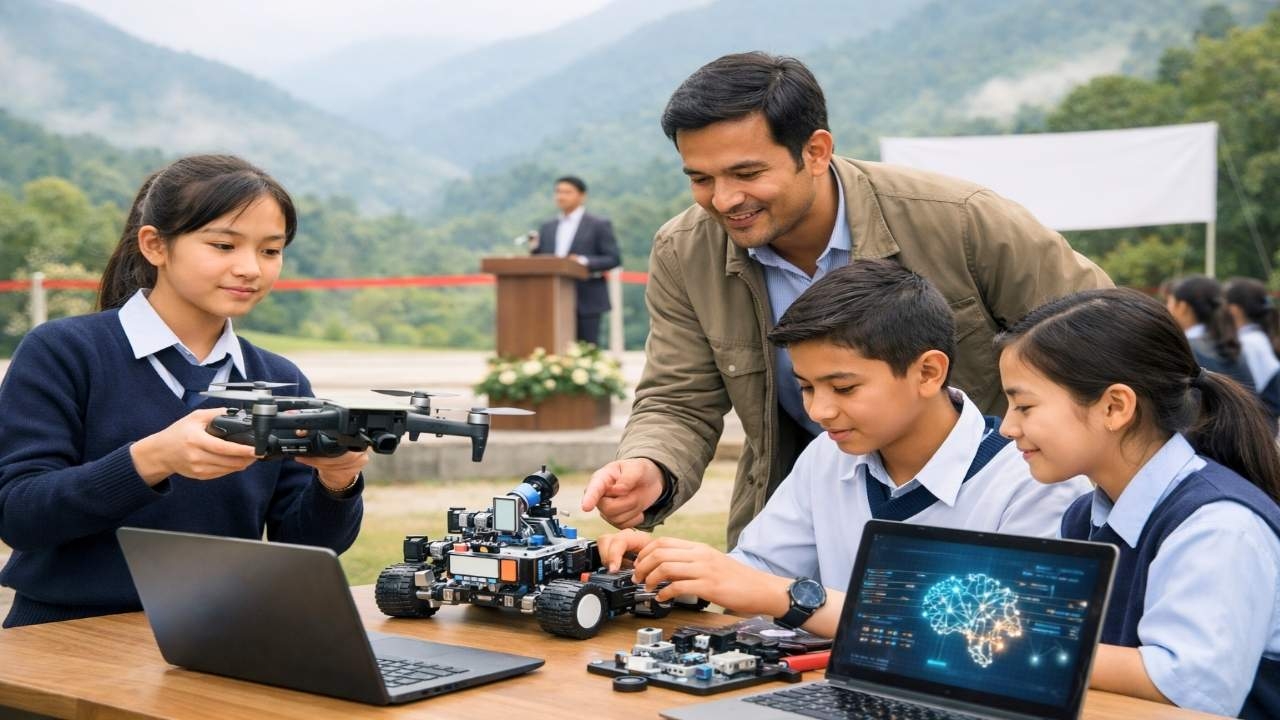
With the inauguration of Nagaland's first Drone School and Drone Centre of Excellence in Kohima, Northeast Bharat has taken a decisive step towards future-oriented education rooted in emerging technologies. Launched on Republic Day, this initiative symbolises a broader and coordinated push across the region between 2024 and 2026 to align education systems with the demands of the digital economy, innovation ecosystems and inclusive growth.
Technology as the New Education Backbone
Across Nagaland, Arunachal Pradesh, Assam, Mizoram, Sikkim and Tripura, state governments have increasingly prioritised technology-enabled learning as a central pillar of education reform.
Nagaland's Drone School and Centre of Excellence offers DGCA-compliant remote pilot certification along with hands-on training in drone operations, maintenance and data analytics. The programme aims to enhance employability while also supporting governance, disaster management and future industrial applications.
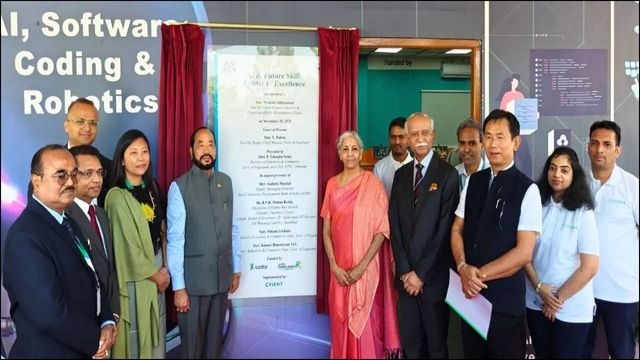
At the same time, Nagaland has emerged as a hub for AI-driven skilling. The AI Centre of Excellence, inaugurated by Union Finance Minister Nirmala Sitharaman, and the SAMARTH project launched at NIELIT Kohima are introducing artificial intelligence, robotics and digital hardware education to school students across the Northeast. These initiatives place special emphasis on reaching learners in remote and underserved areas, ensuring that technological advancement does not remain confined to urban centres.
Arunachal Pradesh: Building an AI-Ready Generation
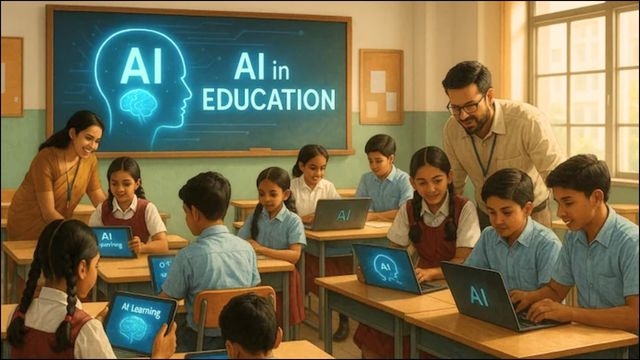
Arunachal Pradesh has adopted a multi-layered approach to artificial intelligence education. Between December 2025 and January 2026, the state rolled out AI Explorer boot camps for school students from Classes 6 to 12, alongside AI Job Ready programmes for college students and graduates. Collaborations with premier institutions such as IIT Delhi have ensured hands-on training, offline classrooms, project-based learning and structured career preparation.
Beyond skill development, the state has also used AI to promote inclusion. The distribution of AI-powered KIBO reading devices to visually and hearing-impaired students has enabled independent access to printed and digital content in local languages. This intervention reinforces the government's commitment to equitable education and accessibility for students with disabilities.
Assam's Focus on Teachers, Girls and Rural Students
Assam's education reforms reflect a systemic and long-term approach. With central support, IIT Guwahati has been training government school teachers to deliver AI curricula and has contributed to the co-authoring of AI textbooks for Classes 11 and 12. This strong focus on teacher capacity building ensures sustainability, consistency and quality in the rollout of artificial intelligence education.
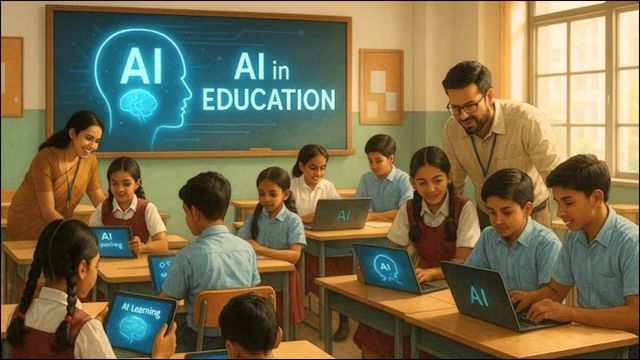
In parallel, the Artificial Intelligence Quotient programme has introduced structured AI education to rural students from Classes 6 to 12. By targeting learners outside urban centres, the initiative seeks to bridge the persistent urban-rural digital divide.
On the social front, the Mukhya Mantrir Nijut Moina 2.0 scheme has significantly strengthened girls' access to higher education. By providing monthly financial assistance from higher secondary level through to postgraduate studies, the scheme directly addresses dropout rates and gender disparity, particularly among economically vulnerable households.
Innovation Reaches the Last Mile
Several initiatives across the region demonstrate how technology-led education is being adapted to local needs and realities.
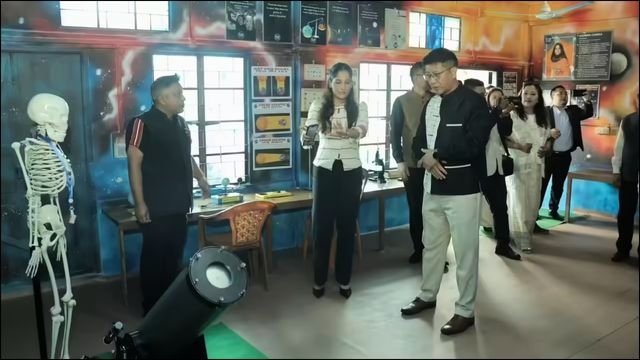
In Mizoram, Cosmic Classrooms established in Lunglei have introduced astronomy laboratories, scientific equipment and modern learning resources in government schools. These facilities promote experiential learning and foster scientific curiosity among students.
Tripura has adopted an innovative approach through AI-powered Aspirational Boards. These boards use artificial intelligence to generate visuals of students achieving their dream careers, helping reduce dropouts by strengthening emotional engagement with education and long-term goal setting.
Sikkim's 'AI on Wheels' initiative has taken mobile AI literacy directly to schools using travelling vans. This model ensures access to digital learning in remote and underserved areas where permanent infrastructure remains limited.
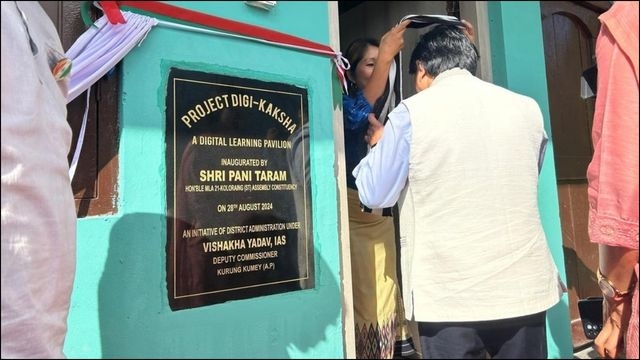
In Arunachal Pradesh's Kurung Kumey district, Project Digi Kaksha has addressed foundational literacy, numeracy and infrastructure gaps. The programme integrates digital classrooms with activity-based teaching methods, improving both learning outcomes and classroom engagement.
At the national level, NIELIT's AI in Education outreach has expanded artificial intelligence and robotics learning to remote regions across the Northeast. Through teacher training programmes and local study centres, the initiative continues to reinforce digital inclusion and capacity building at the grassroots.
A Coordinated Vision for Future-Ready Education
Collectively, these initiatives highlight a decisive strategic shift towards technology-driven education in Northeast Bharat, with artificial intelligence and drone technology positioned at the core of future learning frameworks. The coordinated involvement of the Centre, state governments, premier institutions such as IITs and NIELIT, and district administrations reflects a strong collaborative governance model that enhances both implementation capacity and outcomes.
Equally important is the targeted focus on rural learners, girls, tribal communities and students with disabilities. This approach underscores a clear commitment to inclusive and equitable education. Crucially, sustained investments in teacher training and curriculum development signal a long-term vision for human capital formation. Rather than focusing solely on short-term skilling, these reforms aim to build a resilient, adaptable and future-ready workforce capable of driving the region's socio-economic transformation.
Written by

Kewali Kabir Jain
Journalism Student, Makhanlal Chaturvedi National University of Journalism and Communication