Fifty Years On, Women Stand at the Core of the Indian Coast Guard’s Success
The rise of women from rural and regional backgrounds highlights how the Coast Guard combined national service, social mobility and professional excellence in its operational evolution.
Total Views |


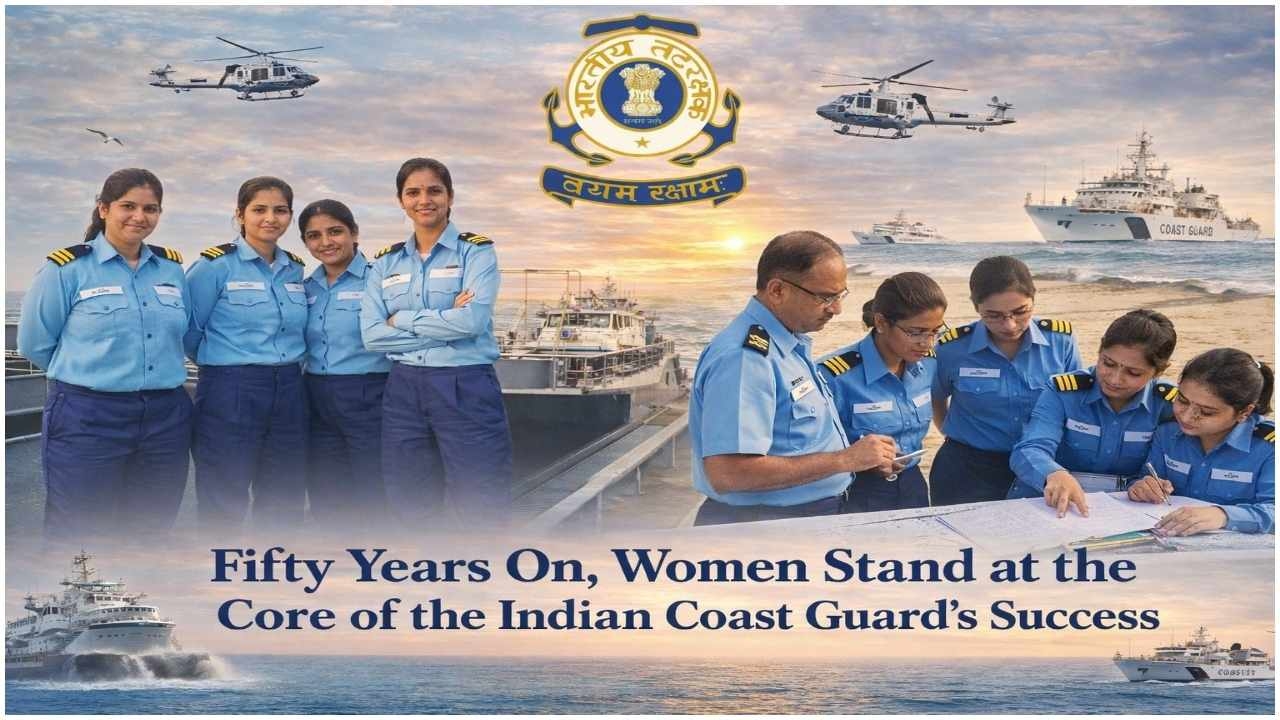
As the Indian Coast Guard marks its 50th Raising Day on 1 February 2026, the force stands not merely as a maritime security institution, but as a symbol of institutional reform, meritocracy, and national resolve. From a modest beginning in 1977 with just seven surface platforms, the Coast Guard today operates 155 ships and 80 aircraft, safeguarding India’s vast maritime interests. Parallel to this operational expansion has been a quieter yet equally historic transformation, the steady rise of women officers into frontline, command, aviation, and strategic leadership roles.
Between 2011 and 2026, women in the Indian Coast Guard moved decisively from peripheral postings to the very heart of high-risk maritime operations. This report documents twelve landmark achievements that collectively illustrate how the force embraced gender-inclusive, capability-driven leadership without compromising operational effectiveness.
Women on the Frontline
A watershed moment arrived on 1 February 2017, when the Indian Coast Guard became the first Indian armed force to deploy women officers in active frontline combat roles. Posted aboard Air Cushion Vehicles or hovercrafts, women Assistant Commandants undertook sensitive patrols along the maritime borders near Pakistan and Bangladesh. These deployments were not symbolic. The officers intercepted suspicious vessels, pursued smugglers, and carried out dangerous boarding operations that had traditionally remained male-only responsibilities.
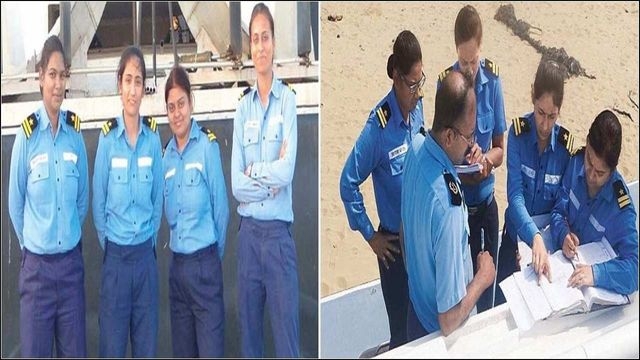
This decision reflected institutional confidence in training, competence, and leadership rather than tokenism. It also laid the foundation for future operational parity across maritime roles.
Hovercraft Command and Sea-Borne Leadership
The year 2019 marked another operational breakthrough. On 8 March, women officers including Captain Anuradha Shukla and Deputy Commandant Shirin Chandran became among the first to independently command and operate Coast Guard hovercrafts during live patrols off the Chennai coast. Hovercraft operations remain among the most demanding assignments in the force, requiring rapid decision-making, technical mastery, and physical endurance.
Their successful command conclusively demonstrated that frontline maritime leadership depends on skill and professionalism, not gender.
Aviation: From Villages to the Skies
Women’s integration into Coast Guard aviation began as early as 2011, challenging entrenched social and institutional barriers. Commandant Pilot Rajyashree Rathore, hailing from a Hindi-medium background in rural Rajasthan, emerged as one of the first women pilots in the Indian Coast Guard. She flew Dornier aircraft on surveillance and reconnaissance missions, contributing directly to maritime domain awareness.
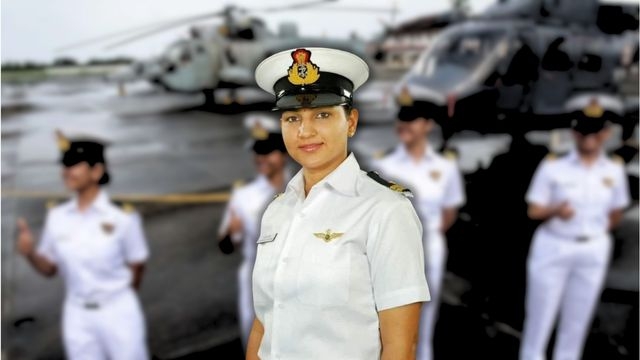
In the same year, Puja Patel became the first woman from Kutch in Gujarat to be commissioned as a Coast Guard pilot. She fulfilled a childhood dream while playing a critical role in coastal security and search-and-rescue missions. Their journeys highlighted how the Coast Guard became a vehicle for social mobility anchored in national service.
Leadership Beyond the Deck: Rank and Recognition
Institutional maturity became evident in March 2020, when Nupur Kulshrestha, commissioned in 1999, became the first woman Deputy Inspector General of the Indian Coast Guard. Her promotion reflected more than two decades of operational credibility in a force entrusted with real-time maritime contingencies.
National recognition followed in January 2026. On Republic Day, Commander Indu P. Nair received the President’s Tatrakshak Medal for over twenty-two years of distinguished service, particularly for strengthening maritime law enforcement through legal and policy frameworks. Her career highlighted the expanding role of women in strategic, legal, and institutional decision-making within uniformed services.
Republic Day Parade: Visibility of Command
The Republic Day Parade 2026 offered a defining visual statement of Nari Shakti in uniform. Assistant Commandant Nishi Sharma led the all-women Indian Coast Guard contingent along Kartavya Path, while Assistant Commandant Chunauti Sharma commanded marching units. These moments did not represent ceremonial exceptions. They resulted from years of operational grooming, leadership training, and institutional trust.
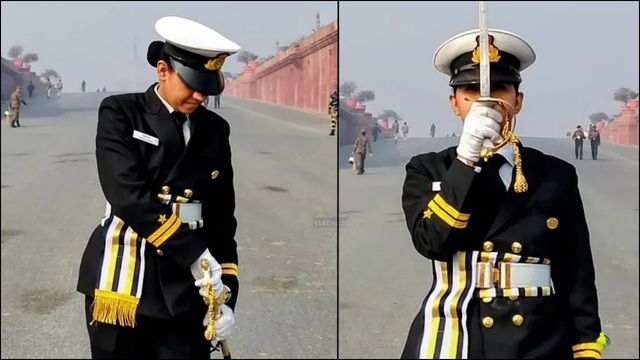
Such visibility matters not as spectacle, but as affirmation that women officers now represent the Indian Coast Guard on the nation’s highest ceremonial platform.
Environmental Security and Emerging Domains
In January 2026, women officers Anuja Sahni and Vasudha Chandra were appointed aboard ICGS Samudra Pratap, India’s first indigenously built pollution control vessel. Their deployment reflected the Coast Guard’s evolving mandate, where environmental protection, pollution response, and maritime sustainability form integral components of national security.
Women officers now actively shape India’s blue economy agenda and environmental resilience, further expanding the operational canvas of the force.
Roots in Bharat: Representation and Resolve
Equally significant is the social geography of these achievements. Officers such as Sonali Mankoti, the first woman from Kumaon to join the Indian Coast Guard, left behind a high-paying corporate career to serve the nation. Her journey from a village in Uttarakhand to commissioning at the Indian Naval Academy exemplifies the Bharatiya ethos of duty over comfort.
Collectively, these twelve milestones underline a deeper institutional truth. The Indian Coast Guard did not accommodate women through symbolic inclusion. It integrated them through performance, trust, and responsibility. As the force enters its next half-century, the role of women officers stands not as an exception, but as an established pillar of India’s maritime security architecture.
Written by

Kewali Kabir Jain
Journalism Student, Makhanlal Chaturvedi National University of Journalism and Communication