Bhojshala Verdict: Madhya Pradesh High Court Affirms Hindu Civilisational Truth
The court stated that archaeological evidence and historical records clearly establish Bhojshala as a Hindu temple dedicated to Goddess Saraswati in Dhar.
Total Views |


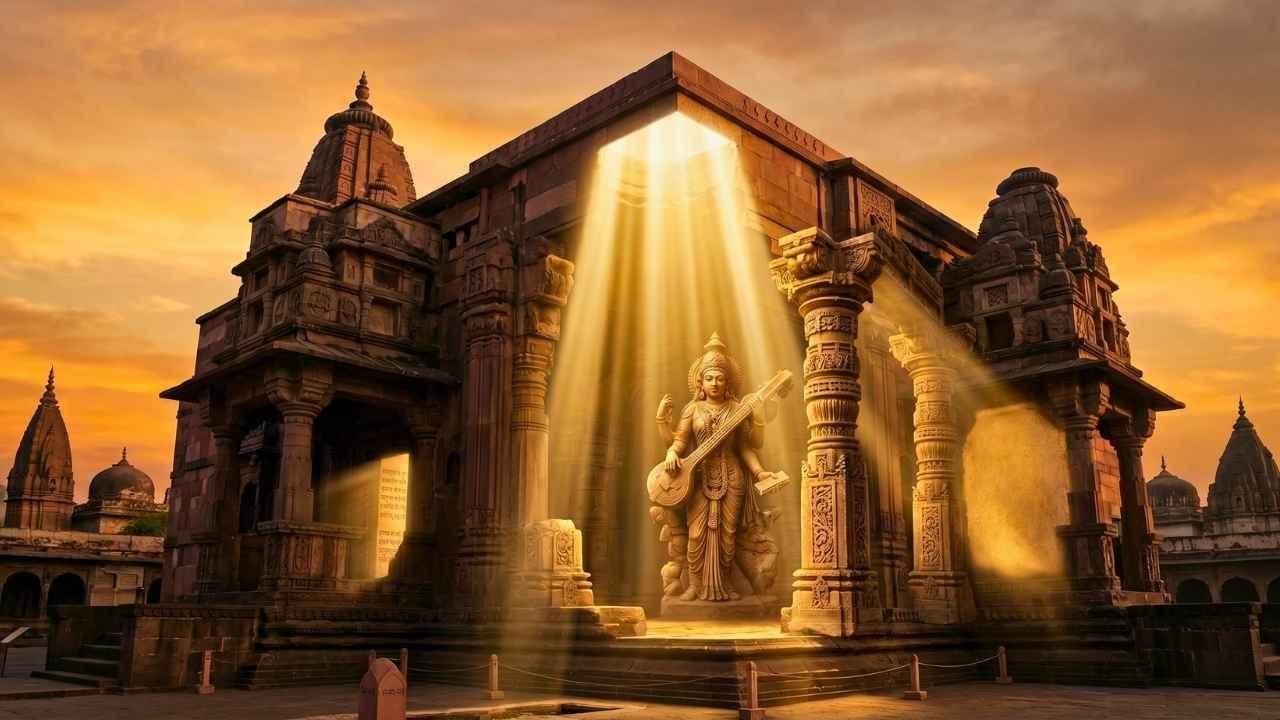
In a landmark judgment that upholds historical truth, archaeological evidence and civilisational continuity, the Madhya Pradesh High Court has declared the Bhojshala complex in Dhar to be a Hindu temple dedicated to Goddess Saraswati. The court has directed that the Muslim side be provided with alternative land for a mosque, effectively ending the decades-old practice of sharing the sacred site.
The judgment comes after years of legal struggle and follows a comprehensive scientific survey conducted by the Archaeological Survey of India (ASI), which left little doubt about the site's original character.
Raja Bhoj's Saraswati Temple: A Centre of Learning
Bhojshala was established by the legendary Parmar king Raja Bhoj (1010–1055 CE), one of the greatest rulers and scholars of medieval India. Historical records mention the construction of the Saraswati Sadan around 1034 CE as a temple and centre for Sanskrit learning and Vedic studies. Raja Bhoj, known as a patron of arts, literature and education, built it as a temple dedicated to Goddess Vagdevi (Saraswati).
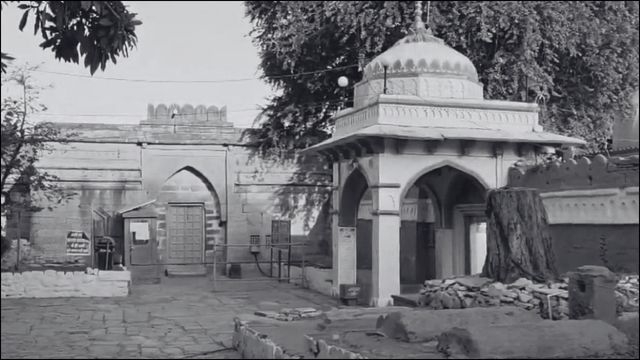
This sacred site faced repeated invasions during the medieval period. Between 1305 and 1409, waves of attacks on Malwa led to structural alterations. By 1459, references to "Kamal Maula" began to appear, as later rulers attempted to repurpose the site. Despite these changes, its core identity as a Hindu temple endured in local memory and tradition.
ASI Survey: Overwhelming Evidence of Temple Origins
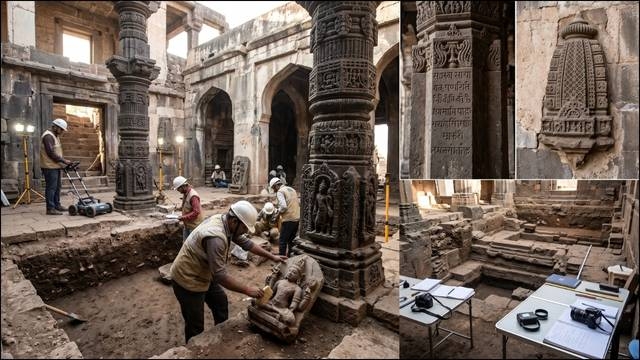
The High Court's decision rests heavily on the exhaustive 98-day scientific survey conducted by the ASI following a 2024 order. The report, spanning more than 2,000 pages across 10 volumes, provides compelling evidence of the site's temple origins:
- Remnants of a large Parmar-era temple structure.
- 106 pillars and 82 pilasters consistent with temple architecture.
- Numerous Sanskrit and Prakrit inscriptions in Nagari script, predating the Arabic and Persian inscriptions found at the site.
- Fragments of mutilated Hindu idols and sculptural elements.
- Indications that the existing structure was built hastily using materials from the original temple.
The survey employed advanced techniques, including Ground Penetrating Radar (GPR), scientific excavation and structural analysis. It confirmed that the present building incorporates parts of an earlier Hindu temple complex. The discovery and historical journey of the Vagdevi idol, found during 19th-century excavations and later taken to England, further strengthens the Hindu claim. Hindu organisations have consistently demanded its return.
The Long Timeline of Dispute and Assertion
The controversy intensified in the modern era:
1875: Claims emerged regarding the discovery of the Vagdevi idol during excavations.
1909: The complex was declared a protected monument.
1934: Administrative orders addressed competing claims over the site.
1952: Bhoj Utsav celebrations began on Vasant Panchami.
2003: A compromise arrangement allowed Hindu puja on Tuesdays and Muslim prayers on Fridays. This frequently led to tension whenever Vasant Panchami coincided with Friday prayers.
In 2022, the Hindu Front for Justice and the Bhoj Utsav Samiti approached the High Court seeking a scientific survey and restoration of the site's original character. The court's latest ruling in 2026 has now settled the core issue: Bhojshala is, and always has been, a temple.
The verdict is being widely welcomed as a triumph of evidence over narrative. It reinforces the principle that historical temples cannot be permanently erased through occupation or renaming. Similar to the Gyanvapi and other disputes, scientific scrutiny and judicial resolve are increasingly being viewed as instruments in reclaiming India's civilisational heritage.
Written by
Kewali Kabir Jain
Journalism Student, Makhanlal Chaturvedi National University of Journalism and Communication