Modi Government's Decisive War on Terror: 12 Years of 'New Bharat' and the Zero-Tolerance Doctrine
Uri, Pulwama and Pahalgam tested Bharat"s resolve, prompting the Modi government to adopt an increasingly assertive and uncompromising response to terrorism.
Total Views |


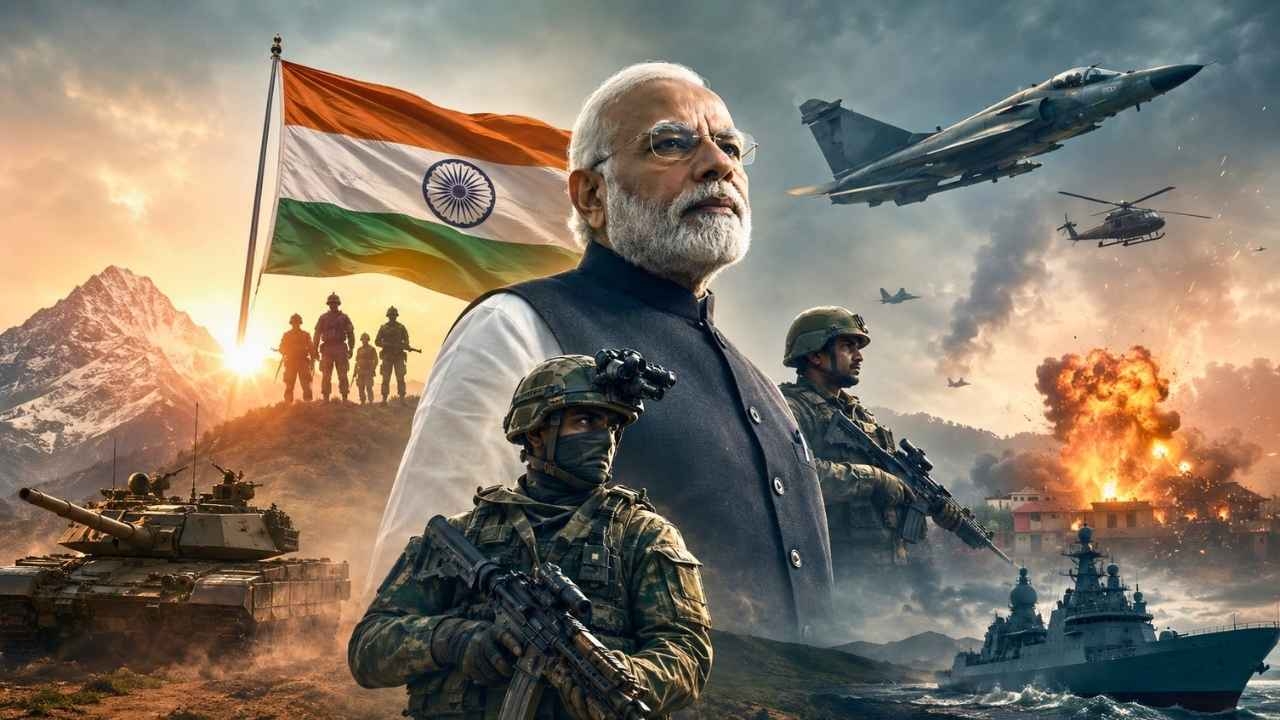
Over the past 12 years (2014–2026), under the leadership of Prime Minister Narendra Modi, India's national security apparatus and defence policy have undergone a historic and aggressive transformation. Shedding the historically defensive posture of the past, the Bharatiya Janata Party (BJP) government institutionalised a "Zero-Tolerance" policy against terrorism.
The message over the last decade has been unequivocal: Bharat will no longer hesitate to cross borders to neutralise threats and protect its sovereignty. Here is a detailed, data-backed analysis of how the Modi government dismantled terror networks and redefined India's response to cross-border terrorism.
Major Anti-Terror Military Operations
Over the past 12 years, the Modi government has executed three major cross-border military retaliations against terrorism. In 2016, following the attack on the Uri Army Base, Indian Special Forces conducted Surgical Strikes in Pakistan-occupied Kashmir (PoK), destroying multiple terror launch pads and neutralising dozens of terrorists. In 2019, in response to the tragic Pulwama attack on a CRPF convoy, the Indian Air Force launched the Balakot Airstrike, crossing deep into Khyber Pakhtunkhwa, Pakistan, to obliterate Jaish-e-Mohammed's largest training facility. Most recently, in response to the 2025 Pahalgam attack on tourists, the government launched Operation Sindoor, a massive offensive targeting nine locations across Pakistan and PoK. The operation reportedly resulted in the elimination of over 100 terrorists, the destruction of nine major terror camps, and the diplomatic suspension of the Indus Waters Treaty.
1. The 2016 Surgical Strikes: The First Definitive Retaliation
In September 2016, Pakistan-backed terrorists launched a deadly attack on an Indian Army brigade headquarters in Uri, Jammu & Kashmir, resulting in the martyrdom of 19 Indian soldiers.
Breaking away from the tradition of mere diplomatic condemnation, the Indian Army's Special Forces crossed the Line of Control (LoC) on the intervening night of 28-29 September 2016 and carried out precise Surgical Strikes. Indian commandos completely dismantled multiple terrorist launch pads located in PoK, inflicting heavy casualties on terrorists and their handlers. This operation marked a paradigm shift in India's military doctrine, moving from strategic restraint to active deterrence.
2. The 2019 Balakot Airstrikes: Crossing the Rubicon
On 14 February 2019, a suicide bombing in Pulwama claimed the lives of 40 CRPF personnel. The nation demanded justice, and the government promised a swift and uncompromising response.
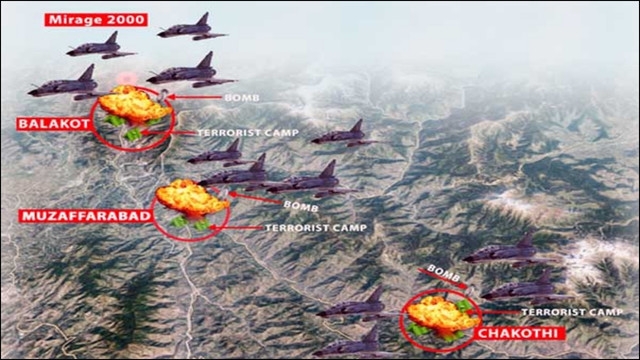
In the early hours of 26 February 2019, Indian Air Force (IAF) Mirage 2000 fighter jets crossed into Pakistani airspace and travelled deep into Khyber Pakhtunkhwa province to strike Balakot. Using precision-guided munitions, the IAF destroyed the largest training camp of the Jaish-e-Mohammed (JeM) terrorist group.
This operation marked a major milestone. It was the first time since the 1971 war that Indian fighter jets crossed the LoC to conduct a pre-emptive strike deep inside Pakistani territory. The strike reportedly neutralised a large number of terrorists, trainers, and senior commanders.
Operation Sindoor (2025): The Tri-Service Annihilation
On 22 April 2025, The Resistance Front (TRF), a proxy group of Lashkar-e-Taiba, carried out a brutal attack in Pahalgam, Kashmir, targeting tourists and killing 26 innocent civilians.
Between 7 May and 10 May 2025, the Modi government launched Operation Sindoor, a historic, intelligence-driven, tri-service military offensive involving the Army, Navy, and Air Force.
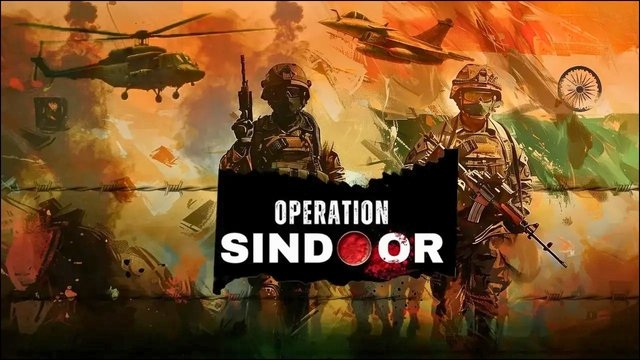
Using swarm drones and precision stand-off weapons such as SCALP and HAMMER missiles, the Indian Armed Forces destroyed nine major operational hubs belonging to Lashkar-e-Taiba (LeT), Jaish-e-Mohammed (JeM), and Hizbul Mujahideen in PoK and Pakistan's Punjab province.
The unprecedented scale of the operation reportedly led to the elimination of more than 100 terrorists, including several senior commanders. Alongside the military action, the government suspended the 1960 Indus Waters Treaty, a move presented as a significant strategic and economic pressure point against Pakistan. The decision reinforced the doctrine that "blood and water cannot flow together".
Systemic Eradication of Terror Over 12 Years
Beyond kinetic military operations, the BJP government sought to build a comprehensive domestic and international framework aimed at combating terrorism at its roots.
Abrogation of Article 370 (2019)
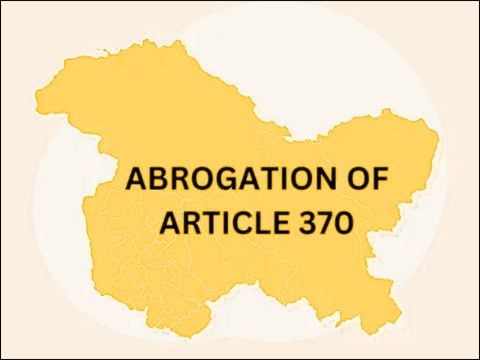
By revoking Jammu & Kashmir's special status and fully integrating the region with the Indian Union, the government sought to dismantle the political and social ecosystem that it argued had fuelled separatism. Official data has indicated a significant reduction in stone-pelting incidents and civilian casualties in the years following the abrogation.
Strengthening the UAPA
The Unlawful Activities (Prevention) Act (UAPA) was amended to grant broader powers to the National Investigation Agency (NIA). Among the most significant changes was the authority to designate individual persons as terrorists, thereby preventing them from operating through newly created proxy organisations.
Choking Terror Financing
Through sustained diplomatic engagement at the Financial Action Task Force (FATF), India played a key role in maintaining pressure on Pakistan through its placement on the FATF Grey List for an extended period. This increased scrutiny constrained Pakistan's ability to support proxy networks openly.
Domestically, the National Investigation Agency intensified its crackdown on hawala channels and terror-financing networks operating in the Kashmir Valley, disrupting funding pipelines that had sustained extremist activities for years.
Written by
Kewali Kabir Jain
Journalism Student, Makhanlal Chaturvedi National University of Journalism and Communication