CJP Before BRICS : What Lies Behind The September 5 March?
From US Embassy alerts and Khalistani funding offers to Sonam Wangchuk’s FCRA baggage, how a so-called student protest targets to embarrass India just days before the BRICS Summit
Total Views |


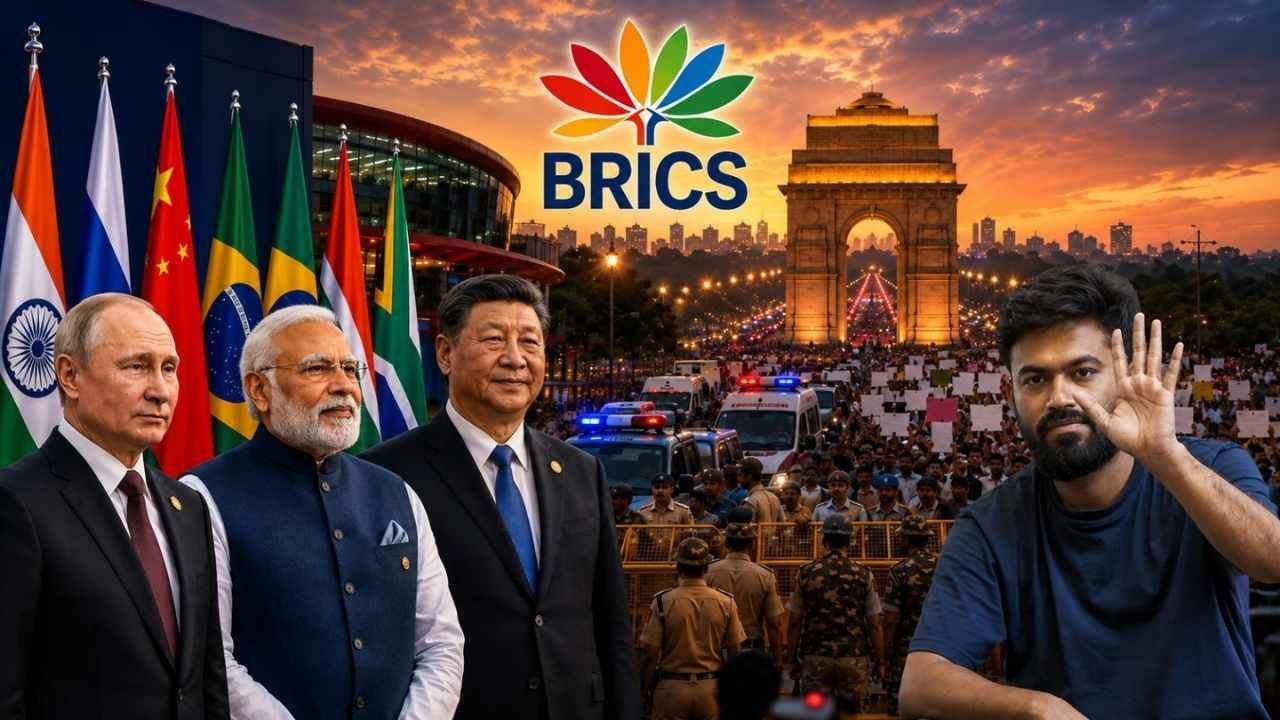
Cockroach Janata Party (CJP) founder Abhijeet Dipke has called a September 5 march in New Delhi, a week before the BRICS Summit, amid questions over foreign-linked support, political networks and the movement’s broader national-security implications.
CJP founder Abhijeet Dipke has called a “peaceful protest march” in New Delhi on 5 September 2026, beginning at India Gate and moving towards Delhi Police Headquarters.
Dipke has already described the earlier agitation as a mere “trailer.” September 5 is now the next major mobilisation. The timing is significant because India will host the 18th BRICS Summit in New Delhi on September 12-13, barely a week later. Russian President Vladimir Putin is expected to attend, while Chinese President Xi Jinping is also likely to participate.
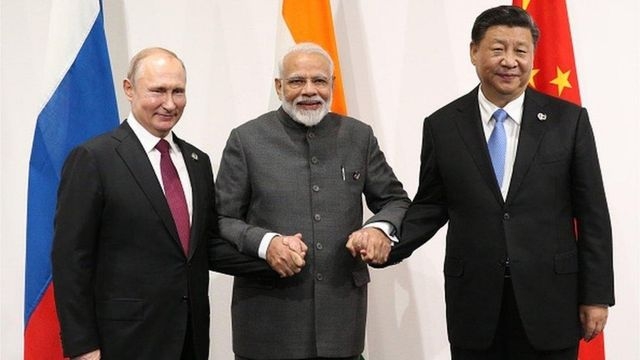
A high-visibility protest in the capital just before BRICS risks producing images of unrest, police deployment and a supposed “youth revolt” at the very moment Bharat seeks to project stability and Global South leadership.
How Did The US Know Before The March?
On 17 July 2026, three days before the July 20 “Sansad Chalo” mobilisation, the US Embassy in New Delhi issued a Demonstration Alert warning of expected protests around Jantar Mantar and Parliament House, heightened security and traffic disruptions.
Embassies routinely issue such advisories. Yet the timing and specificity still raised questions about how closely Washington was tracking a supposedly organic student mobilisation before it reached the streets.
The alert does not prove US involvement, but it adds another layer to the wider ecosystem developing around CJP.
Banned Khalistani Group Offers $1 Million to CJP
More troubling was the intervention of Sikhs for Justice (SFJ), the US-based Khalistani separatist organisation banned in India and led by Gurpatwant Singh Pannun.
Pannun publicly announced a 1 million dollar commitment to the CJP agitation, urging protesters not to negotiate with the Modi government, to continue their mobilisation until August 15 and to reject Independence Day celebrations.
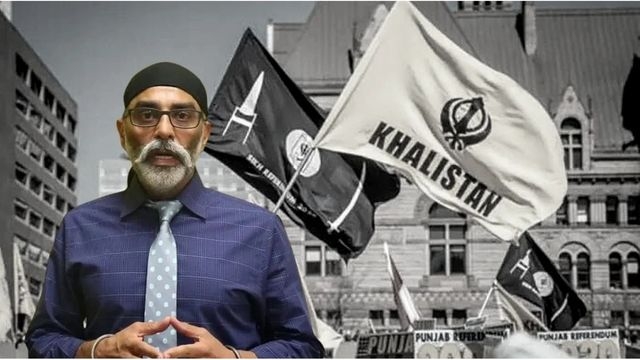
He later claimed that 2,50,000 lakh dollars had already been paid before freezing the remaining amount. That alleged transfer has not been independently verified.
But the central issue remains: why did a banned separatist organisation advocating India’s Balkanisation see enough utility in a so-called student movement to publicly pledge 1 million dollar? That itself is a serious national-security red flag.
Wangchuk, SECMOL and the Student Mask
Sonam Wangchuk’s involvement further complicates the picture. His organisation, SECMOL, had its FCRA registration cancelled by the Ministry of Home Affairs in September 2025 over foreign-funding violations and financial irregularities.
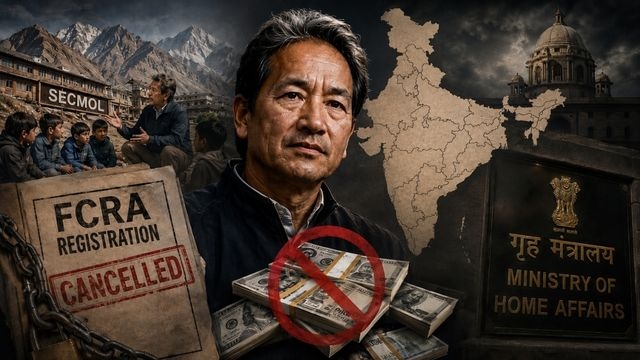
The Ministry of Home Affairs (MHA) flagged approximately 4.93 lakh rupees received from a Swedish organisation for projects touching on migration, food security and “sovereignty”, along with other accounting discrepancies.
Wangchuk had earlier welcomed Ladakh becoming a Union Territory, but later emerged as a prominent face demanding statehood and Sixth Schedule protections.
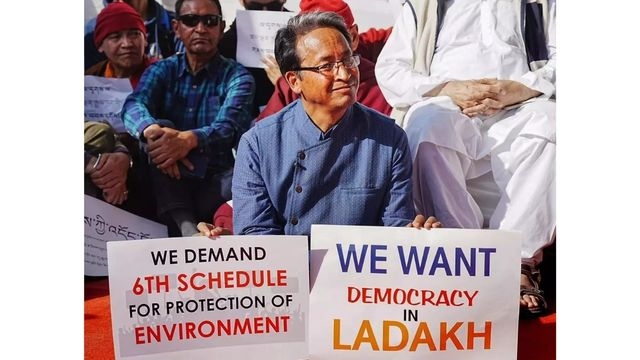
The issue is therefore larger than the image of an education reformer. His activism now sits at the intersection of foreign-funding controversy, street mobilisation and political demands concerning one of India’s most strategically sensitive border regions.
Presenting him merely as a harmless education icon ignores that political and national-security context.
Bangladesh Template: Student Anger to Political Upheaval
Bangladesh offers a warning. What began in 2024 as student protests over government-job quotas rapidly expanded into a nationwide political uprising that eventually brought down Sheikh Hasina’s government.
As the agitation widened, opposition and Islamist networks entered the political space. Indian reporting also pointed towards the role of Jamaat-e-Islami’s student wing and its historically reported links with Pakistan-based networks.
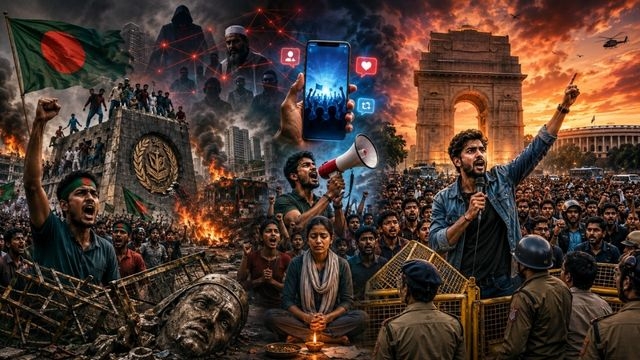
The lesson is straightforward: the “student” label does not mean only students remain in control once a movement acquires political momentum.
CJP’s model of viral digital mobilisation, hunger strikes, demands for ministerial resignations, street pressure around Parliament and now a pre-BRICS march follows a pattern that deserves scrutiny.
Dipke’s Political Background and Funding Questions
Dipke himself is not an apolitical student activist. He previously worked with the Aam Aadmi Party’s social-media and meme team (2020-2023) including as a communications operations, and was associated with Delhi’s education administration.
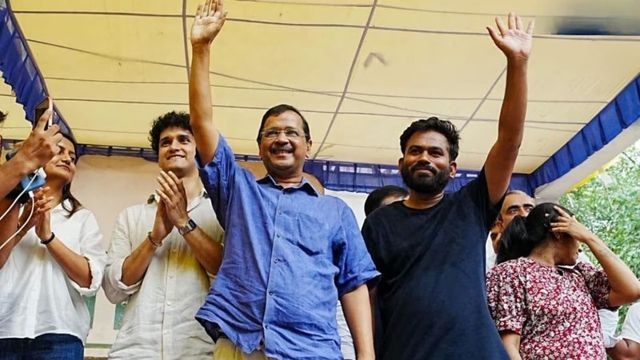
He later pursued an MS in Public Relations at Boston University, explaining that his education was financed through a scholarship and loan.
Questions around CJP’s broader organisational ecosystem, however, remain relevant. Kapil Sibal’s ₹1 crore contribution to a CJP-linked legal-aid fund also showed how quickly substantial political and institutional support gathered around the movement.
CJP may call itself citizen-driven, but the political experience of its leadership and the ideological and separatist forces circling around it demand scrutiny.
Why September 5 Matters
Taken separately, each episode can be explained away.
The US Embassy alert can be called routine. SFJ’s 1 million dollar pledge can be described as unsolicited. SECMOL and FCRA cancellation can be treated as unrelated. Bangladesh can be dismissed in a different context. But together, the pattern becomes harder to ignore.
There is foreign diplomatic attention, a banned Khalistani organisation offering 1 million dollar, Pannun’s unverified claim of an actual payment, Wangchuk’s FCRA baggage and border-region activism, Dipke’s political background, and now a major Delhi mobilisation exactly one week before BRICS.
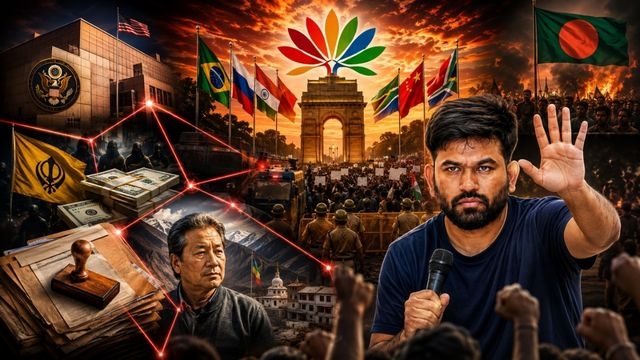
This does not by itself prove a single centrally controlled “deep state” operation.
But it does show that a movement presented as a student agitation has increasingly become useful terrain for political, ideological and separatist forces whose objectives go far beyond education reform.
The net effect, intentional or otherwise, is clear: India risks being projected as internally unstable just when Bharat is preparing to showcase diplomatic strength and Global South leadership.
That is why September 5 is not merely another protest date. The timing and the ecosystem around CJP are part of the story.
Written by

Kewali Kabir Jain
Journalism Student, Makhanlal Chaturvedi National University of Journalism and Communication