Manufactured Victimhood: How Universities Propagate False Narratives to Destabilise Bharat
Is the portrayal of Muslims as perpetual victims an academic failure driven by ideology rather than evidence based inquiry within Indian universities?
Total Views |


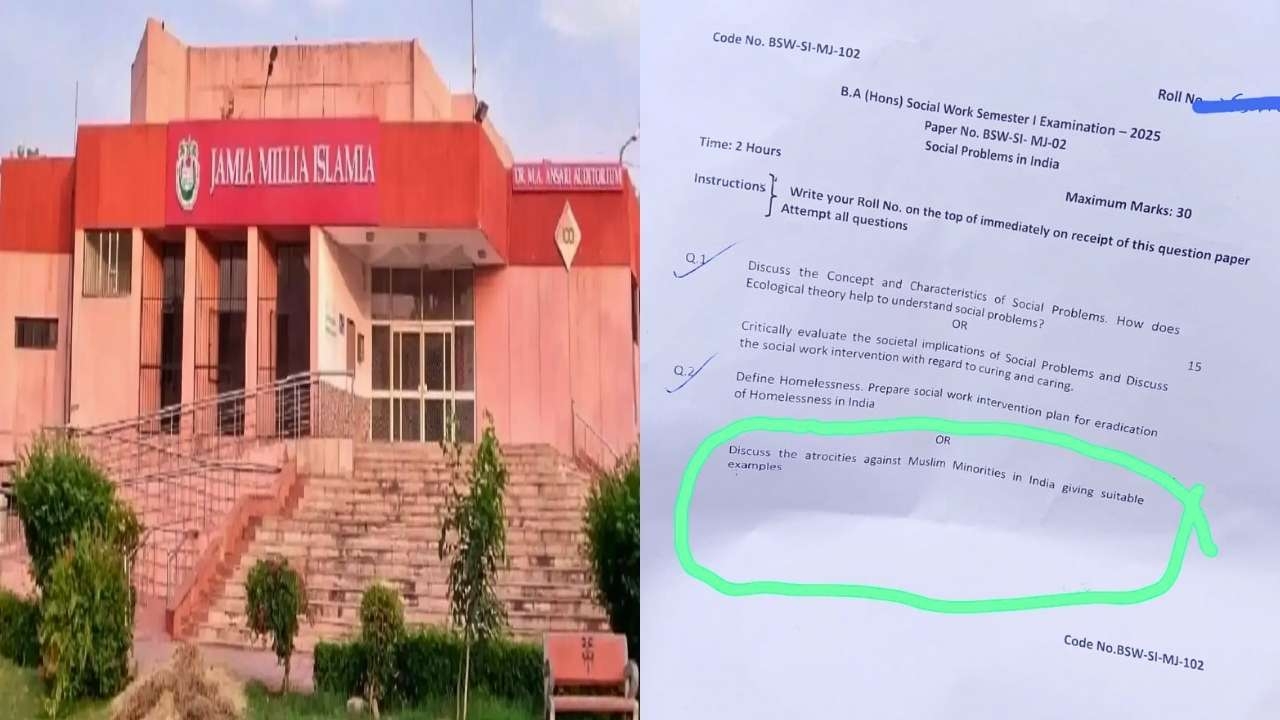
Recently, an examination conducted at Jamia Millia Islamia University included a question that has raised serious concerns about the role of academic institutions in shaping public discourse. The question asked students to "discuss the atrocities against Muslim minorities in India, giving suitable examples". This framing has prompted a wider debate on how universities influence narratives and whether they fulfil their responsibility to encourage objective and critical inquiry.
The problem with the question
The core issue with this examination question lies in its presumption. It treats “atrocities against Muslim minorities” as an established and unquestionable fact that merely requires elaboration and examples. Instead of inviting students to critically examine whether such systematic atrocities exist, the question embeds a predetermined conclusion into the academic exercise.
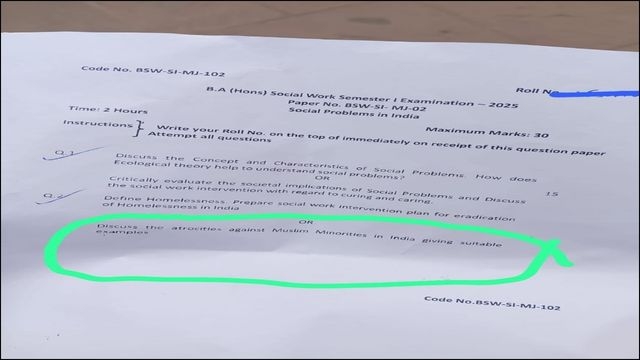
By framing the issue in this manner, the university effectively inserts a narrative of Muslim victimhood into the curriculum without demanding scrutiny of its accuracy or evidence. This reflects how institutions can perpetuate specific ideological positions by presenting them as baseline assumptions rather than contested claims that deserve rigorous analysis. It also raises an important question: are Muslims really victims in Bharat, as this narrative suggests?
Scrutinising the victimhood narrative
The claim that Muslims face systematic persecution in Bharat does not withstand serious scrutiny. Notably, several prominent Muslim scholars and leaders have themselves rejected this narrative. Mahmood Madani, a respected Muslim leader, has categorically denied claims of a Muslim genocide in Bharat, stating that such a scenario can never occur in the country.
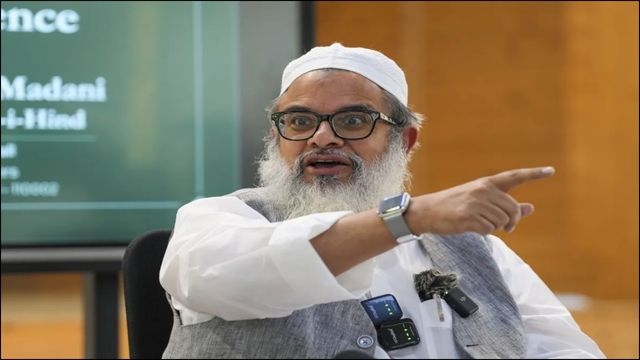
He has also praised the patience and restraint shown by Indian citizens following the Pahalgam terror attack earlier this year. Madani emphasised that enemies of Bharat are attempting to destabilise the nation through terrorism, aided by powerful foreign forces. His remarks directly contradict the portrayal of Muslims as helpless victims of an oppressive state.
If influential Muslim voices reject the narrative of systemic victimisation, an important question emerges. Why does this narrative continue to dominate academic institutions and international discourse?
Who benefits from this narrative?
Certain Western human rights organisations, such as Human Rights Watch, along with media outlets like Al Jazeera, frequently amplify allegations of anti-Muslim violence under the current BJP-led government. These claims are often presented without adequate context or critical examination.
This raises several crucial questions. Who is driving the false narrative that Muslims are victims in Bharat? Are Muslims themselves the primary promoters of this idea, or are they also being misled by it? Who stands to gain by portraying an entire community as oppressed, thereby manufacturing social conflict? Most importantly, who benefits from the instability that such narratives seek to create?
The leftist ideological agenda
The answers lie in leftist ideology, which fundamentally depends on identifying and sustaining conflict within society. When genuine conflicts are absent, leftist groups attempt to manufacture them by exploiting social and cultural fault lines. Communism, at its core, is rooted in the idea of inevitable class struggle, a lens through which leftist ideologues interpret every aspect of society.
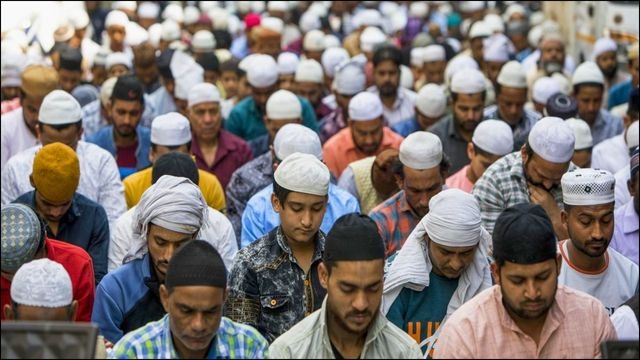
In the present context, the left increasingly operates through universities and media platforms. By framing Muslims as perpetual victims, leftist ideologues create the communal discord necessary to advance their political objectives. This approach serves a destabilising agenda that directly undermines Bharat’s internal security and social harmony.
Muslims used as leverage
The Muslim community is being used as leverage to advance goals aimed at creating social instability and weakening national cohesion. This manufactured narrative may serve leftist political ambitions, but it ultimately harms both Muslims and the nation as a whole.
It is incumbent upon the Muslim community to recognise this manipulation and refuse to become prey to ideologies that exploit them for destructive purposes. When academic institutions embed such one sided narratives into examination papers, they fail in their fundamental duty to nurture independent thinking. Instead, they become instruments of ideological indoctrination, perpetuating false narratives that threaten national unity.
Article by

Aadarsh Gupta
Young Researcher