Bangladesh in Flames: Mob Violence and Targeted Attacks on Hindus
Why have Hindu homes, temples, media offices and even children become targets amid growing unrest and radical street violence in Bangladesh?
Total Views |


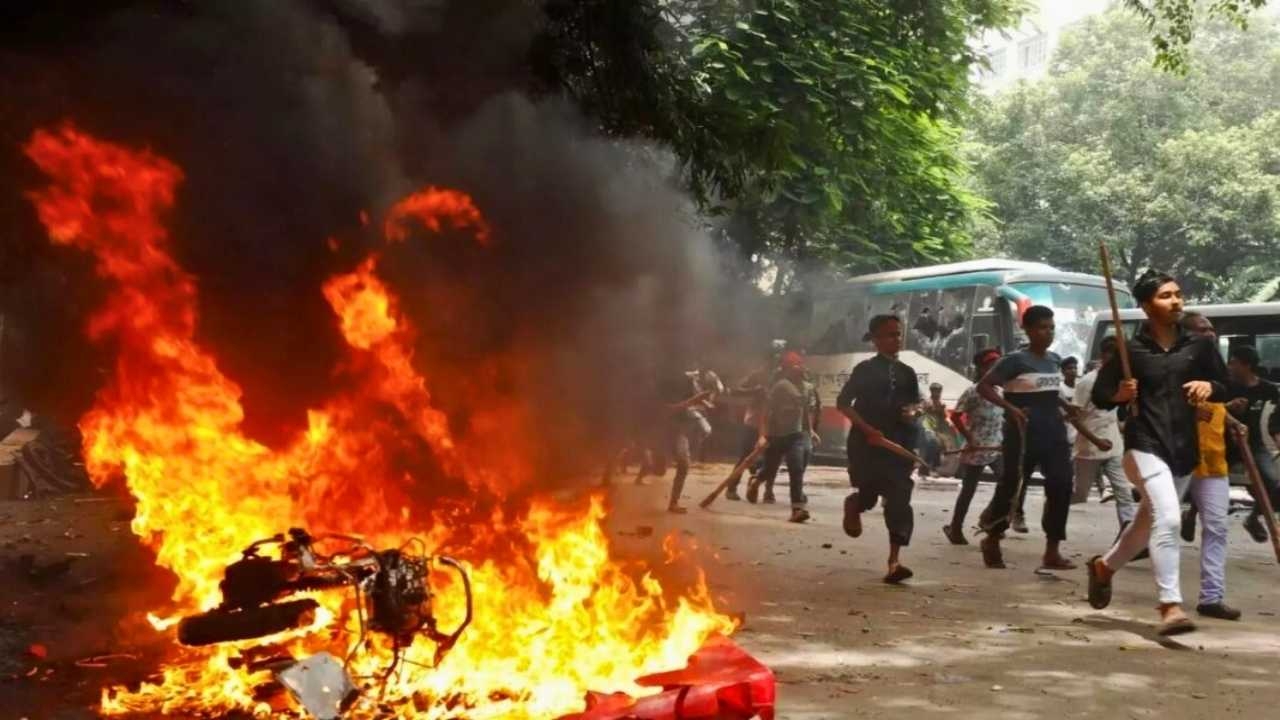
Recent developments in Bangladesh have raised serious alarm. Ongoing political instability, combined with the visible erosion of effective state policing, has created an environment in which targeted attacks on minority communities, particularly Hindus, have intensified. Since 1947, the Hindu population in the region has declined sharply, falling from nearly 30 percent to less than 9 percent today. This demographic collapse reflects decades of sustained pressure, recurring violence, and forced migration.
December alone witnessed a deeply unsettling wave of violence that exposed the growing fragility of law and order, the radicalisation of street protests, and a disturbing pattern of targeted attacks against Hindus, media institutions, and Indian diplomatic interests.
The situation has deteriorated further since the fall of Sheikh Hasina’s government, which had remained in power since 2009. The present crisis highlights a long and painful history of both overt and covert persecution of Hindus, beginning in East Pakistan and continuing into present day Bangladesh. More than 205 reported attacks on temples and other sacred Hindu sites form part of this broader pattern of violence. The unrest that followed the alleged student protests in July 2024 merely exposed deeper historical fault lines rooted in decades of religious polarisation.
From Campuses to Canteens: Symbols Under Attack
A Radical chanting Islamic slogans and quoting Kazi Nazrul Islam vandalised histotical Madhur Canteen in Dhaka 🇧🇩.
— Megh Updates 🚨™ (@MeghUpdates) December 24, 2025
Madhur Canteen is not just a café. It is a living memory of the Language Movement, the Mass uprising, and the Liberation War.
Yunus is destroying Bangladesh pic.twitter.com/g1tIEeKx5j
The vandalisation of Madhur, commonly known as Madhu’s Canteen, at Dhaka University on 24 December symbolised the breakdown of civic restraint in spaces historically associated with dialogue and dissent. A young man identifying himself as Mohammad Sagar from Comilla appeared in viral footage chanting Islamic slogans, reciting Kazi Nazrul Islam’s Bidrohi, and destroying property, including banners linked to student politics. He claimed that he had come to visit Osman Hadi’s grave, thereby connecting the act to the wider unrest triggered by Hadi’s death. That such violence occurred in the heart of the country’s premier university reflects how radical impulses are now emboldened within public institutions.
Targeting Hindus
Even more alarming is the clear and consistent pattern of violence directed at the Hindu minority. On 22 December, radical elements set fire to the homes of Sukha Sheel and Anil Sheel in Chittagong’s West Sultanpur village during the dead of night. Attackers reportedly locked the doors from outside, trapping families inside. Although the victims narrowly escaped, their livestock perished and all their possessions were reduced to ashes.
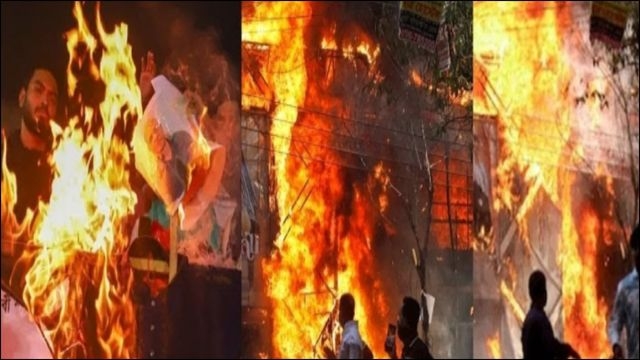
Earlier, on 20 December, a Hindu rickshaw puller, Gobinda Biswas, suffered a brutal assault by a mob in Jhenaidah district merely for wearing a sacred red thread. Perpetrators deliberately spread a rumour branding him an agent of India’s intelligence agency, RAW, which triggered mob violence. This incident demonstrates how religious markers and fabricated accusations are increasingly weaponised to legitimise brutality.
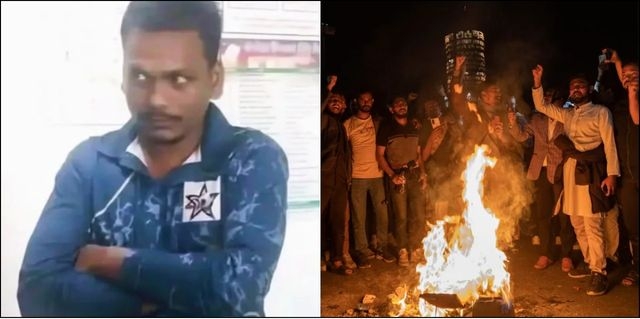
The most horrifying case occurred on 19 December in Mymensingh district, where a Hindu youth, Dipu Chandra Das, was lynched over a false allegation of blasphemy. Assailants beat him to death, tied his body to a tree, and then set it on fire. This act of savagery shocked observers and underscored the mortal danger faced by minorities amid rising radicalism.
The killing of a 75 year old Hindu freedom fighter, Jogesh Chandra Roy, and his wife, Subarna Roy, on 11 December in Rangpur further deepened concerns. Both were found murdered in their home, allegedly struck on the head. The fact that a veteran of Bangladesh’s 1971 Liberation War could meet such a fate speaks volumes about the erosion of moral and historical anchors in the current unrest.
Media Under Siege, State Authority Questioned
The violence extended beyond minority communities. Media institutions also came under direct attack. On 20 December, video footage showed the Bangladesh Army allegedly allowing a mob to vandalise and burn the office of The Daily Star after asking for time to evacuate staff. A day earlier, violent protesters torched the Dhaka office of Prothom Alo, forcing journalists to flee for their lives.
Political Violence and Civilian Casualties

Political unrest has also claimed innocent lives. On 19 December, attackers set fire to the home of a local BNP leader in Lakshmipur after locking the family inside. A seven year old girl was killed, and three others suffered critical injuries. The death of a child in such circumstances highlights the indiscriminate nature of the violence and the complete disregard for human life.
Anti-Bharat Hostility and Diplomatic Fallout
Alongside internal chaos, a pronounced anti-Bharat strain has emerged. Protesters attacked the residence of India’s Deputy High Commissioner in Chattogram on 19 December, hurling bricks amid slogans and demonstrations. Attempts to march on Indian diplomatic missions in multiple cities on 18 December led to clashes with police and forced the closure of Indian Visa Application Centres in Rajshahi and Khulna.
On 17 December, India shut its Visa Application Centre in Dhaka altogether, citing credible security threats from radical elements. Diplomatic strain intensified when Bangladesh summoned India’s High Commissioner on 14 December over the shooting of Inqilab Moncho leader Sharif Osman Hadi, demanding action against suspects allegedly linked to India.
Article by
Kewali Kabir Jain
Journalism Student, Makhanlal Chaturvedi National University of Journalism and Communication