The Stone Pelting Jihad and Its Normalisation by Radical Elements
By downplaying injuries and denying intent, influential voices have normalised attacks on police and civilians under the guise of protest.
Total Views |


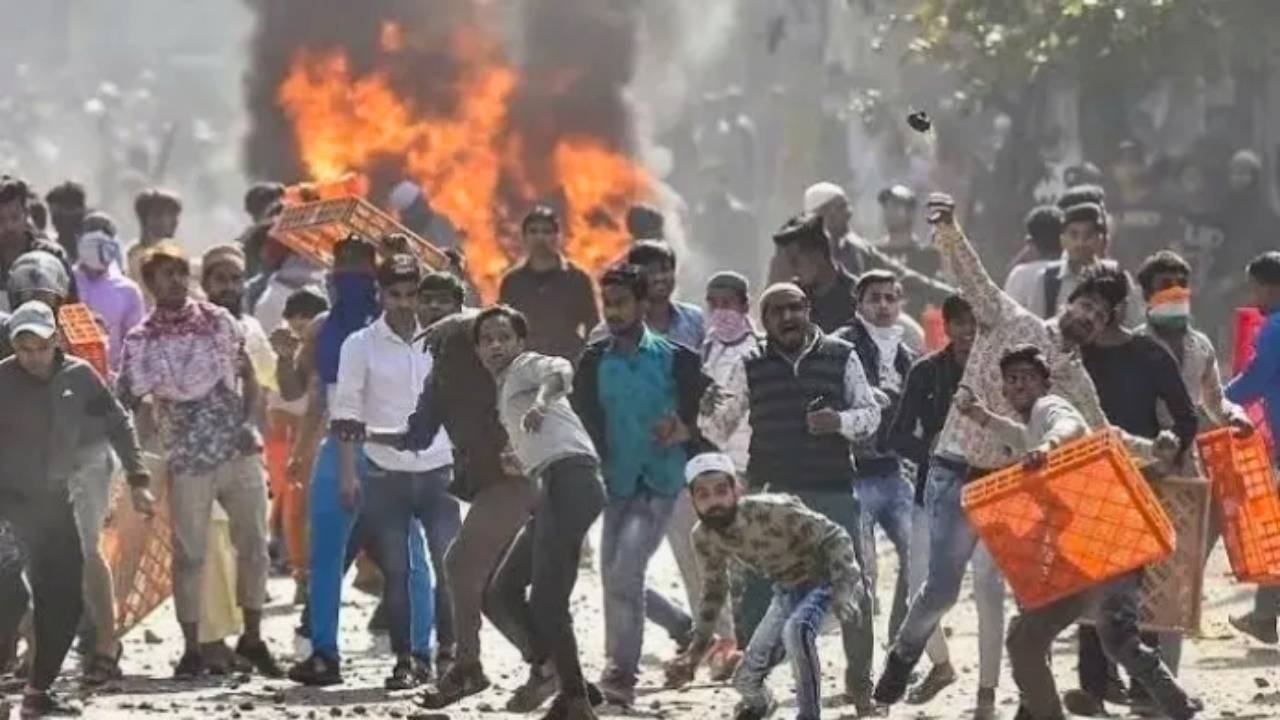
Over the last decade, incidents of stone pelting, particularly against police personnel, security forces and civilian processions, have increasingly been accompanied by a parallel phenomenon: public justification, minimisation and even moral defence of such violence by radical voices, political leaders and influential opinion makers. A compilation of fourteen major incidents between 2017 and 2026 reveals a disturbing pattern in which unlawful violence is repeatedly reframed as "reaction", "resistance" or "inevitability", rather than being unequivocally condemned.
Turkman Gate 2026: The Trigger Point
The most recent spate of incidents unfolded in January 2026 during an anti-encroachment drive ordered by the Delhi High Court near the Faiz-e-Ilahi Mosque at Turkman Gate. Following the spread of false rumours regarding the demolition of the mosque, police personnel were attacked with stones and glass bottles, leaving several officers injured.
SHOCKING. POLICE ATTACKED FOR COURT ORDERED DEMOLITION NEAR Faiz-e-Ilahi Mosque, Turkman Gate, Delhi.
— Rahul Shivshankar (@RShivshankar) January 7, 2026
Crowd gathered, raised slogans, tried breaking barricades.
Interestingly Red Fort suicide bomber Umar Nabi had visited the mosque before the delhi blast. pic.twitter.com/wTmMMxgOuv
Instead of clear condemnation, multiple public figures and local residents offered justifications. Maulana Sajid Rashidi, speaking to News Peti on January 10, remarked that "reaction" was inevitable if a mosque was perceived to be under threat and went on to downplay stone pelting as "not a serious offence" under the Constitution. Similar narratives were echoed in interviews with TNN World, Jist, Khabar India and Mojo Story, where locals framed the violence as a response to alleged injustice, poor timing by authorities, or dismissed it as inconsequential.
"We are pelting stones because no one is listening to us..."
— BALA (@erbmjha) January 9, 2026
Hindus protest & sit on dharnas but Muslims consider stone pelting their birth right. pic.twitter.com/lREexWjQm9
What stood out was not merely the defence of violence, but a collective effort to normalise it. Some denied that stone pelting had occurred at all, others claimed that children were responsible, while several asserted that stones posed no real danger to armed police.
Political Endorsements and Rationalisation
SP Leader Justifies Stone-Pelting?
— TIMES NOW (@TimesNow) January 7, 2026
'Rumours were spread that there were plans to demolish a mosque… an MP can go anywhere,' says Samajwadi Party leader ST Hasan.@NiyamikaS & @HeenaGambhir share details. pic.twitter.com/o1nrEgWsVC
The Turkman Gate incident also drew responses from political leaders. Samajwadi Party leader S. T. Hasan linked stone pelting to "oppression" during encroachment drives, while AAP MLA Amanatullah Khan justified such acts by citing alleged targeting of mosques, graveyards and Waqf properties. These statements, rather than reinforcing the rule of law, effectively legitimised mob violence as an acceptable form of protest.
This trend is not new. In 2022, following widespread unrest triggered by remarks made by Nupur Sharma, stone pelting incidents across several cities were similarly defended in public interviews. In many cases, responsibility was shifted on to delayed or inadequate police action rather than on those who resorted to violence.
Selective Narratives and Media Amplification
In July 2023, during the Kanwar Yatra in Bareilly, pilgrims were injured when stones were hurled near a mosque along the route. Instead of unequivocal denunciation, selective footage circulated widely online. Alt News co-founder Mohammed Zubair shared cropped visuals suggesting violence "from both sides", a narrative that critics argue obscured the targeted attack on Kanwariyas and diluted accountability.
Such selective framing, repeated over time, has contributed to a discourse in which stone pelting is contextualised, relativised or justified, rather than treated as a straightforward criminal act.
Kashmir: From 'Reaction' to 'National Interest'
The roots of this apologetic approach extend back to Kashmir. In April 2017, following the Prime Minister's call for Kashmiri youth to choose "tourism over terrorism", former Chief Minister Farooq Abdullah publicly defended stone pelters, describing their actions as being "for the nation".
A year later, during encounters in Pulwama where stone pelters attempted to shield terrorists, both Omar Abdullah and Mehbooba Mufti criticised the security forces. Their statements characterised the encounters as excessive and focused on the deaths of pelters, without addressing their role in obstructing counter-terror operations.
A Consistent Pattern and a Serious Concern
Taken together, these fourteen incidents underline a consistent and troubling pattern: the systematic rationalisation of mob violence by sections of society that wield influence, including religious figures, political leaders, media voices and activists. The repeated portrayal of stone pelting as spontaneous, harmless or provoked undermines the authority of the state, demoralises law enforcement agencies and emboldens radical elements.
The normalisation of such violence, when left unchallenged, risks converting unlawful aggression into an accepted form of political or religious expression, with serious consequences for public order and the rule of law.
Article by
Kewali Kabir Jain
Journalism Student, Makhanlal Chaturvedi National University of Journalism and Communication