Hong Kong’s Silenced Voices: How CCP Turns National Security into Political Control
Under Xi Jinping, Beijing’s security regime has narrowed Hong Kong’s political freedoms, punished dissent and made loyalty to the Communist Party a condition of public participation.
Total Views |


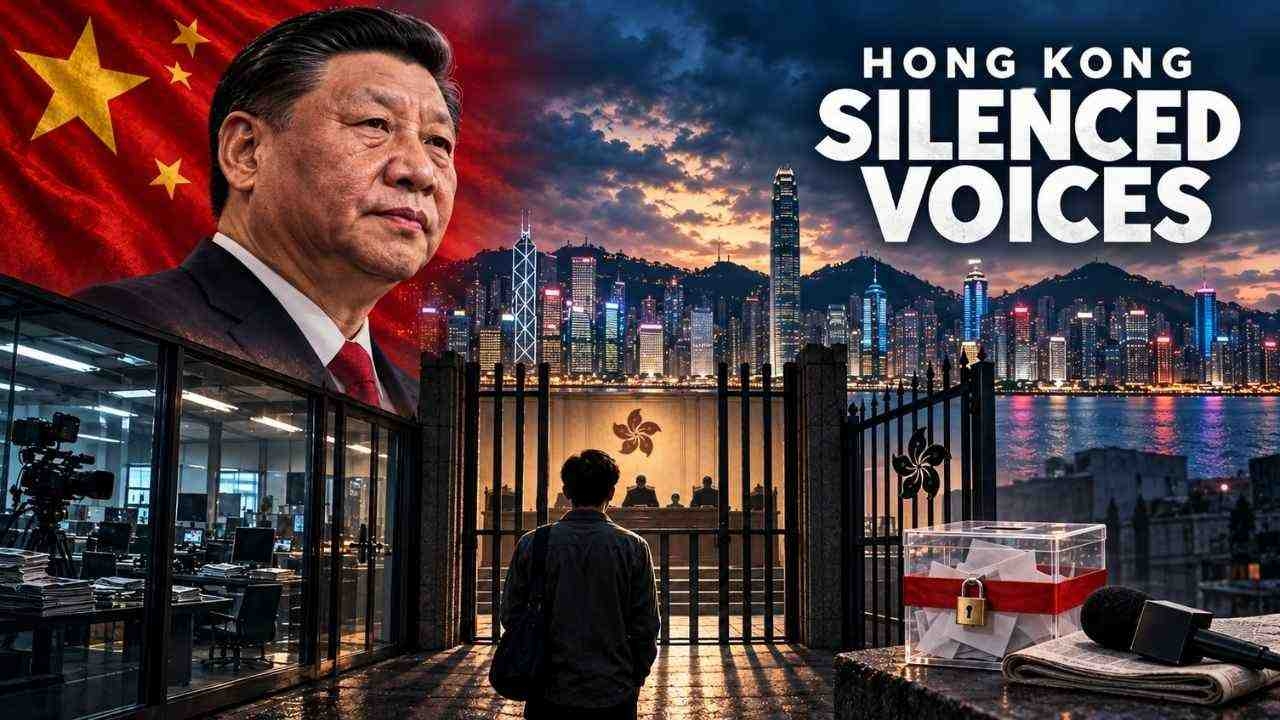
Since Beijing imposed its national security law in 2020, Chinese and Hong Kong authorities have prosecuted democracy advocates and restricted expression, using sweeping security powers that Human Rights Watch says undermine freedoms and political participation.
Security as a Shield for Power
National security should protect people from genuine threats. In Hong Kong, Human Rights Watch’s reporting reveals a disturbing pattern: security legislation used against peaceful expression, political organising and independent institutions. Beijing imposed the National Security Law in June 2020; Hong Kong added the Safeguarding National Security Ordinance in March 2024. Human Rights Watch (HRW) says the latter expands police powers, weakens procedural protections and criminalizes further peaceful activities.
The criticism of Xi Jinping’s government is therefore concrete. The Chinese Communist Party has backed a framework through which challenges to its authority can become security offences. When political disagreement attracts criminal punishment, the boundary between protecting the country and protecting its rulers becomes dangerously blurred.
Democracy Advocates Behind Bars
The prosecution of democracy advocates illustrates that danger. On November 19, 2024, a Hong Kong court sentenced 45 activists and former politicians to prison terms ranging from four years and two months to ten years. Their convictions concerned involvement in an unofficial primary election held in 2020. Legal scholar Benny Tai received the longest sentence. HRW condemned the prosecution and demanded that the convictions be overturned.
_202610130942269415_H@@IGHT_360_W@@IDTH_640.jpg "china - image 1 (3)")
Authorities argued that the planned use of a legislative majority to block budgets and force the chief executive’s resignation amounted to subversion. That justification deserves scrutiny. Political opposition can be confrontational without constituting a security threat. Treating an electoral strategy as a criminal conspiracy risks replacing democratic contestation with enforced obedience.
HRW also identified prolonged pre-trial detention, restrictions on bail and the absence of a jury as serious concerns. These safeguards matter precisely when defendants challenge powerful authorities. Their weakening makes assurances of fair treatment harder to accept without question.
_202610130942445197_H@@IGHT_360_W@@IDTH_640.jpg "china - image 2 (4)")
Loyalty Replaces Political Choice
Beijing’s project extends beyond individual prosecution. HRW’s June 2025 assessment describes a political system increasingly reserved for people considered loyal to the CCP. Electoral changes have restricted opposition participation, while independent organizations have faced intense pressure.
_202610130943040354_H@@IGHT_360_W@@IDTH_640.jpg "china - image 3 (1)")
This approach empties political representation of its essential purpose. Citizens need meaningful choices, including representatives willing to challenge government policy. A system that filters candidates according to loyalty may retain elections, but it weakens the public’s ability to hold power accountable.
Calling this arrangement patriotic does not resolve the problem. Patriotism cannot reasonably require permanent agreement with one party. The CCP’s identification of its leadership with national interests allows criticism of the government to be portrayed as hostility towards China itself.
The Cost of Silencing Institutions
Independent journalists and civil society have also suffered. HRW documented the closure of at least 14 independent media outlets since the 2020 law, including Apple Daily and Stand News, following police raids and arrests. It also reported that nearly 100 civil society organizations, unions and political parties had disbanded since 2020.
_202610130943223010_H@@IGHT_360_W@@IDTH_640.jpg "china - image 4 (3)")
The damage reaches beyond those directly prosecuted. Journalists become cautious about investigations; organisers reconsider meetings; citizens question whether expressing an opinion is worth the risk. Repression works partly through this uncertainty. CCP need not arrest everyone if prominent cases persuade others to remain silent.
For Xi’s leadership, such silence may make his governance easier. For society, it removes essential warning systems. Independent reporting exposes failures, civic organizations represent overlooked interests, and opposition tests official decisions. Suppressing these functions protects authorities from scrutiny while depriving citizens of influence.
_202610130943435355_H@@IGHT_360_W@@IDTH_640.jpg "china - image 5 (1)")
Hong Kong exposes the weakness beneath the CCP’s display of confidence: a leadership unwilling to tolerate organised disagreement. China’s people deserve institutions that protect their voices, not laws that make political
participation dangerous.
Genuine security requires accountable power, credible safeguards and freedom to speak. Xi’s government should be judged by those standards, rather than by its claims of stability.