The Foreign-Funded Campaign Against India’s Data Centres
Open Society, Ford and USAID money trails, 28 pieces on Countercurrents and a $20,000 Pulitzer fellowship network expose coordinated pressure against India’s digital sovereignty.
Total Views |


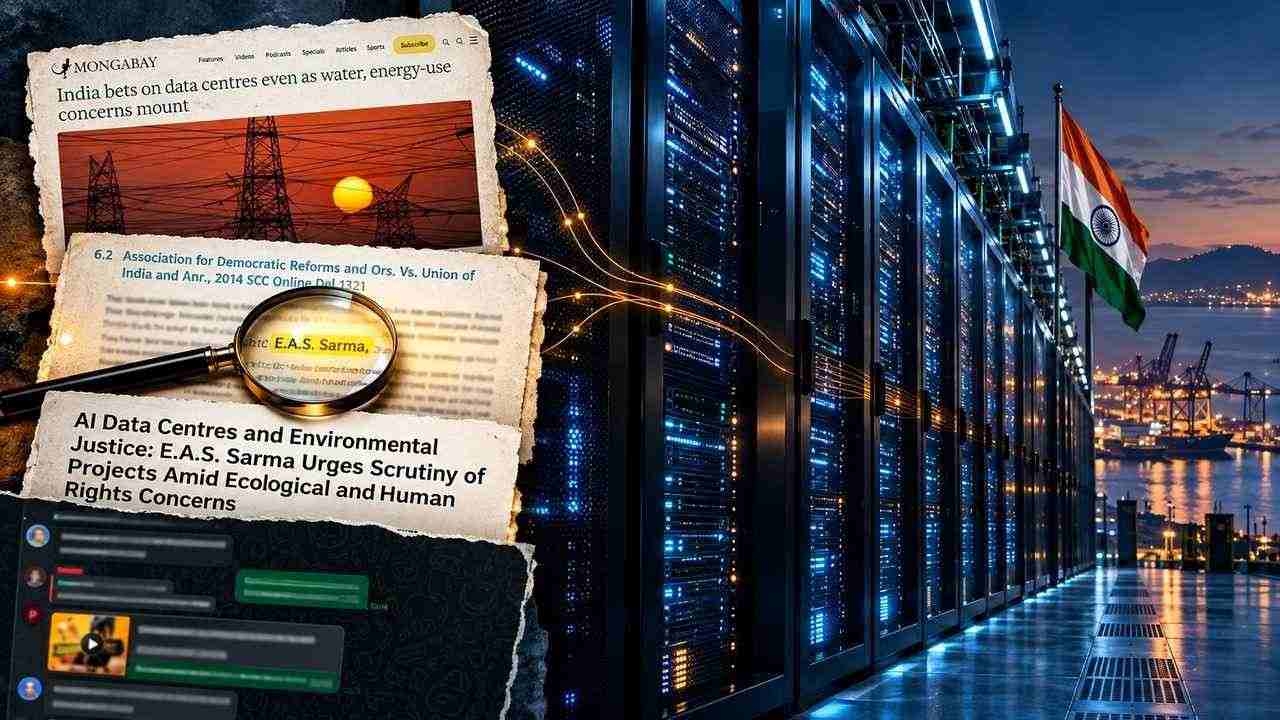
India’s data-centre expansion faced critical coverage between January and September 2026, prompting scrutiny of how journalists, outlets and international funding networks shaped reporting on water, energy and displacement, particularly around the proposed Google-Adani Visakhapatnam project.
Between January and September 2026, a tightly coordinated barrage of at least 45 articles has systematically attacked India’s data-centre expansion, with the sharpest focus reserved for the Google-Adani project at Visakhapatnam. Far from being spontaneous public concern, this coverage has emanated from a small cluster of outlets, the same handful of reporters, and a well-documented network of Western foundations and aid vehicles. India is constructing its own digital infrastructure to secure data sovereignty and reduce dependence on external systems. The public has every right to know who is financing the effort to obstruct it.
_202610131202528424_H@@IGHT_360_W@@IDTH_640.jpg "image 1 (1)")
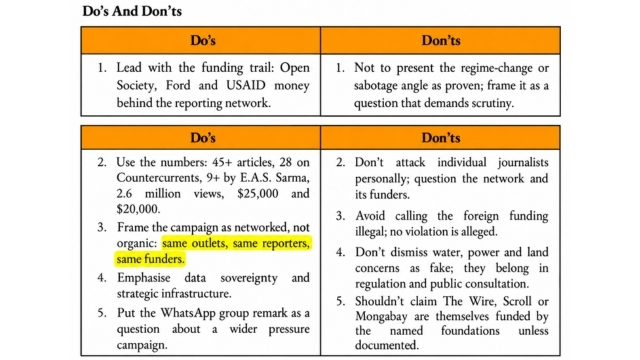
The numerical concentration of countercurrents alone published 28 of these pieces. The Wire and Scroll supplied additional coverage. Across this output the same five talking points appear with mechanical regularity: water stress, power draw, land acquisition and displacement, alleged regulatory failure, and the charge that foreign technology companies are “extracting value” from India. This is not scattered commentary. It is a pattern.
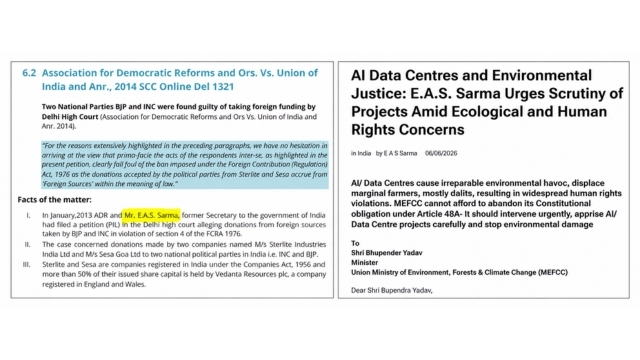
One byline stands out. “E.A.S. Sarma” – a retired IAS officer and former Union Finance Secretary, has written at least nine articles on Countercurrents opposing the data-centre build-out, most pointedly the Google-Adani Vizag project. His activism runs through the Association for Democratic Reforms (ADR), an organization that has itself received Ford Foundation funding. Parallel reporting lines reinforce the same narrative.
Independent journalists Monica Jha and Shamsheer Yousaf produced the flagship Vizag investigation under the Environmental Reporting Collective’s (ERC) “Dirty Data” project, alleging displacement and health risks around Google’s proposed facility. Their video crossed 2.6 million views before being blocked in India; the reporters subsequently went public after the Internet Freedom Foundation briefed them on the legal mechanics of the takedown.
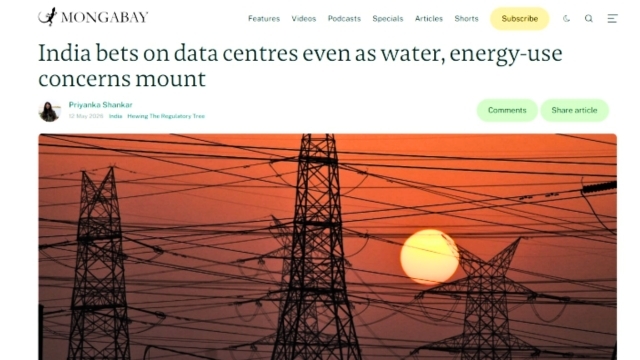
Other journalists operate within the same pipelines. Priyanka Shankar conducted a water-and-energy investigation for Mongabay India and Scroll, drawing on data from the Council on Energy, Environment and Water (CEEW) and the World Resources Institute (WRI). Sushmita, writing for The Wire and IndiaSpend, is a Pulitzer Center AI Accountability Fellow. The fellowship provides up to $20,000 per journalist and requires recipients to share methodology across an international cohort.
The institutional architecture is equally explicit. The reporters sit inside the Environmental Reporting Collective, which connects upward to the International Consortium of Investigative Journalists (ICIJ), Internews’ Earth Journalism Network, and the Pulitzer Center’s AI Accountability Network. A 2019 Open Society Foundations grant record shows $25,000 paid to ICIJ specifically to support the Global Environmental Reporting Collective.
ERC states that “Dirty Data” builds directly on the Pulitzer Center’s network. Internews, which houses the Earth Journalism Network, lists among its published donors the Ford Foundation, Open Society-linked funds, the Packard Foundation, the European Climate Foundation and USAID. Countercurrents carries Greenpeace International material and operates within this same ERC ecosystem. ICIJ partner outlets include The Wire, Indian Express, Mongabay and Al Jazeera.
A further detail sharpens the picture. A WhatsApp group dedicated to the anti-SIR, anti-Election Commission campaign has discussed targeting data centres and nuclear power plants objectives far removed from the stated electoral grievances. When foreign-funded networks challenge strategic infrastructure on multiple fronts, the convergence raises a legitimate question about a broader pressure campaign against India’s critical digital and energy assets.

Legitimate questions about water, power and land use belong in regulation and public consultation; they cannot be dismissed. What demands scrutiny is the networked character of the campaign and the foreign money that sustains it.
Open Society, Ford and USAID funding trails appear repeatedly behind the reporting architecture. No allegation of illegality is required. The documented grants, the fellowship amounts, the 45-plus articles, the 28 pieces on a single platform, the nine-plus bylines by one retired official, the 2.6 million views, and the shared institutional pipelines are sufficient.
India’s data-centre expansion is an exercise in technological self-reliance. When the same outlets, the same reporters and the same Western funders keep appearing against that effort, the opposition ceases to look organic.
It is a networked campaign. The public is entitled to examine the funding trail and to insist that strategic digital infrastructure not be slowed by external interests operating through familiar channels.
Written by

Kewali Kabir Jain
Journalism Student, Makhanlal Chaturvedi National University of Journalism and Communication