Will the Vulnerability of Muslim Women Lead Them to Revolution?
A book review of Shruti Anerao’s ‘Muslim Women: Through the Prism of Muslim Scholars’ – exploring personal testimonies, women’s rights and the case for reform.
Total Views |


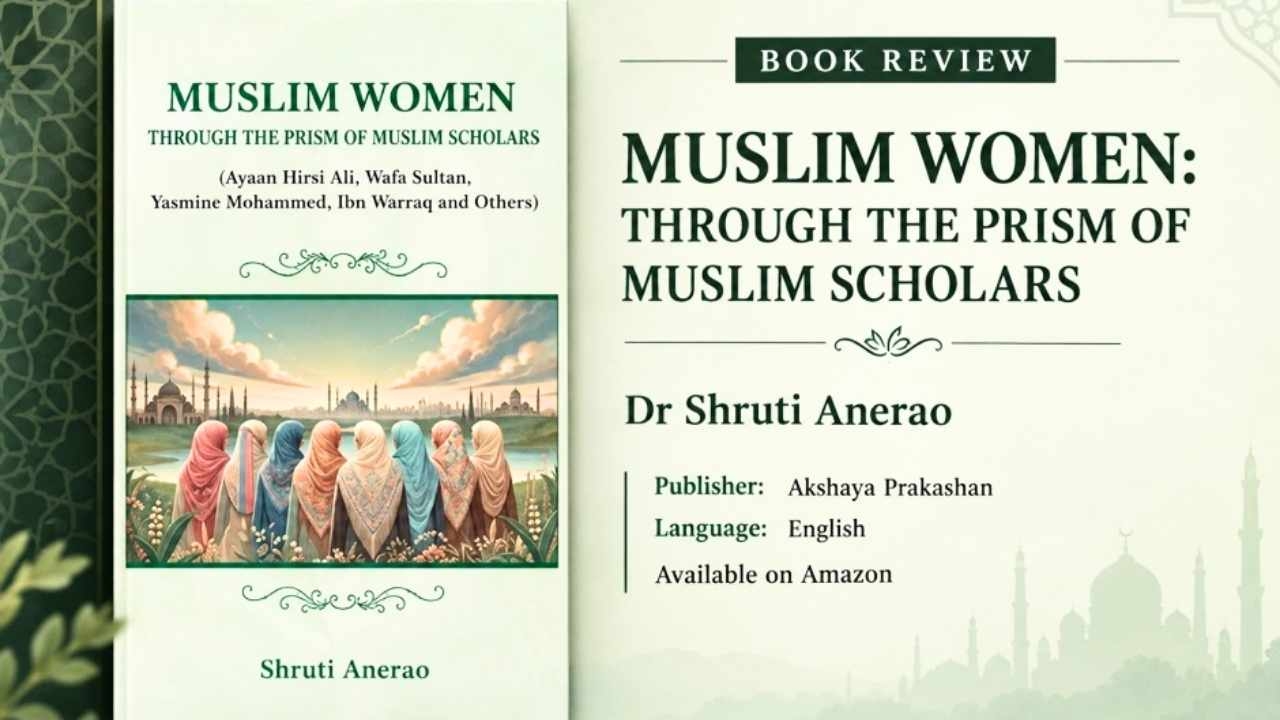
Shruti Anerao’s Muslim Women: Through the Prism of Muslim Scholars examines patriarchy through memoirs and factual writings, connecting women’s experiences across societies with contemporary struggles for dignity, freedom and reform through accessible commentary and analysis.
This book is not a normal study that builds one big argument from start to finish. It works more like a collection, and that is exactly what makes it work so well. Dr. Shruti Anerao goes chapter by chapter through the writings and life stories of several well-known critics who have spoken out about how women are treated in Muslim societies. All of these voices are pulled together to make one main point, which is that patriarchy, backed by certain readings of religious texts and traditions, has shaped the lives of many Muslim women in ways that need to be looked at honestly and truths need to be exposed.
_202610161042005106_H@@IGHT_360_W@@IDTH_640.jpg "image 1 (2)")
Each chapter reads like a clear, guided tour of some scholar’s own honest confessions, with the author adding comments that help the reader see why it matters. For a heavy subject like this, structuring is a real craft, because it takes you in a lot of difficult and unknown worlds without feeling lost.
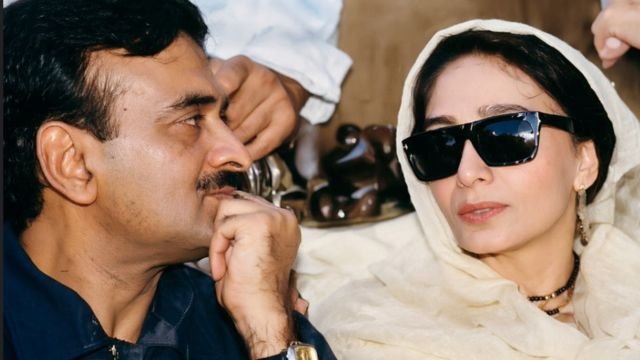
The chapters are built around different authors, and the choices are strong. One part uses Tehmina Durrani’s memoir about her marriage with the Pakistani politician Mustafa Khar. Her story of constant beating, public insults, and total control over her by her patriarchal husband with a feudal mind-set, illustrates how power and domestic violence can hide behind a respectable public image of a politician in Pakistan.
Another chapter looks at the Syrian-American writer Wafa Sultan, whose famous television debate on Al Jazeera and her book ‘A God Who Hates’ give the author material to talk about forced marriages, forced veiling, and the way a woman’s word is often treated as worth less than a man’s. A later chapter follows Yasmine Mohammed, whose memoir “Unveiled” describes an abusive childhood in Canada and ties her story to recent events like the 2022 protests in Iran after the death of Masha Amini.
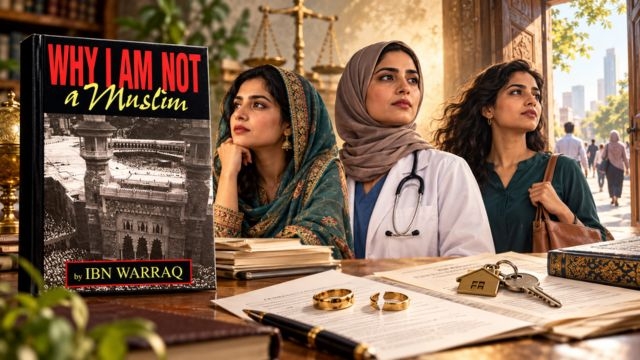
The final chapter Ibn Warraq, a religious scholar, in his book ‘Why I am Not a Muslim?’ – draws our attention towards injustice to women in inheritance rules, divorce laws, arguments regarding the imposition of burqa for and restrictions laid down on women going out for work and freedom to move around alone. Taken together, the chapters move smoothly from personal stories to larger legal and social issues, hence the reader is able to perceive both the terrific human experiences and the wider picture of society dealing inhumanly when it comes to women, whether she is a princess, a doctor, or any one from lower strata of life. All women are equally ill-treated
The biggest strength of the book is that it is easy to read and puts a lot of different voices in one place. If you have never heard of these writers before, this is an excellent starting point, and even if you have, it is useful to see them side by side. The personal stories also give the book real emotional weight, which it would not have if it would have stuck to merely dry legal details. The stories of Durrani and Yasmin Mohammed are especially difficult to forget once you have read them.
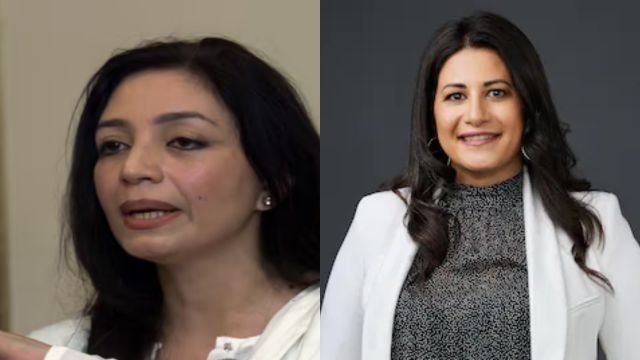
What makes them appealing is the detailed emotional narration from the author’s own heart. These are not vague complaints but specific memories of a specific person from her terrific experience in life and that is what stays with you forever even after you close the book.
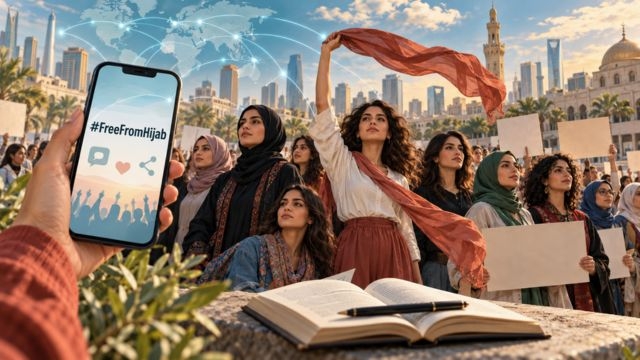
The author also deserves credit for keeping things currently relevant. By including recent events, from the hijab protests to online campaigns like #FreeFromHijab, the book shows that these are not old debates safely stuck in the past. They are still happening right now, and that sense of urgency gives the writing real energy. It would have been easy to treat all of this as history, but the author clearly wants the reader to understand that the questions still matter in the lives of present day women.
Another thing the book does well is, make a hard subject approachable without dumping it down in monotony. The language is plain and direct, and the author never hides behind heavy academic jargon. At the same time, the material itself is serious, and the research behind it is discernible. The reader manages to comprehend the intention of the writer and the writing itself acknowledges the intelligence of the writer, at the same time, welcoming someone who is completely new to the topic. That balance is not easy to pull off, and it is one of the reasons why the book is easily readable and grasping.
What also stands out is the courage of the project. Writing about religion and women’s rights at the same time is sensitive ground, and the author does not look away from the uncomfortable parts. The point is never to attack ordinary believers but to shine a light on real suffering and to argue that women’s voices deserve to be heard. That intention comes through on almost every page, and it gives the book a sense of purpose that holds the different chapters together.
What is also refreshing is that the book does not end in despair. The author points to the reforms of the last two decades in places like Saudi Arabia as a sign that none of this is fixed or permanent. Change is treated as something that is the prerequisite to prevent society from stagnation.
Overall, this is a thought provoking and heart moving book that does its job well. It gathers powerful testimonies, presents them clearly, and connects them to issues that are very much alive today. It works both as an introduction for new readers and as a useful reference for anyone writing on the subject. For a student or a general reader who wants to understand why these debates matter and why so many women have risked so much to speak up, this book is worthy of spare time. It is the kind of read that stays with you and makes you want to learn more, which is about the best thing any book on a serious subject can do.
Written by
Tuhina B. Singh