Rahul Gandhi's Parliamentary Fiasco: A Desperate Bid to Peddle Unverified Claims on National Security
By citing unverified claims on the China standoff, Rahul Gandhi exposed himself to criticism over recklessness in the Lok Sabha.
Total Views |


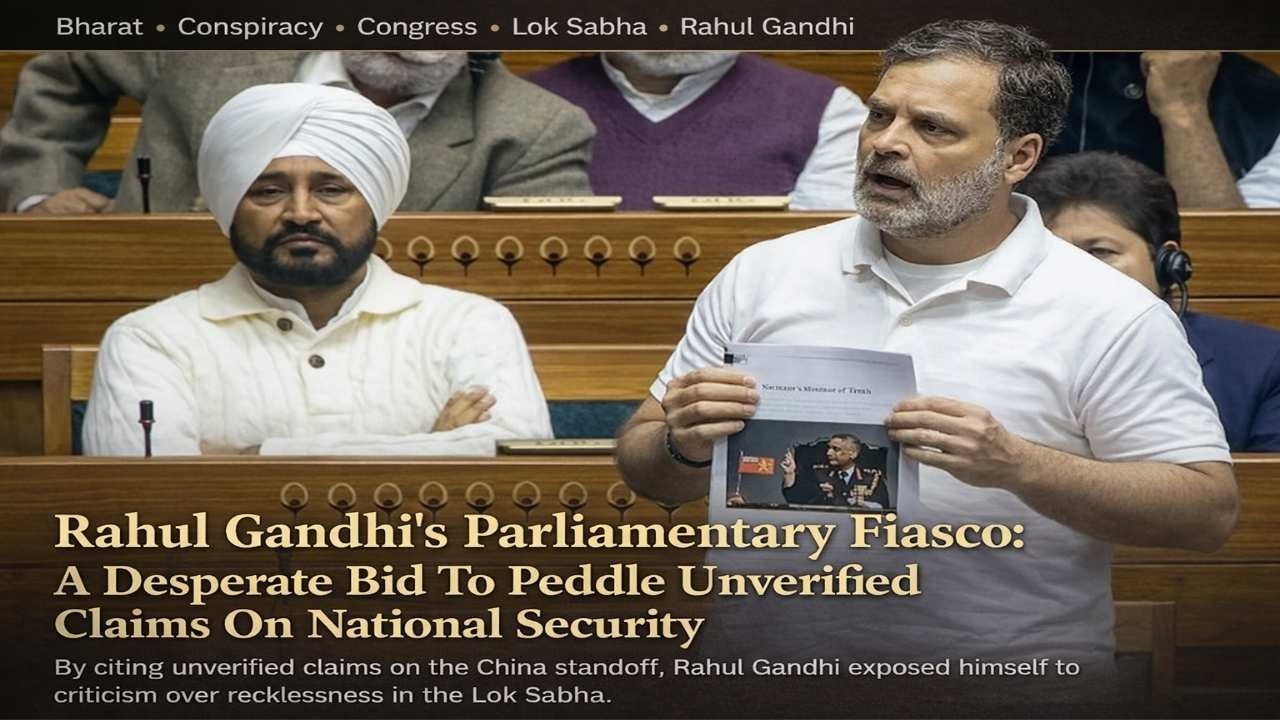
On 2 February 2026, during the Budget Session of the Lok Sabha, Leader of the Opposition Rahul Gandhi learned this lesson the hard way. He attempted to quote from a dubious Caravan magazine article that referred to excerpts from the unpublished memoir of former Army Chief General M.M. Naravane, Four Stars of Destiny. Gandhi’s speech, which touched on sensitive aspects of the 2020 Chinese incursions along the Line of Actual Control, immediately drew objections. Defence Minister Rajnath Singh, Home Minister Amit Shah and Law Minister Kiren Rijiju intervened without delay. Speaker Om Birla, upholding the dignity of the House, enforced established parliamentary norms, leading to adjournments amid the ensuing uproar.
This incident serves as a stark reminder of the Congress party’s long-standing penchant for sensationalism at the expense of national interest. Gandhi managed to utter only a few words, including the phrase “Chinese tanks in Doklam”, before treasury benches rose in unison to protest. The cited memoir remains unpublished and unauthenticated, and therefore carries potential risks to national security by introducing unverified claims into public discourse. Under Rule 349(i) of the Lok Sabha, members may not quote unrelated external material without prior authentication. In parliamentary practice, authentication requires the Speaker to verify a document’s genuineness, often by tabling it before the House or by requiring the member to confirm its accuracy under personal accountability. This safeguard prevents the spread of misinformation and preserves the integrity of debate.
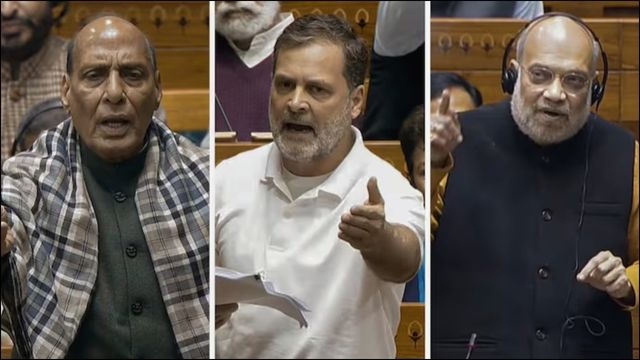
Speaker Birla’s decisive action in disallowing the quotation, directing microphone control and enforcing relevance did not constitute an ad hoc overreach. It reflected a routine exercise of the Chair’s disciplinary authority. Rule 352 prohibits offensive or irrelevant language, while Rule 380 empowers the Speaker to order the expunction of defamatory or undignified remarks, which are then marked with asterisks in the official record. In more serious situations, marshals may intervene, as past disruptions have demonstrated. The temporary deactivation of microphones provides a non-physical mechanism to maintain order and prevents escalation, particularly when members persist in violating procedural norms.
This episode echoes a troubling pattern in India’s parliamentary history, in which opposition figures have frequently tested the boundaries of decorum. The 1989 Bofors scandal during Rajiv Gandhi’s tenure generated intense parliamentary turmoil. Allegations of kickbacks in howitzer procurement contracts triggered en masse resignations, repeated walkouts and frequent adjournments, with marshals occasionally required to restore order. Similarly, in the turbulent 1970s, socialist leader Raj Narain faced removal from the House on multiple occasions due to disruptive conduct amid the political tensions of the Emergency period. In 2021, a scuffle in the Rajya Sabha over controversial legislation saw opposition members storming the well of the House, prompting marshal intervention amid competing claims of misconduct.
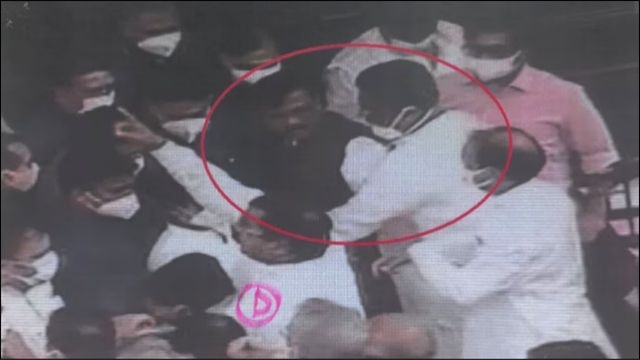
Earlier precedents further illustrate the necessity of procedural safeguards. In the 1965 Hukam Singh ruling, Swatantra Party MP P.K. Deo cited a CBI report concerning alleged corruption only after proper authentication. The ruling balanced the constitutional protection of free speech under Article 105 with procedural checks designed to prevent executive overreach and ensure accountability. Likewise, the 1974 Tulmohan Ram case, which involved forged signatures in a licensing controversy implicating Commerce Minister L.N. Mishra, underscored Parliament’s oversight function. However, scrutiny occurred strictly through verified and authenticated documentation.
Against this backdrop, Rahul Gandhi’s attempt to circumvent established norms appears ill-judged. By invoking an unpublished and unauthenticated source on matters related to LAC tactics, he introduced the possibility of compromising sensitive military information. That risk explains why the Rules of Procedure require prior approval and authentication before such material may enter parliamentary debate.
As the nation observes these developments, it is reasonable to expect that political actors will heed the lessons of history rather than repeat its missteps. Parliament functions as the institutional guardian of democratic deliberation. It cannot devolve into a platform for unverified assertions, particularly on issues that intersect with national security. The Speaker’s firm enforcement of procedural rules ensures that the House continues to operate within constitutional boundaries, safeguarding Bharat’s interests above partisan considerations.
Written by
Kewali Kabir Jain
Journalism Student, Makhanlal Chaturvedi National University of Journalism and Communication