From Maoist Links to “State Pride”: What Is Congress Defending?
Can a figure linked to Maoist ideology be celebrated as a symbol of regional pride? The controversy surrounding Gaddar raises deeper questions about political narratives, selective memory, and ideological positioning. As Congress defends its stance, this debate goes beyond one individual—challenging how societies define legacy, identity, and the line between art and extremism.



The pride of any society is defined by those individuals whose legacy unites that society, ensures its security, and enriches its cultural consciousness. In such a context, it is natural to ask whether a person deeply associated with Maoist terrorism can be described as the “pride” of Telangana. The recent controversy surrounding the Maoist poet Gaddar has brought this very question to the forefront.
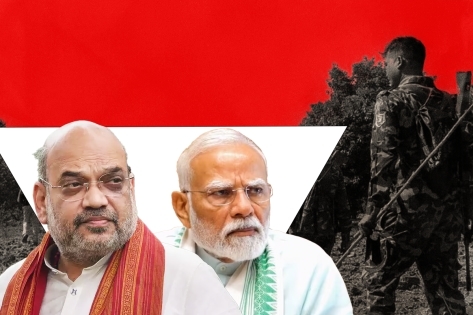
The issue surfaced when Amit Shah referred to Gaddar as a “Naxal.” Following this, Congress leaders opposed the remark, linking it to the honor of Telangana. However, amidst this reaction, a fundamental question was overshadowed: was Gaddar’s identity limited to that of a people’s poet, or was it far more controversial?
It is important to note that Gummadi, also known as Gaddar, was a notorious Maoist who passed away in 2023. Consistent with the character of Indian left-leaning media, he continues to be portrayed as a “people’s poet,” “revolutionary poet,” “revolutionary thinker,” and “writer.” However, this is not the complete reality of Gummadi, alias Gaddar.
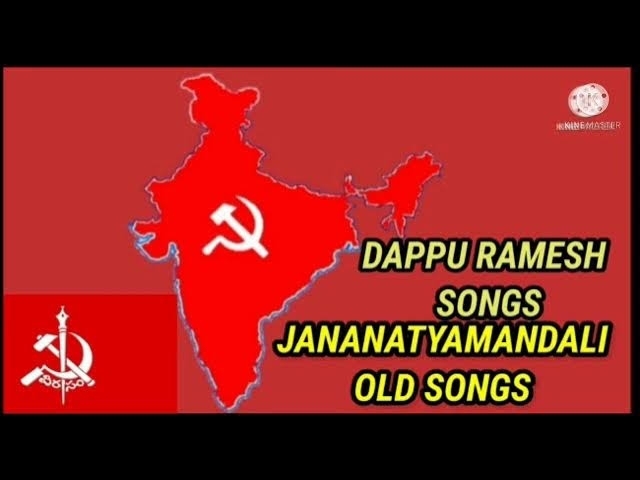
Gummadi, also known as Gaddar, was a hardcore Naxalite ideologue who propagated Naxalism-Maoism through “song, music, dance, and theatre.” In 1972, he founded an organization called “Jana Natya Mandali,” whose primary objective was to disseminate Maoist ideology in rural areas through art and to push rural youth into the dark shadow of Naxal terror.
This organization, “Jana Natya Mandali,” formed by Gummadi, was designated and banned as a terrorist organization for working in support of Naxal extremists. Notably, when the dreaded Naxalite Dappu Ramesh, associated with Jana Natya Mandali, died in 2022, the banned Maoist terrorist organization CPI (Maoist) paid tribute to him.
This was not merely art; it was an ideological campaign aimed at attracting youth toward a violent movement that has stood against India’s democratic system. It is essential to understand that Naxalism is not an ordinary political ideology. It has been a violent movement that has spread terror across several parts of the country for decades. In the name of this ideology, thousands of innocent civilians and security personnel have been killed. In such a scenario, if an individual has actively contributed to the propagation of this ideology, can that aspect be completely ignored?
With the objective of dismantling India’s democratic republican system and establishing a Maoist authoritarian regime, Gummadi Rao, during the 1970s, called upon youth to become Naxalites and himself went underground between 1985 and 1990 to work for the Naxalite movement.
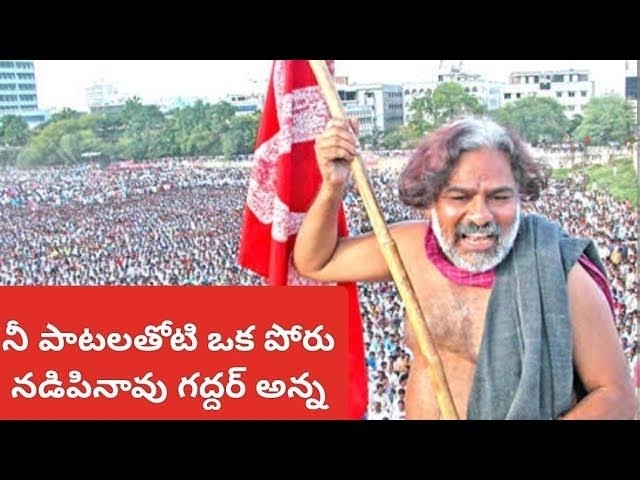
During this period, Gummadi, alias Gaddar, engaged in recruiting cadres for Naxal organizations and pushing them into an endless cycle of Naxal terror. He cultivated an ideological environment in which Naxalism was presented as a “revolution.” However, the true reality of this so-called revolution is best understood by those regions of the country that have witnessed years of violence and instability.
It is also noteworthy that Gummadi faced criminal cases, including charges ranging from the killing of ordinary villagers to the murder of police personnel. He was also a direct accused in a Naxal attack that took place in Karnataka.
On 10 February 2005, Naxal extremists carried out a terrorist attack in Pavagada, Tumkur district of Karnataka. During this attack, approximately 200 Maoists targeted the ninth battalion of the Karnataka State Reserve Police.
In this assault, seven police personnel were martyred, and one civilian was also killed. The police arrested 109 accused in this case and filed chargesheets against two individuals. Gummadi Rao was listed as accused number 11, indicating his direct involvement in the conspiracy behind Maoist terrorist attacks.

In this context, the question becomes even more significant: can an individual’s artistic identity completely overshadow their ideological and political affiliations? Should the other aspects of his life be excluded from discussion merely because he was a poet? If this is done, it would not only be an injustice to history but also to the present.
The Congress party’s portrayal of Gaddar as the pride of Telangana, along with the establishment of awards and institutions in his name, further complicates this discourse. Presenting a person associated with a violent ideology as a symbol of collective societal pride is not appropriate.
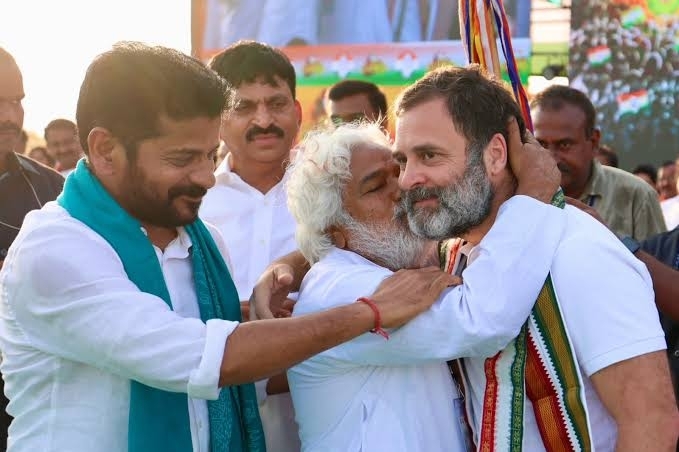
It is noteworthy that until 2017, Gummadi himself maintained connections with Maoist extremists and harbored ambitions aligned with the ideology of Naxal terror aimed at fragmenting the nation. Subsequently, he began aligning with the Congress party. In October 2018, Gummadi met Congress leaders Rahul Gandhi and Sonia Gandhi, after which he became favored by the party.
Gummadi travelled extensively through the forests of undivided Andhra Pradesh and Chhattisgarh, pushing the children and youth of local rural communities into the violence of Naxalism-Maoism, while his own children became educated and affluent.
On one hand, many youths from Telangana, Andhra, and Chhattisgarh who joined Naxalism have had their lives destroyed—some have been killed, some imprisoned, some left wandering in forests, and others have died in deprivation. On the other hand, the children of Gummadi, who led these innocent villagers toward Naxalism, are today well-educated, possess assets worth crores, and have become political leaders, supported by the Congress party.
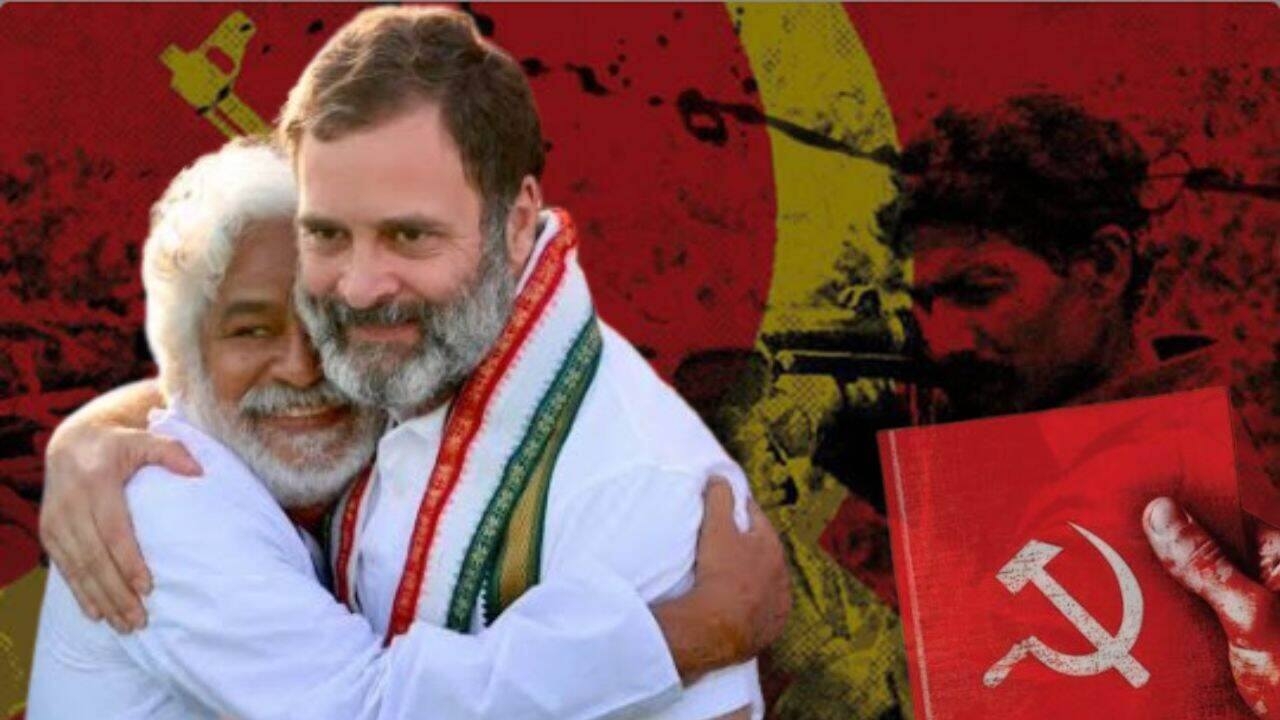
Meanwhile, the Congress party is not only portraying such an individual—who was associated with anti-India, anti-democratic, and terror-supporting ideology—as “great,” but is also projecting him as the pride of Telangana.
The identity of Telangana is not defined by any single individual, especially not by someone associated with Maoist terrorism, which has claimed the lives of thousands of innocents.
Ultimately, this question is not limited to a Maoist figure like Gaddar. It is essential for any society to choose its symbols with caution. Symbols do not merely represent the past; they also shape the direction of the future. And this is precisely where the question arises again: can a person associated with a violent terrorist ideology truly be considered the pride of Telangana?