The End of Naxalism: Vanvasi of Bharat Liberated from Maoist Tyranny
Decades of Maoist coercion end as tribal regions transition from terror zones to centres of development and local empowerment.
Total Views |


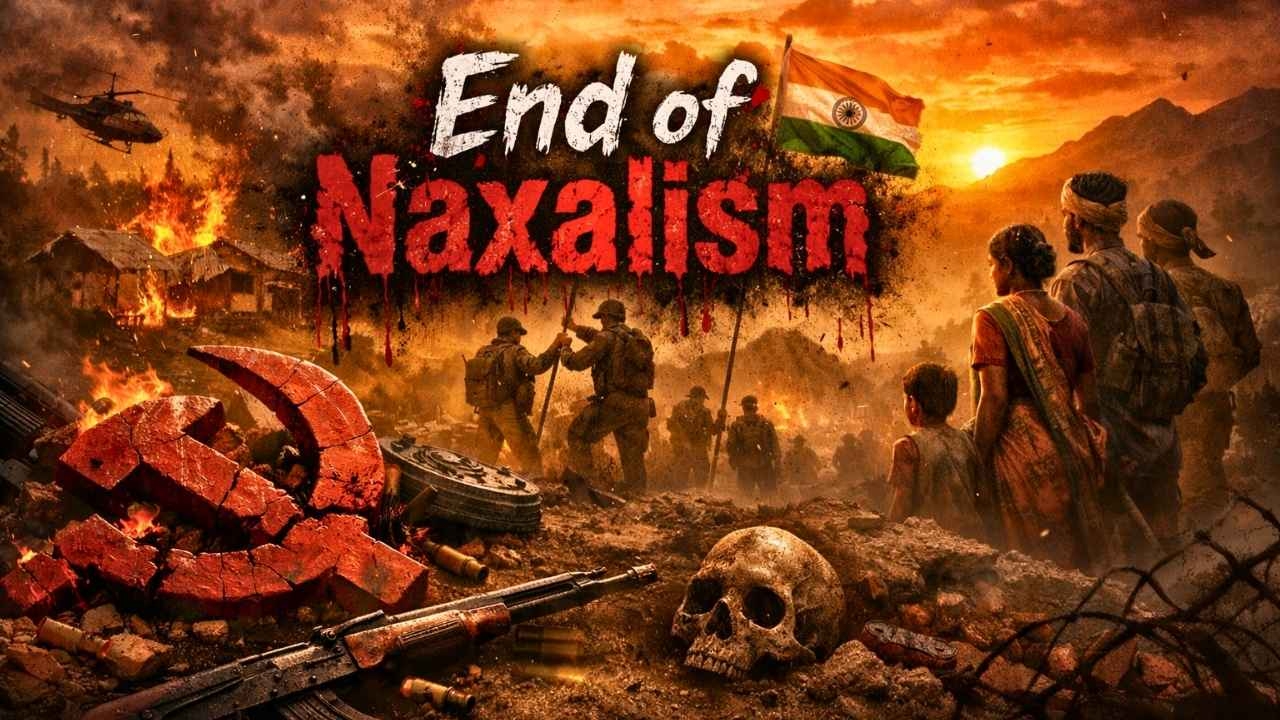
As the sun set on March 31, 2026, Bharat stood tall and united in declaring victory over the longest-running internal security threat since Independence. Union Home Minister Amit Shah fulfilled the solemn pledge of making Bharat Naxal-free. The Maoist "Red Corridor", which once stretched through mineral-rich tribal heartlands, has been dismantled.
From the dense sal forests of Bastar in Chhattisgarh to the rugged hills of Gadchiroli in Maharashtra, from the plateaus of West Singhbhum in Jharkhand to the remote hamlets of Kandhamal in Odisha, and even the once-troubled fringes of Telangana and Andhra Pradesh, the red guns have fallen silent. The politburo of the Communist Party of India (Maoist) has seen thousands of its cadres surrender, and the last pockets of violence have been neutralised. This marks the emancipation of Bharat's Vanvasi communities.
For over five decades, the Maoists preyed upon legitimate grievances of tribal neglect. In the six focus states of Chhattisgarh, Jharkhand, Odisha, Telangana, Andhra Pradesh and Maharashtra, the Naxals embedded themselves within Janjati villages. They promised dignity while enforcing a regime of fear. They advanced a doctrine of "protracted people's war" aimed at capturing Delhi, using Bharat's indigenous sons and daughters as expendable instruments.
The decline of this parasitic movement, accelerated since 2014 under the leadership of Prime Minister Narendra Modi and Amit Shah, has exposed the Maoist deception and restored the forests to their rightful stewards, the tribal communities themselves.
The Maoist Exploitation: Tribals as Human Shields in the "People's War"
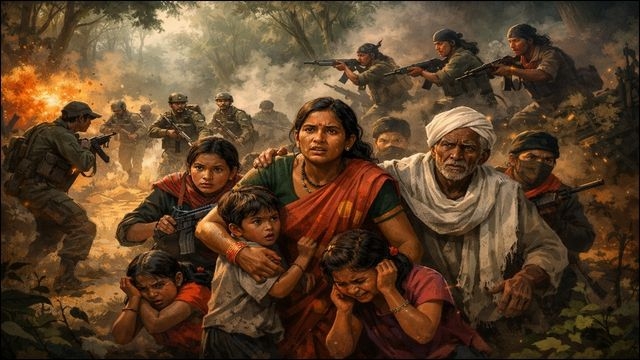
In Chhattisgarh's Bastar region, once the epicentre of the Red Corridor, Maoists converted villages into conflict zones. Repeatedly, they forced Vanvasi women, children and elderly villagers to act as human shields. In encounters in Narayanpur's Abujhmad in December 2024, security forces recovered evidence that Maoists compelled villagers, including minors, to transport supplies and stand between guerrillas and advancing forces. When firing occurred, it was the tribals who suffered the consequences. Despite this, sections of urban sympathisers and certain left-leaning NGOs attributed blame to the state.
Senior officers in Bastar have consistently documented that female Maoists, often misled tribal women, were deliberately deployed as shields because male commanders retreated. This tactic relied on the assumption that security forces would hesitate to engage when women were positioned at the front.
This pattern was also replicated across states. In Jharkhand's West Singhbhum, Maoists mined roads and obstructed development. They imposed levies on forest produce such as tendu leaves and bamboo. Dissenters were labelled informers and executed in kangaroo courts. In Odisha's Kandhamal and Malkangiri, entire villages were coerced into providing food, shelter and recruits. Children were inducted under threat.
In Telangana and Andhra Pradesh, Janjati youth were forced into armed dalams, while infrastructure such as schools and roads was deliberately destroyed to sustain isolation. Maharashtra's Gadchiroli witnessed similar extortion practices, where tribal farmers surrendered a portion of their limited harvest under threat of execution.
Thousands of Vanvasis lost their lives in Maoist ambushes or were killed as suspected informers. Leadership remained dominated by non-tribal urban ideologues, while tribal foot soldiers bore the brunt of violence.
From Red Strongholds to Development Zones
Chhattisgarh bore the heaviest burden, with Bastar's Abujhmad functioning as the Maoist stronghold. Under the National Policy and Action Plan, the state led a decisive counter-offensive. Units such as the District Reserve Guard and Bastar Fighters, comprising local tribal youth including surrendered cadres, played a pivotal role. Their familiarity with terrain enabled systematic dismantling of Maoist networks.
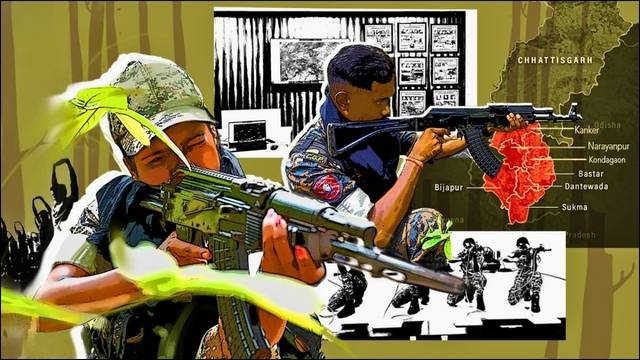
Chhattisgarh alone recorded over 6,000 surrenders and 1,241 neutralisations since 2014. By early 2026, the last severely affected districts, including Bijapur, Narayanpur and Sukma, saw a collapse in violence. Bastar now operates without insurgent disruption.
Jharkhand followed a similar trajectory. West Singhbhum, once characterised by ambushes and extortion, now witnesses expanding infrastructure and increasing tribal participation in security forces.
Odisha has significantly reduced Maoist influence. Kandhamal has entered the consolidation phase, while Malkangiri and Kalahandi have transitioned from parallel Maoist systems to stable administrative governance.
Telangana and Andhra Pradesh achieved near-total elimination earlier. Districts such as Bhadradri-Kothagudem and Alluri Sitarama Raju now reflect effective tribal integration through implementation of the Panchayats (Extension to Scheduled Areas) Act and the Forest Rights Act.
Maharashtra's Gadchiroli, previously a major western stronghold, has also seen Maoist influence disappear. It is no longer categorised among the most affected districts, and tribal communities now participate actively in civic and developmental initiatives.
At the national level, Left Wing Extremism-affected districts declined from 126 in 2014 to seven by February 2026, and to zero by March 31, 2026. Violent incidents have reduced by 88 percent since 2010. The year 2025 recorded 2,337 surrenders, a 165 percent increase. More than 8,000 Naxals have laid down arms over the past decade.
The Real Transformation: Tribal Agency, Development and Dharma
The current BJP-led government's integrated strategy, combining security, development, rights and perception management, has strengthened tribal agency. Specialised units such as the District Reserve Guard and Bastar Fighters emerged as decisive instruments. Rehabilitation policies enabled surrendered cadres to reintegrate through housing, employment and social inclusion.
Flagship initiatives, including the Aspirational Districts Programme, expansion of road connectivity, establishment of schools and skill centres, and improved healthcare access, reached previously inaccessible regions. The implementation of the Forest Rights Act and PESA ensured legal ownership and governance rights for Janjatis.
In Bastar, former Maoist recruits, including women, now serve within Bharat's security framework, protecting their own communities. Local markets are expanding, school attendance has increased, and healthcare services are reaching remote areas.
The so-called Maoist movement stands exposed as an anti-national and anti-Dharma enterprise sustained through coercion and extortion. Its collapse represents not merely a security success, but the restoration of dignity, autonomy and rightful ownership to Bharat's Vanvasi communities.
Written by

Kewali Kabir Jain
Journalism Student, Makhanlal Chaturvedi National University of Journalism and Communication