The Rebel Christian Clergyman Who Influenced the Entire World: Martin Luther – Part 3
In 1520, Luther openly rejects papal control, redefining sacraments and declaring that salvation depends on faith rather than Church rituals.
Total Views |


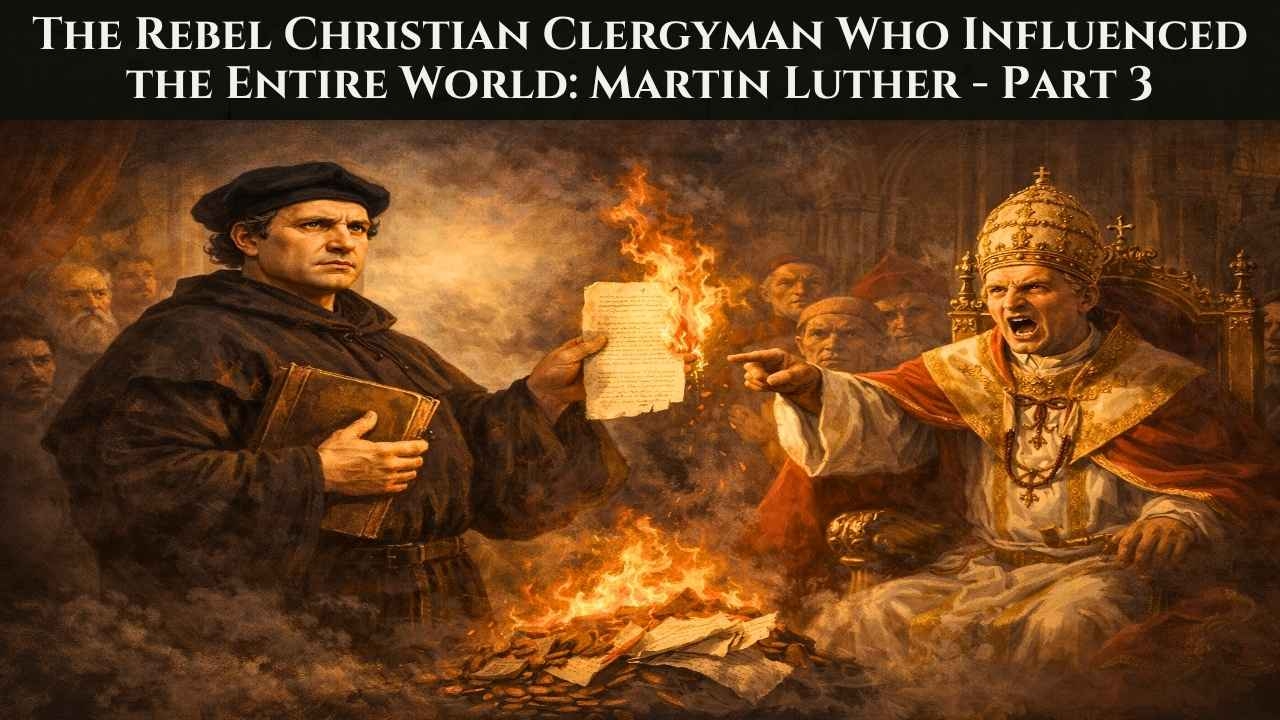
October 31, 1517, is observed as Reformation Day. In 1520, Martin Luther wrote three books. In the previous section, we looked at To the Christian Nobility of the German Nation. His second book was On the Babylonian Captivity of the Church.
In this work, Martin Luther argues that the Roman Church and the Pope had taken the church captive. According to him, the Pope had bound the Church through religious sacraments and Roman philosophy.
Christianity recognises seven sacraments: Baptism, Confirmation, Eucharist, Penance, Anointing of the Sick, Holy Orders, and Matrimony. Martin Luther stated that only three of these—Baptism, Eucharist, and Penance—are true sacraments, while the others are unnecessary.
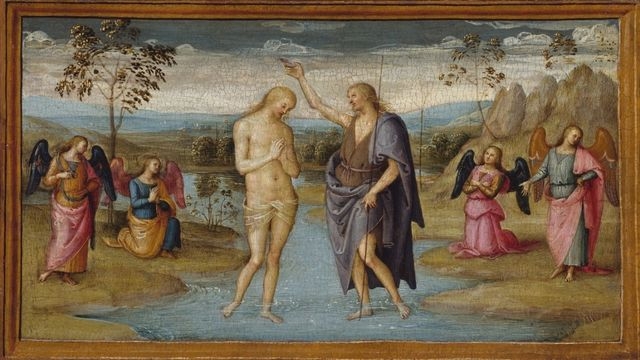
Every individual is baptised when they are made a Christian. This involves sprinkling water on them or immersing their head in water three times. The Father, the Son, and the Holy Spirit together form what is called the Trinity in Christianity. Luther accepted this concept of the Trinity.
The Eucharist refers to the Last Supper that Jesus Christ shared with his disciples. At that time, he said that the bread represented his body and the wine represented his blood. This ritual is performed in churches on Thursdays or Sundays. Bread and wine are placed on the table, prayers are offered, and it is believed that through these prayers, Jesus becomes present in them. Martin Luther argued that no such prayers are necessary—Jesus is already present. He believed that such practices were created by clergy to increase their own authority.
Regarding penance, Luther stated that no intermediary is required for repentance. The overall tone of this book reflects strong anger toward the clergy.
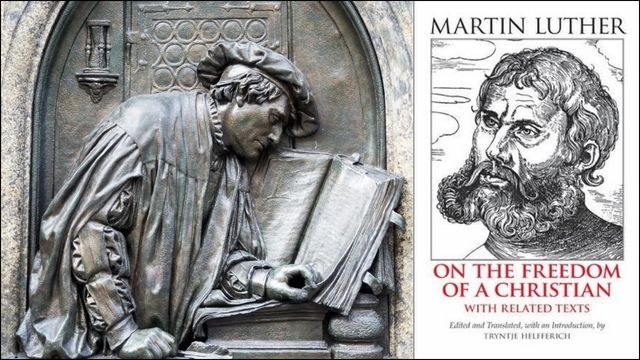
The third book written in 1520 was On the Freedom of a Christian. In this, Luther states that Christians are already forgiven children of God and do not need to follow any external rules imposed by the Church.
A Christian, he says, is a free lord, subject to none, and at the same time a dutiful servant of all, responsible to everyone. Only faith—firm belief—can bring a person closer to Christ or God.
Luther supports his arguments with several references from the Bible. He explains that Jesus Christ, our God, died for our sins and rose again for our salvation. He is the Lamb of God who takes away the sins of the world. The sins of humanity were placed upon him. All people are sinners, and without considering their deeds or virtues, it is only by divine grace—embodied in the blood of Jesus Christ—that one is freed from sin (Romans 3:23–25).
This must be believed. It cannot be understood through actions, laws, or merit. Therefore, it is certain that unwavering faith alone leads to salvation from sin, and this is the ultimate truth.
By strongly opposing the religious system, the Pope, and the established holy orders, Martin Luther inevitably attracted the hostility of both the Pope and the king.
Written by
Dr. Prasad Kelkar