Naxal Threat Fades; Bharat Tightens Its Grip
Bharat closes in on ending one of its most enduring internal security threats.
Total Views |


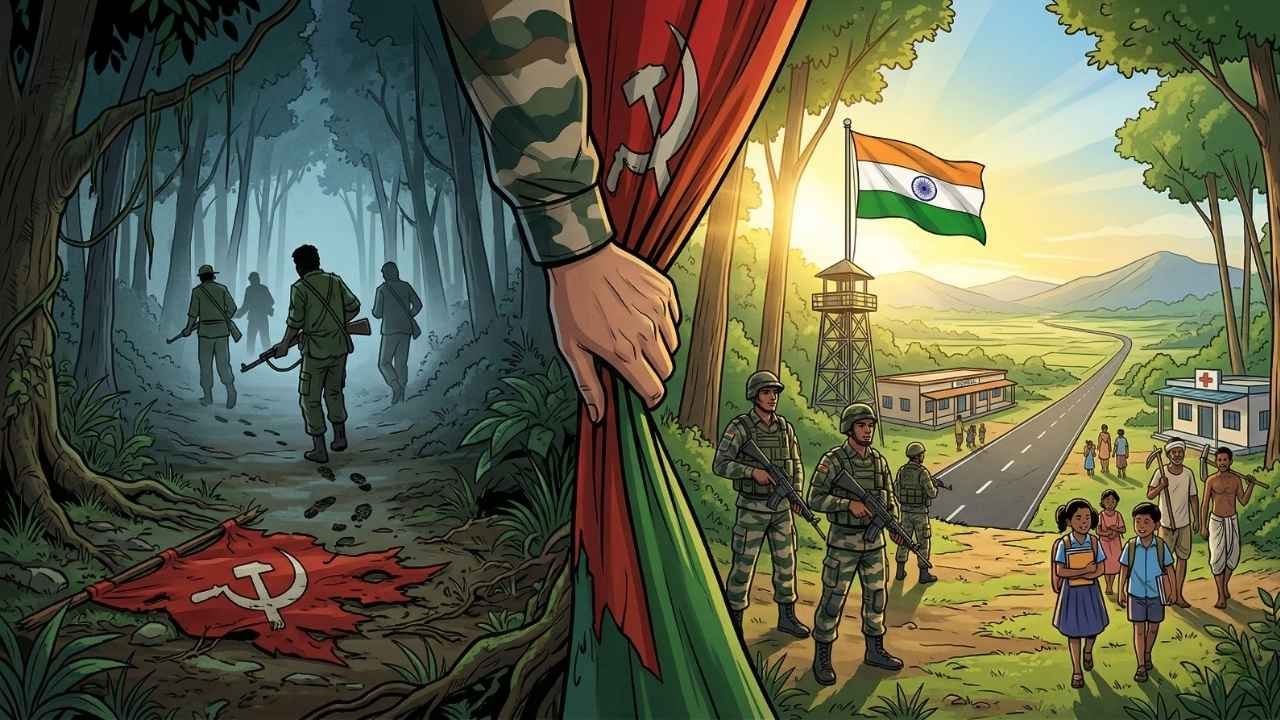
A bloody chapter in Bharatiya history finally nears its conclusion. Once boasting a presence across 12 States and dominating 17 per cent of Bharatiya territory, the Maoist terrorism now gasps for breath in merely 2 districts. Union Home Minister Amit Shah recently presented these defining statistics to the Lok Sabha, signalling the imminent death of a ruthless ideological syndicate.
For decades, intellectuals peddled a romanticised narrative. They painted Naxalism as a natural rebellion of the marginalised against a failing State. However, the reality reveals a much darker, meticulously calculated strategy.
Maoists never cared about poverty. In fact, Naxalism created poverty rather than fighting it. If economic deprivation truly birthed this insurgency, equal poverty in other regions would have spawned similar armed movements. Instead, the architects of this terror deliberately selected inaccessible geographical terrains like dense forests and rugged hills to establish their bases.
The roots of this bloodshed did not begin just at Naxalbari in 1967; rather, they can be traced back to the ideological penetration of Maoism in Bharat as early as the 1920s. The events of 1967 only provided this imported doctrine, drawn from China, with a localised identity under the label of "Naxalism."
From there, the movement gradually expanded its geographical and operational footprint towards Southern Bharat. The insurgents envisioned a continuous terror corridor stretching from 'Pashupati to Tirupati', a plan actively pursued by the People's War Group (PWG).
Building 'Liberated Zones'
The organisation systematically built its operational network in Andhra Pradesh before extending its influence into the forested interiors of Chhattisgarh. It identified the Dandakaranya region in Bastar as a strategic base, exploiting its difficult terrain and prevailing administrative vacuum. Following the murder of Pravir Chandra Bhanj Deo, the region experienced a significant leadership void, which Maoist leadership leveraged to their advantage.
Under Kondapalli Seetharamaiah, initial efforts involved sending small scouting units to understand local socio-cultural dynamics. Gradually, they infiltrated tribal society through cultural mediums such as songs, dances, and street performances.
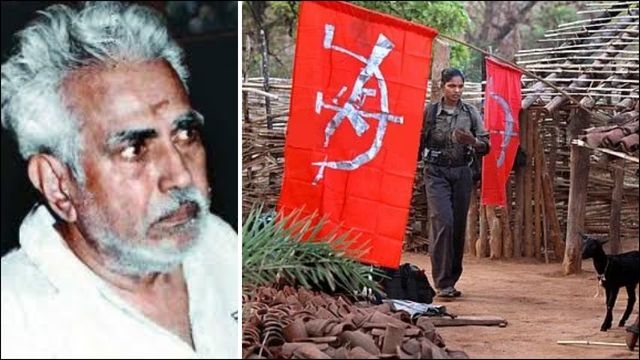
Once entrenched, they consolidated control by establishing parallel, coercive structures and progressively militarising sections of the local population, eventually projecting Dandakaranya as their first so-called "liberated zone."
By the 1990s, the insurgents declared Bastar a liberated zone. They actively dismantled the democratic apparatus and established parallel administrative structures, including brutal kangaroo courts.
Following a directive from the Coordination Committee of Maoist Parties of South Asia (CCOMPOSA) in 2004, the People's War Group merged with the Maoist Communist Centre of India (MCC) to form the Communist Party of India (Maoist). This unification centralised their military capabilities and exponentially increased the regional bloodshed.
Violent Spree Of Attacks
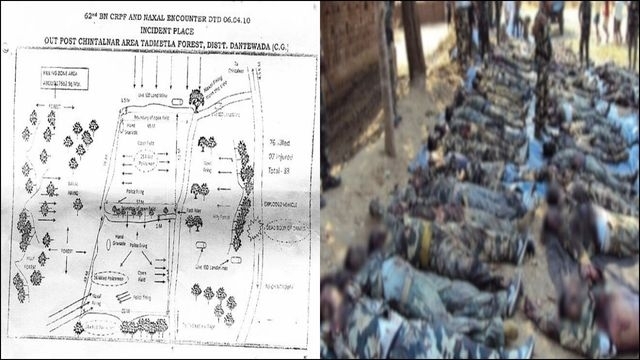
The Maoist syndicate subsequently drenched the soil of Bastar in innocent blood. They masquerade as saviours of tribal communities but primarily butcher the very Janajatis they claim to protect.
Their violent spree includes the horrific April 2010 Tadmetla attack, where insurgents ambushed a joint security patrol and martyred 76 brave jawans. This incident remains the deadliest attack in Bharatiya counter-insurgency history.
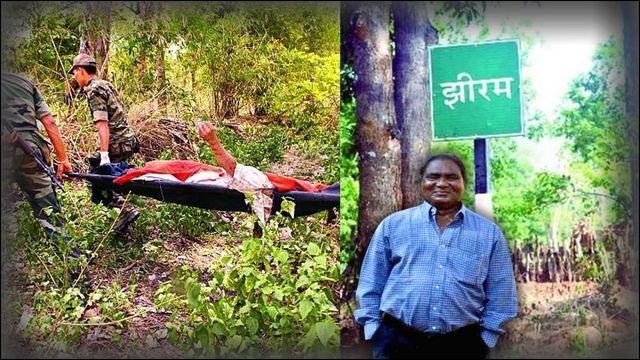
In May 2013, they orchestrated the Jhiram Ghati massacre. They ambushed a political convoy travelling from Sukma to Jagdalpur, trapping the vehicles between two hills. They murdered 29 people, including top provincial politicians like Mahendra Karma, Uday Mudaliyar, and Nandkumar Patel. They even danced on Karma's lifeless body to celebrate their barbarism.
Furthermore, they burnt down tribal camps in Errabore in July 2006, murdering 33 local villagers and injuring hundreds more. In 2007, they attacked the Ranibodli police post, claiming the lives of 55 security personnel.
The extreme brutality of the extremists eventually sparked a fierce local backlash. In 2005, fed up with constant abductions and murders, tribal communities initiated Salwa Judum (Peace March). Locals picked up arms to answer the Maoist bullets.
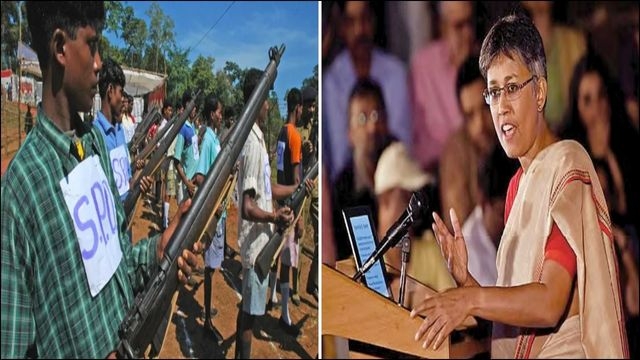
This organic uprising severely weakened the militant grip. Consequently, urban sympathisers rushed to the courts to shield their armed comrades. The Supreme Court banned Salwa Judum in 2011, forcing the villagers to disarm. Maoists immediately capitalised on this vulnerability and unleashed a brutal wave of targeted killings against the defenceless Salwa Judum leaders.
Shocking Political Patronage
As the security forces spilled their blood in the jungles, certain political entities actively patronised the insurgents. While Bhupesh Baghel governed Chhattisgarh between 2018 and 2023, his administration exhibited a shocking leniency towards these anti-national forces.
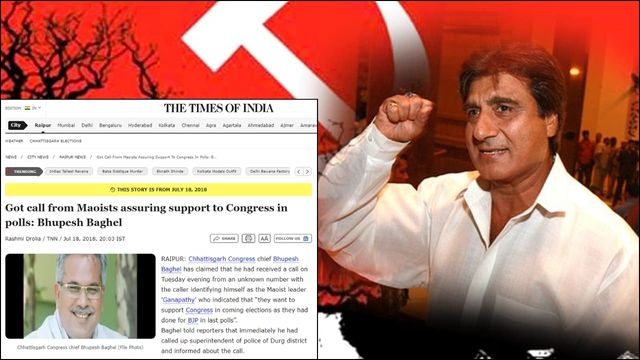
Prior to the 2018 elections, Maoist leader Ganapathi directly telephoned Baghel to offer electoral support, promising to sway results in numerous constituencies. Consequently, the political party won overwhelmingly in the Maoist-affected zones. Furthermore, politicians like Raj Babbar shockingly categorised these murderers as revolutionaries, whilst a Rajya Sabha Member of Parliament openly defended them.
When the entire country locked down during the coronavirus pandemic, the state government allowed Maoists to hold massive gatherings. Ten thousand villagers attended a massive Maoist conference in June 2020, which helped these terrorists replenish their exhausted rations.
The State Police received intelligence inputs about these gatherings, yet the Government took absolutely no action to stop them. This political complicity helped the Maoists raise entirely new armed companies and train hundreds of fresh recruits during the lockdown.
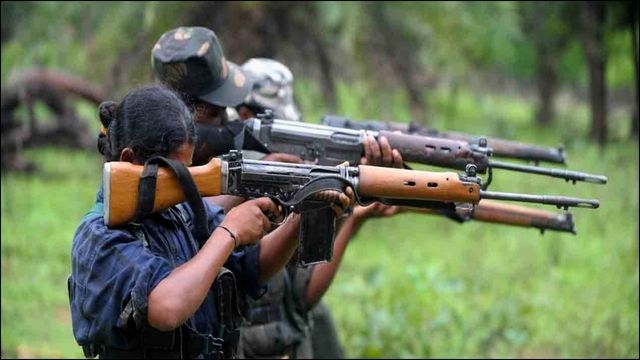
Consequently, terrorist attacks persisted. In 2019, Maoists executed 72 attacks, killing 30 civilians and 19 jawans. In 2020, they conducted 70 attacks, resulting in the deaths of 28 civilians and 37 jawans.
In 2021 alone, extremists executed 71 attacks, killing 29 civilians and 45 security personnel. The casualty rate for security forces increased significantly during this period, exposing the dire consequences of political apathy.
Interestingly, leaders from Andhra Pradesh and Telangana tightly controlled the entire upper echelon of the Maoist organisation. These non-local leaders treated local tribal communities as disposable foot soldiers.
Whenever these senior leaders wished to retire, they comfortably surrendered in their home States and collected massive Government bounties. Meanwhile, they ruthlessly executed any local tribal cadre who even dreamt of surrendering.
Additionally, urban Naxals constantly manufacture a fake encounter narrative to demoralise security forces. Whenever our soldiers eliminate terrorists, sympathisers like Himanshu Kumar approach the judiciary to halt the military operations. The Supreme Court famously fined Kumar for misusing the legal system to protect extremists.
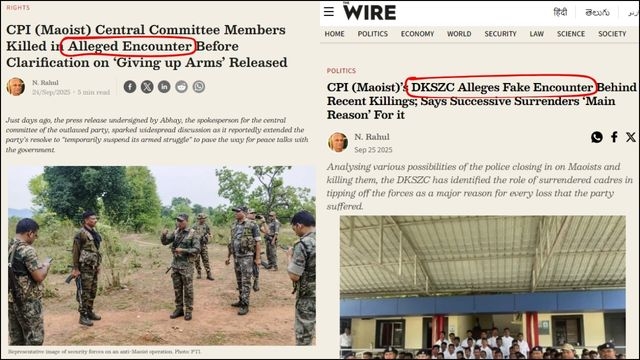
Media outlets also play a sinister role by deliberately using terms like "alleged" Maoists to cast doubt on legitimate military actions. Politicians also fuel this propaganda. Following a successful operation in Hapatola, multiple political figures immediately questioned the authenticity of the military action.
The Sinister Agenda
The Maoist agenda rests entirely on anti-democratic and anti-national foundations. They actively conspire with enemy nations to destabilise Bharat. They absolutely despise development. Maoists consistently blow up newly constructed roads, destroy schools, and target healthcare facilities because progress threatens their existence.
If electricity and doctors reach a village, the Maoist fear factory collapses. Therefore, they maintain parallel kangaroo courts where they execute innocent Vanavasis without any legal representation or fair trial.
Moreover, their internal structure heavily relied on the extreme exploitation of women. Surrendered female cadres confessed that top commanders subjected them to years of continuous sexual abuse and treated them merely as objects of consumption.
One former commander, Shobha Mandi, revealed that fellow Maoists raped her repeatedly for seven years. Furthermore, these terrorists vehemently opposed indigenous cultural practices. They assassinated tribal leaders who promoted Hindu traditions or organised local religious festivals. They murdered Ghassuram Usendi simply because he urged the tribal community to worship Goddess Danteshwari.
Ultimately, they worshipped violence, believing solely in Mao Zedong's doctrine that political power grows out of the barrel of a gun. They utilised terror to extort money and run massive criminal networks.
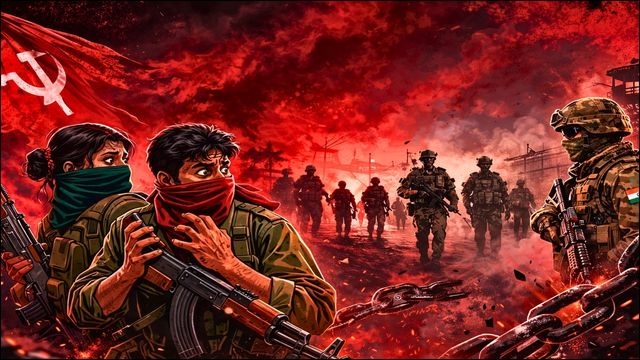
Today, however, the Bharatiya state has almost dismantled this terror network. The ideological deception has lost its grip on the Vanavasi youth. The nation has already recognised the Maoists not as misguided rebels but as a highly structured terror syndicate.
Bharat now writes the final obituary of left-wing extremism, ensuring that the blood-soaked soil of Bastar finally sees the dawn of genuine peace and democratic development.
Written by

Mokshi Jain
Sub-editor, The Narrative