The Rebel Christian Clergyman Who Influenced the Entire World: Martin Luther – Part 7
Luther"s views on war, Islam, and Jews reveal deep contradictions, as his ideas shift between tolerance, hostility, and lasting historical consequences.
Total Views |


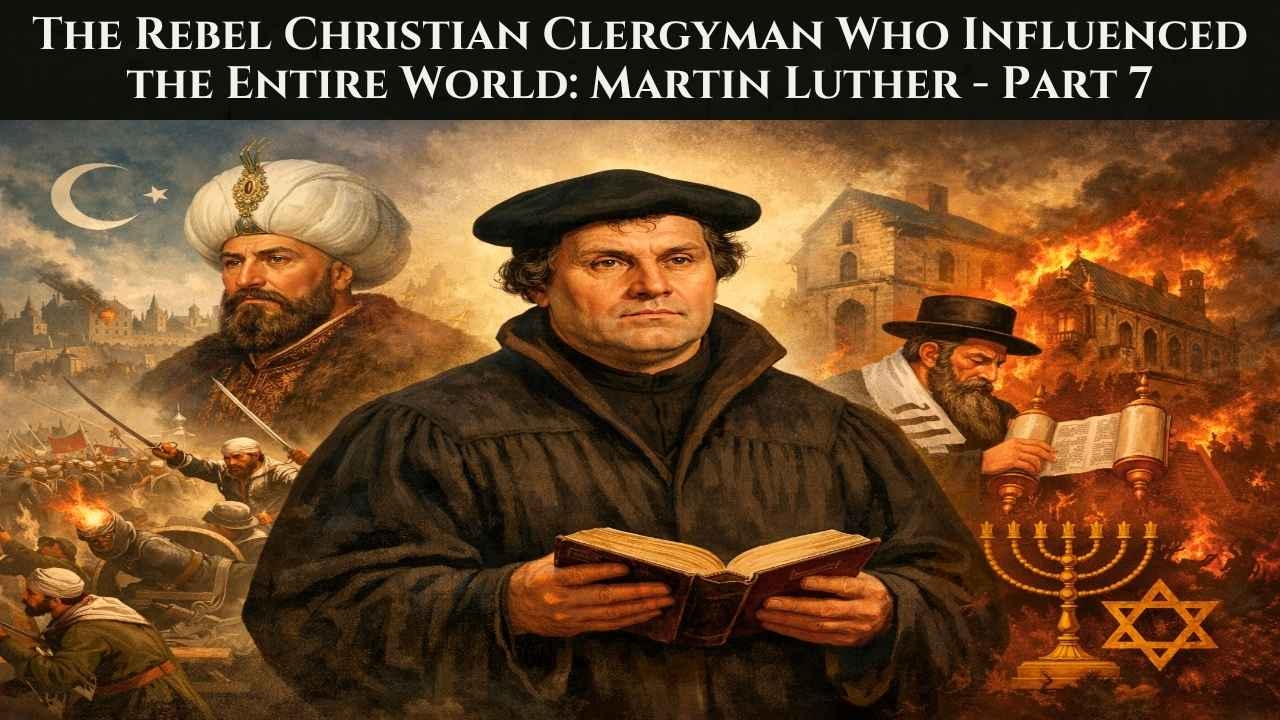
At the beginning of Martin Luther's career, around 1518, the Ottoman Empire's ruler, Caliph Suleiman, attacked Vienna. At that time, Luther believed that this attack should not be resisted. He said it was a calamity sent by God upon Christians as punishment and that God had sent the Turks to destroy the Pope, his associates, and the Roman Catholic Church. (Jyotirao Phule made a similar statement regarding Prophet Muhammad and Afzal Khan.) Such was the intensity of Luther's hatred toward the Pope and the Roman Church. The Roman Church, however, declared it a holy war to resist the Turkish invasion, which Luther opposed, saying it was against the principles of Jesus Christ.
By 1526, as Suleiman's attacks intensified, Luther's stance changed. Here, his "Two Kingdoms" theory proved useful. He argued that defending the nation was the duty of the ruler, but it was a secular responsibility, and the war should not be fought on religious grounds. Later, as it seemed that Vienna might fall, Luther prayed for the victory of King Charles V and urged all nations to do the same.
In 1542, Luther read the Qur'an in Latin and subsequently published several pamphlets critiquing Islam under the title "Mohammedanism or the Turk". However, he remained indifferent to Muslim religious expansion, arguing that just as the Pope and Catholics exist in the world, Muslims too should be allowed to live according to their beliefs. This again reflects the extreme nature of Luther's hostility toward the Pope and Catholicism.
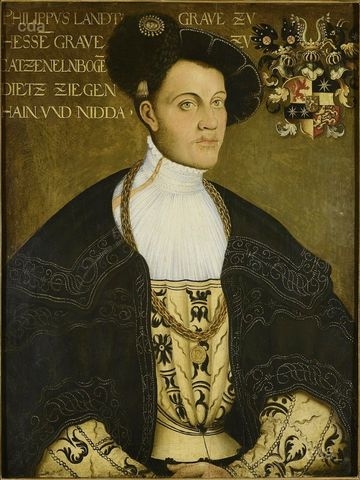
In 1539, Philip of Saxony, Landgrave of Hesse, desired to enter into a second marriage (bigamy), which is not accepted in Christian tradition. He sought Luther's advice. Seeing Philip's firm determination, Luther reluctantly advised him to conduct the marriage secretly. In Luther's view, divorce was a greater sin than bigamy. Philip married Margarethe in secret, but his sister exposed the matter. When Philip, in trouble, told Luther he would reveal that he had acted on Luther's advice, Luther told him to tell a "good and strong lie". Luther's biographer Martin Brecht notes that this incident permanently tarnished Luther's reputation, as he was as much at fault as Philip.
Luther's relationship with the Jews was similarly complex. Jesus Christ himself was born a Jew, and his early followers were also Jews. Although Christians often held Jews responsible for the crucifixion of Christ, Jews denied this. Jews were frequently persecuted in Christian states. Initially, Luther helped prevent the destruction of Jewish religious texts, believing that Jews, troubled by the Catholic Church, would join the Reformation and convert to Christianity. However, Jews did not abandon their traditions. When Luther realised this, his attitude shifted drastically, and he began to hate them.
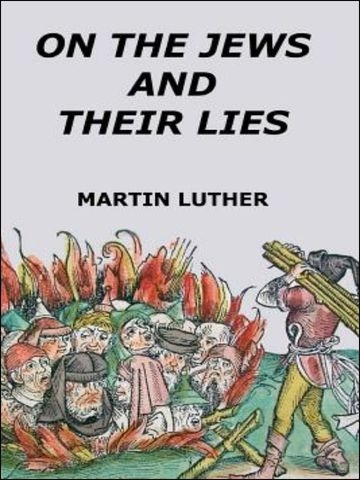
In 1543, he wrote the book "On the Jews and Their Lies", in which he harshly criticised Christian states for failing to deal with Jews. He urged Christians to take severe actions: to burn synagogues and schools, destroy their homes, confiscate their religious books, prohibit rabbis from teaching, deny them access to highways, seize their wealth (gold and silver), and force them into hard labour. He further suggested that if they were still seen as a threat, they should be expelled permanently from the country, following the examples of France, Spain, and Bohemia. He referred to Jews as "the Devil's people".
These ideas had a significant impact in Germany, leading to increased persecution of Jews. The seeds of anti-Jewish hatred sown by Luther later bore poisonous fruit, and his writings were cited in Germany for many years.
The Nazi regime in Germany referred to itself as the "Third Reich", considering itself the successor to the Roman Empire and the German Empire. Along with this legacy, they also inherited anti-Jewish sentiment. During this period, many anti-Jewish writings cited Luther as a reference.
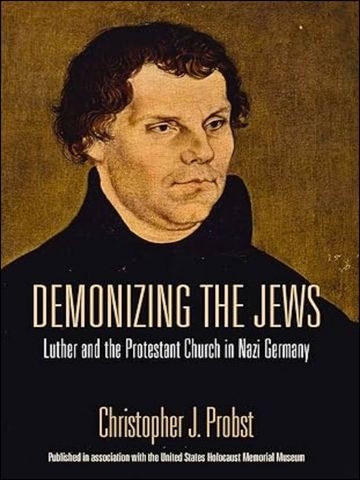
The book "Demonizing the Jews: Luther and the Protestant Church in Nazi Germany" by Christopher J. Probst (2012) explores this connection.
Thus, in Martin Luther's life, we see both angelic and demonic aspects. His biographer Martin Brecht writes:
"There is a world of difference between his belief in salvation and a racial ideology. Nevertheless, his misguided agitation had the evil result that Luther fatefully became one of the ‘church fathers of antisemitism' and thus provided material for the modern hatred of the Jews, cloaking it with the authority of the Reformer."
Written by
Dr. Prasad Kelkar