1956: Report of the Christian Missionary Activities Enquiry Committee (Part 1)
The report reviews missionary activity, social unrest, and contested narratives around conversion methods, education control, and alleged political involvement in tribal regions.
The Narrative World 17-Apr-2026
Total Views |


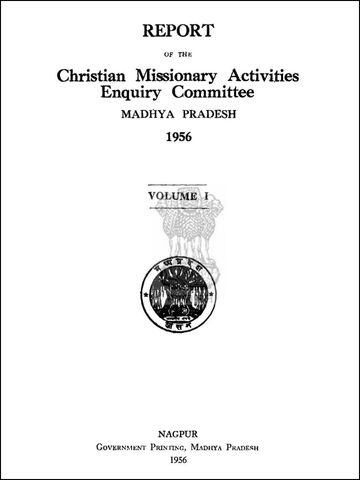
This committee was appointed by the government of Madhya Pradesh; rather, it was obliged to do so as Christians and non-Christians both complained. It was brought to the notice of the government repeatedly that conversion of illiterate Aboriginals was achieved by force, fraud and temptation of monetary gain. On the other hand, missionaries alleged that local officials and non-Christians harassed them.
The committee was to thoroughly enquire into the question and make recommendations. Access to some government files was given to the committee. It toured the 14 districts, visited 77 centres, and contacted approximately 11360 people. It was set up to clear the doubts and disputes and promote goodwill, friendliness and peace.
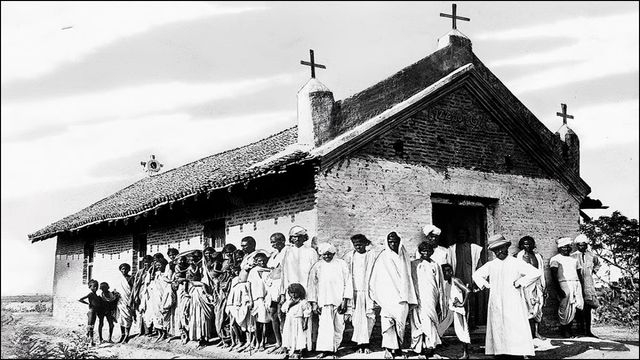
The committee was aware of the fact that missionaries provided good service in the area of education and medical relief, but people had objections to the methods adopted by the missionaries. They created tension and a rift in society. People suspected some ulterior political or extra-religious motive also. Missionary efforts were concentrated in remote and inaccessible forest areas. The conversion was on a big scale, and foreign money was used for the activity.
To help understand various aspects of the problem, an elaborate questionnaire was prepared. The committee had no power either to compel anyone to attend or make any statement, oral or written, or to administer an oath. The nature was not judicious. The attitude and the tone were neutral. It was to view the problem as an integral part of the broad canvas of the world's history.
The response was encouraging; 55 Christian and 330 non-Christian organisations replied. Later the Catholic Church retracted its cooperation and moved the high court, but the petition was dismissed.
The committee identified several underlying causes of unrest:
- Prior to political integration, certain regions experienced oppression and misgovernance.
- The population expected immediate improvements after integration. Although conditions stabilised, missionary activities reportedly continued in a covert manner.
The report that the MP government acquired from the states showed that the role of missionaries was certainly not healthy and acceptable. Even before independence, the government was compelled to restrict their movement. After integration they obviously thought of losing their influence. They were playing with the feelings of the primitive converts.
Missionaries didn't want the government to open schools in the area under some scheme. The Catholic father even gave an undertaking to confine the activities only to religion and not have any political role.
Missionaries saw opening the schools as Hindu propaganda and the efforts to bring the converts to their original faith. It was seen to be an attempt to prevent missionaries from converting and uplifting people. It was also mentioned as an endeavour to push non-Christians (the word used is 'pagan') away from the schools. This was written by Father Vermiere in a letter.
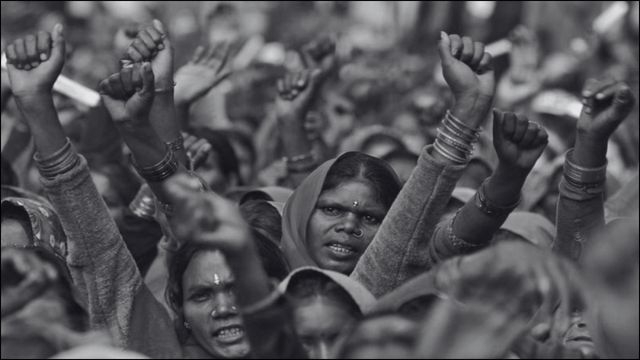
Of course missionaries were working secretly in the merged states to carry out their propaganda. The districts they targeted had dense forest and were rich with minerals. They even wanted to isolate Aboriginals from other communities and exclude the nationalist elements. The demand for Adiwasisthan was also put forward along with Pakistan in 1938. After independence there was a demand for a corridor joining East Bengal with Hyderabad.
Propagating the Adiwasi movement had always been the aim. In 1948 propaganda for separate Jharkhand, which would include all the areas dominated by Adivasis, was carried out, which could have been administered by Christians who were in big numbers. This was a corridor from Bengal to the state of Hyderabad. They wanted to merge all states (small states which were administered by families). (This area was dominated by Adivasi Christians with Bihar instead of Madhya Pradesh, especially the states of Surguja and Jashpur). In 1948 they were merged with Madhya Pradesh. In spite of this, missionaries expected people to have the right to choose the state. This was in a way weaponising democracy. The agitation was carried out secretly.
Obviously even in February 1941 too many restrictions were in place to check unfair activities of Catholic priests. Rev Tigga was fined for violating the restrictions. They always were involved in the political activities which were divisive in nature.
Many non-Christians pointed out the religious nature of instructions to children in schools. Government schools were opened in the tribal area; missionaries objected to this, as they were also running schools. On one hand, missionaries promised cooperation in every possible way, but they were very much into the political movement related to Jharkhand and the matters outside religion.
The missionaries levelled charges against local officials and non-official people for denying scholarships and concessions to Christians. No case was found to be true.
It was obvious that missionaries did not want government to open schools where Catholic schools already existed. The Backward Areas Welfare scheme was certainly a blow to the activities of missionaries.
Mission authorities always wanted to spread Christianity in the area. Christians were brought into the country, and later they were given the task of conversion by preachers.
Selected boys used to be sent to missionary headquarters for training in handicrafts or for higher education. The schools were opened where there were prospects of conversion. Only prospective converts would be admitted to schools. Cash grants were also reported; if one converted, one was not obliged to repay. Use of force was also reported in some cases.
It is mentioned in the report that members of Rashtriya Swayam Sevak Sangh and Arya Samaj came together to fight such activities. Objectionable methods were used by missionaries consistently.
Provocative songs were sung which denounced Hindu religion. When the matter was reported to the police, the concerned missionary offered an unconditional apology.
Threatening those who opposed conversion was also attempted. All the allegations were found to be totally false; even the instance of molesting a Christian lady teacher was false. All such false claims were made to mislead the administration and authorities and whip up the emotions. These were baseless and frivolous complaints made to disrupt the harmony.
When a reverend was found to be involved in the case of smuggling rice (there was a restriction on the export of rice to neighbouring states, and the foodgrain position was not satisfactory), fierce propaganda was made in foreign countries about the treatment given to Christians in Madhya Pradesh. It was found that the smuggling was going on a large scale. In such cases the persons involved were found guilty and convicted too.
The charges of harassment and differentiation levelled against the authorities were supported by the national council on Christians, but all were found to be totally false. It was obvious that it was a cover-up of the objectionable activities carried out. The locals had discontent against the church for the anti-religious and anti-social activities. Especially foreign missionaries were trying to get a foothold in the tribal areas, which people resented. Official enquiry made it clear.
The number of conversions gradually increased; it is reported by the commission that in 1948 the number was 4. In the year 1952 it went up to 4,003; in 1953 the number was 877; and in 1954 it was 233. These numbers belong to only one tribal community, the Uraons. The numbers tell the tales clearly. It is to be noted that about 30 missions were working in Madhya Pradesh then. The activities were confined to scheduled class, tribes and backward class. Of course the charges of conversion were denied by missionaries.

प्रो. विद्या देशपांडे
Professor Vidya Deshpande has over four decades of experience in education. Her main expertise is philosophy; she taught philosophy and logic at Nowrosjee Wadia College for 36 years. She has been associated with the Janakalyan Blood Bank for the last 38 years and served as a management committee member of Karve Stree Shikshan Sanstha for 10 years. Her special fields of interest include the philosophy of social sciences, school education, development of self-reliance skills, and top-up skills to make students profession-ready.