Civilisational Refuge: How Bharat Sheltered the Persecuted And Neglected Across Centuries
Long before global refugee laws existed, Bharat absorbed millions fleeing war, genocide, and persecution while preserving their identity and traditions.
Total Views |


At a time when sections of the Western political establishment continue to question Bharat's record on minorities and human rights, history offers a far more complex and compelling counterpoint. During Prime Minister Narendra Modi's visit to the Netherlands on May 17, 2026, Dutch Prime Minister Rob Jetten raised concerns regarding minority rights and press freedom in Bharat. Responding firmly, MEA Secretary (West) Ambassador Sibi George remarked that such comments reflected a "lack of understanding" of Bharat's civilisational ethos, pointing out that persecuted minorities, including Jews fleeing Europe, historically found shelter and dignity in Bharat.
The historical record supports that assertion.
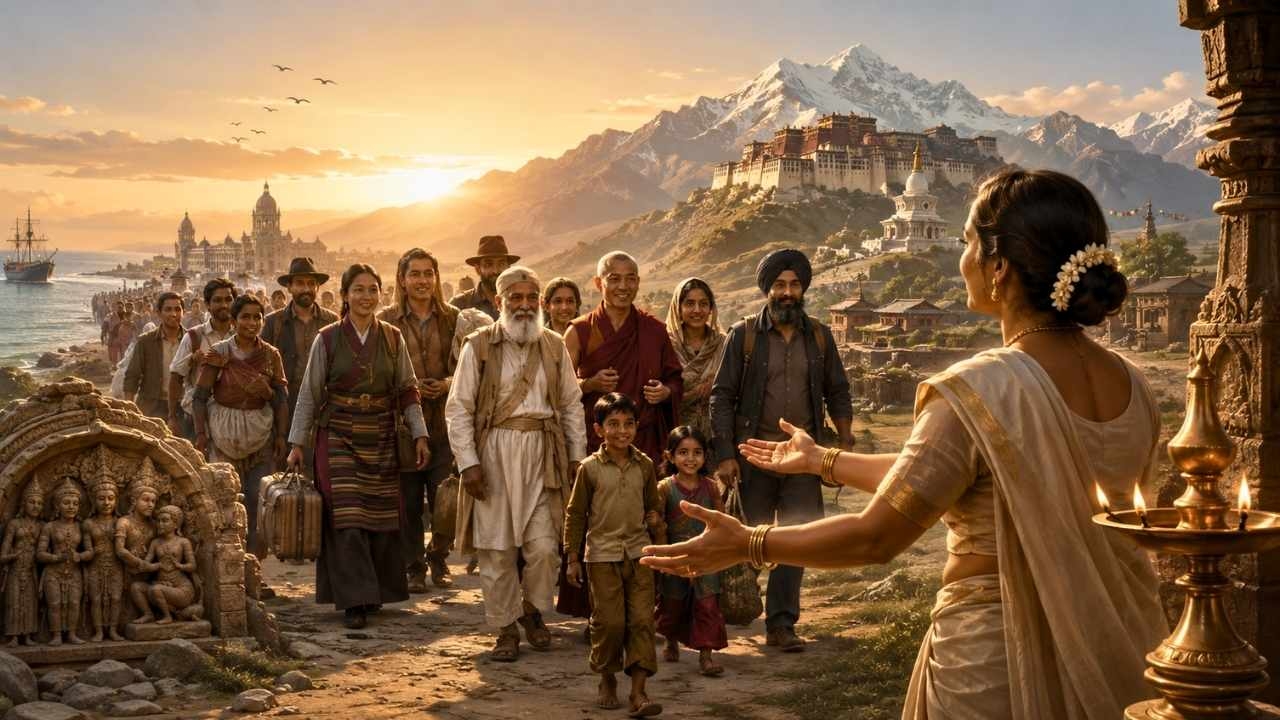
Across more than a millennium, Bharat has repeatedly opened its doors to communities fleeing conquest, genocide, religious persecution, ethnic cleansing, and political violence. From Zoroastrian Parsis escaping the collapse of Persia to Tibetan Buddhists fleeing Chinese repression, from Bengali refugees escaping the horrors of the 1971 genocide to Afghan Sikhs and Hindus escaping Taliban terror, Bharat has often acted as a refuge civilisation. What makes this history particularly striking is that Bharat accomplished much of this without ever signing the 1951 UN Refugee Convention or creating a dedicated refugee law.
At the heart of this tradition lies the ancient Indian ideal of "Vasudhaiva Kutumbakam", the belief that the world is one family.
Bharat Hosted Millions Without a Formal Refugee Law
Unlike many Western countries that possess codified asylum systems, Bharat has no single refugee statute. Refugees are technically governed under colonial-era legislation such as the Foreigners Act (1946), the Registration of Foreigners Act (1939), and the Passport Act (1920).
Yet despite the absence of a formal framework, Indian courts have repeatedly interpreted Articles 14 and 21 of the Constitution to extend basic protections to refugees, particularly regarding the right to life and protection from arbitrary deportation.
Over the decades, Bharat has managed refugee crises involving millions through camps, rehabilitation programmes, land allocation, educational institutions, long-term visas, and humanitarian assistance, often under severe economic and political pressure.
Parsis: The Earliest Refugees of Civilisational Bharat
One of the earliest and most celebrated refugee migrations into Bharat occurred between the 8th and 10th centuries, when followers of Zoroastrianism fled Persia after the fall of the Sassanian Empire and the Arab conquest of the region.
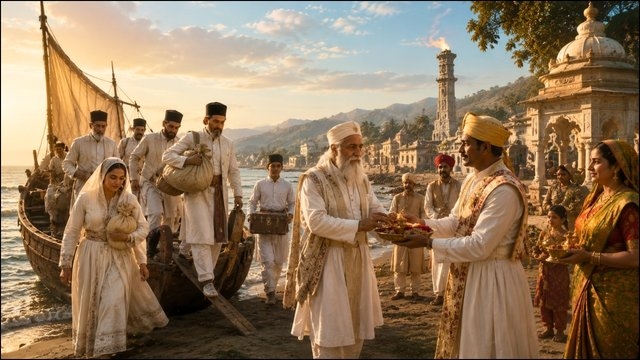
The Parsis arrived on the western coast of Bharat, particularly in Gujarat, where local rulers permitted them to settle peacefully while preserving their religion and customs. Over time, this tiny refugee community became one of the most influential minorities in Bharat's modern history. Figures such as Dadabhai Naoroji, Jamsetji Tata, Pherozeshah Mehta, and the Jeejeebhoy family emerged from this community.
Even today, Bharat hosts the world's largest Parsi population, while the community commemorates its arrival through the annual Sanjan Day celebrations in Gujarat.
Jews Found Safety in Bharat During Europe's Darkest Years
When Nazi Germany unleashed one of history's greatest genocides, Bharat became one of the few regions where Jews could live without systemic anti-Semitic persecution.
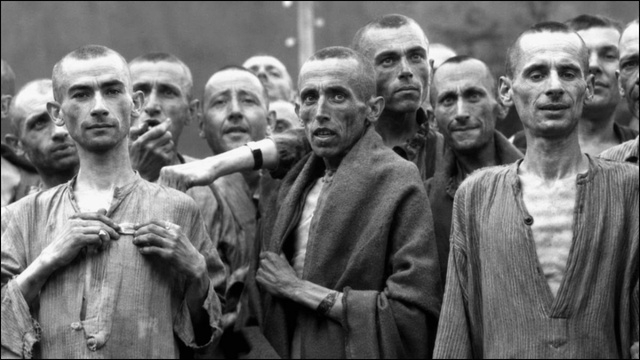
Between 1933 and 1945, nearly 5,000 Jewish refugees fleeing Adolf Hitler and Nazi terror found shelter in British India. Many settled in Bombay, Calcutta, and Cochin, where established Jewish communities, including Baghdadi Jews, helped support the newcomers.
Unlike Europe, where Jews faced concentration camps and extermination, Bharat offered relative safety and social integration. Refugees contributed to architecture, medicine, business, education, and industry, strengthening Bharat's cosmopolitan urban culture during the colonial era.
Tibetans and the Dalai Lama: Bharat's Most Visible Refugee Community
Perhaps the most internationally recognised refugee movement into Bharat began after the 1959 Tibetan uprising against Chinese rule.
As Chinese suppression intensified, the 14th Dalai Lama fled Tibet and entered Bharat, where Prime Minister Jawaharlal Nehru granted asylum. Nearly 80,000 Tibetans followed within a year.
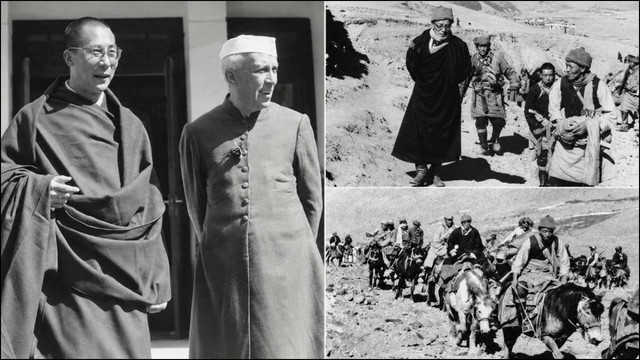
Bharat gave them shelter and enabled the preservation of Tibetan civilisation itself. Dharamshala became the headquarters of the Tibetan Government-in-Exile, while settlements emerged across Karnataka, Uttarakhand, Arunachal Pradesh, Odisha, and Sikkim.
Schools, monasteries, cultural centres, and agricultural settlements were established with Indian assistance. Even today, Tibetan Buddhism flourishes openly in Bharat despite Beijing's objections. Bharat's treatment of Tibetans represents one of the world's most successful examples of refugee rehabilitation without forced cultural assimilation.
Chakma and Hajong Refugees: The Northeast's Forgotten Humanitarian Crisis
Long before the global discourse on refugees became mainstream, Bharat faced a major displacement crisis in the Northeast.
In the 1960s, the construction of the Kaptai Dam in East Pakistan submerged vast areas of the Chittagong Hill Tracts, displacing Chakma Buddhists and Hajong Hindus. Around 15,000 refugees entered Bharat and were rehabilitated primarily in Arunachal Pradesh.
Subsequent ethnic violence in Bangladesh during the 1980s triggered additional refugee flows into Tripura, Assam, Mizoram, and Meghalaya.
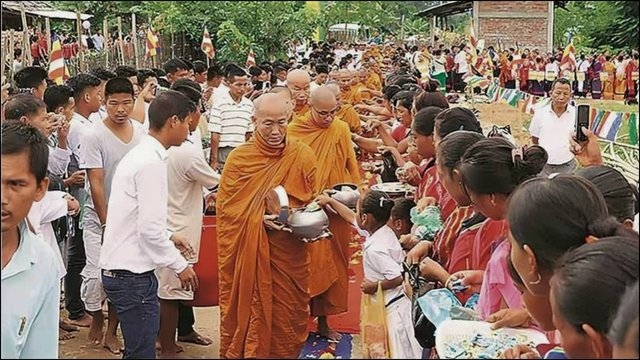
Despite demographic anxieties and local political tensions, Bharat provided land, rehabilitation assistance, and official documentation to many refugees. In 2015, the Supreme Court directed the government to process citizenship rights for eligible Chakma-Hajong refugees, reaffirming constitutional protections even amid regional opposition.
The 1971 Bangladesh Refugee Crisis: One of the Largest Human Movements in Modern History
Few refugee crises in modern history rival the scale of the 1971 Bangladesh Liberation War. After Pakistan launched Operation Searchlight in East Pakistan, mass killings, rape, and widespread atrocities triggered a humanitarian catastrophe. Nearly 10 million refugees fled into Bharat within months.
The burden on Bharat was staggering.
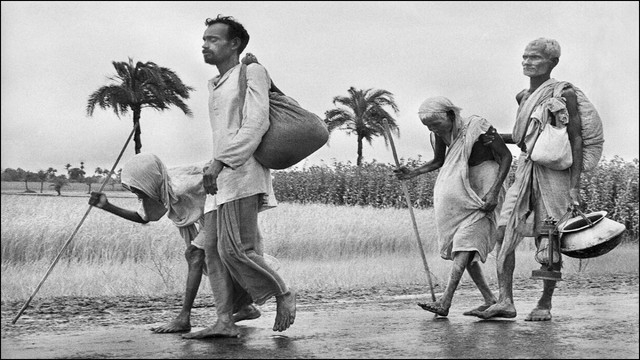
Around 6.8 million refugees were housed across nearly 825 camps in West Bengal, Assam, and Tripura. Food shortages, disease, sanitation crises, and economic pressure severely strained Indian resources. Yet Bharat kept its borders open while mobilising relief efforts with international support.
The refugee influx also reshaped regional geopolitics. Ultimately, Bharat's military intervention in December 1971 contributed to the birth of Bangladesh.
By early 1972, nearly nine million refugees had returned home, making it one of the largest temporary refugee movements ever recorded.
Sri Lankan Tamils and Bharat's Long-Term Refugee Responsibility
The anti-Tamil pogrom known as Black July in 1983 marked the beginning of another major refugee influx into Bharat. As Sri Lanka descended into civil war, nearly one lakh Tamil refugees fled across the Palk Strait into Tamil Nadu. Bharat established more than 100 refugee camps and provided food, education, healthcare, and financial support.
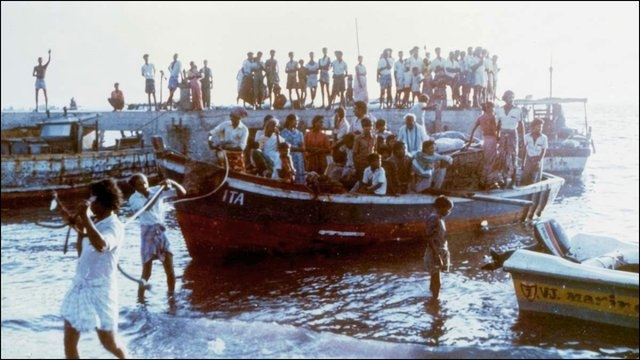
Unlike temporary wartime displacements, many Sri Lankan Tamil refugees remained in Bharat for decades. Even after the civil war ended in 2009, thousands chose not to return due to lingering insecurity and economic uncertainty.
Afghan Hindus and Sikhs Escaping Taliban Extremism
Few communities suffered more under Taliban rule than Afghanistan's shrinking Hindu and Sikh minorities.
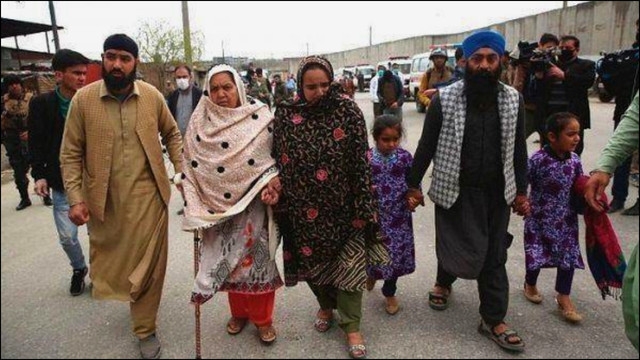
Beginning in the 1980s and accelerating during the Taliban's rise in the 1990s and again after the 2021 takeover, thousands fled to Bharat. Many settled in Delhi and adjoining regions, where they rebuilt temples, businesses, and community networks.
Bharat provided long-term visas, asylum pathways, and eventual citizenship opportunities for many refugees. The Citizenship Amendment Act, passed in 2019, specifically included persecuted Hindus and Sikhs from Afghanistan, Pakistan, and Bangladesh within its fast-track citizenship provisions.
Bhutan's Lhotshampas and Bharat's Quiet Border Reality
The refugee crisis involving Bhutan's Nepali-speaking Lhotshampa population during the late 1980s and 1990s received far less international attention.
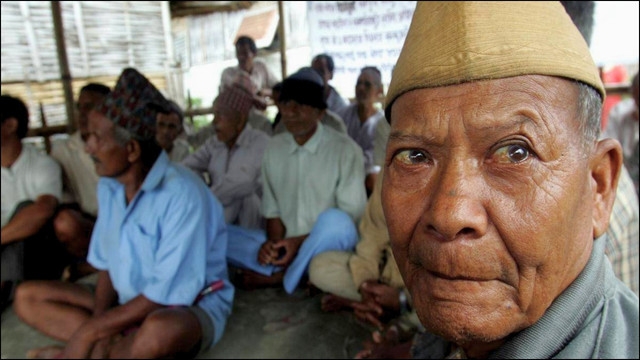
Following Bhutan's "One Nation, One People" policy and tightening citizenship rules, tens of thousands fled the country. While most moved to Nepal's UNHCR-administered camps, many also entered Bharat through Assam and West Bengal.
Iranian Baha'is and Bharat's Religious Pluralism
Following the 1979 Islamic Revolution in Iran, members of the Baha'i faith faced systematic persecution, arrests, educational exclusion, and restrictions on religious practice. Many sought refuge abroad, and Bharat emerged as one of the destinations where Baha'is could openly practise their faith. New Delhi's Lotus Temple became both a spiritual centre and a global symbol of religious pluralism.
Chin Refugees and Bharat's Ethnic Borderlands
The Chin refugee movement from Myanmar demonstrates how ethnic and cultural ties often shaped Bharat's humanitarian responses.
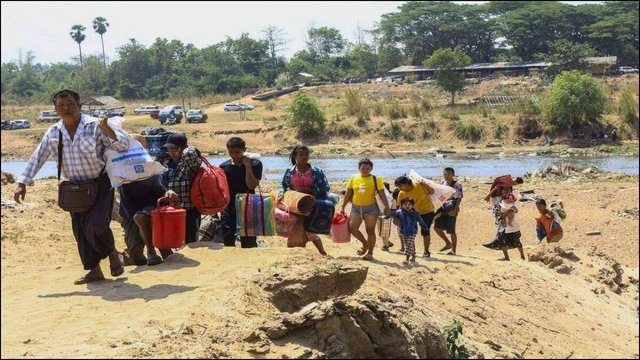
Since the 1990s, Chin Christians fleeing Myanmar's military regime have entered Mizoram, where they share deep ethnic connections with local Mizo communities. Refugee numbers rose sharply after Myanmar's 2021 military coup, with estimates suggesting 30,000 to 35,000 Chin refugees currently reside in Mizoram and nearby regions.
A Civilisation Larger Than the State
Bharat's refugee history is neither simple nor free from contradictions. Different governments have adopted different policies toward different refugee groups based on geopolitics, security, economics, and domestic politics.
Some communities eventually received citizenship pathways. Others continue to live in legal uncertainty. Certain refugee crises generated social tensions and demographic anxieties, especially in border states.
Yet across these complexities, one broad historical pattern remains undeniable: Bharat repeatedly absorbed persecuted populations on a scale unmatched by most postcolonial states.
Written by
Kewali Kabir Jain
Journalism Student, Makhanlal Chaturvedi National University of Journalism and Communication