The Strategic Rise of Nuclear Bharat
The rise of Nuclear Bharat was not sudden. It was shaped by years of innovation, investment and strategic determination.
Total Views |


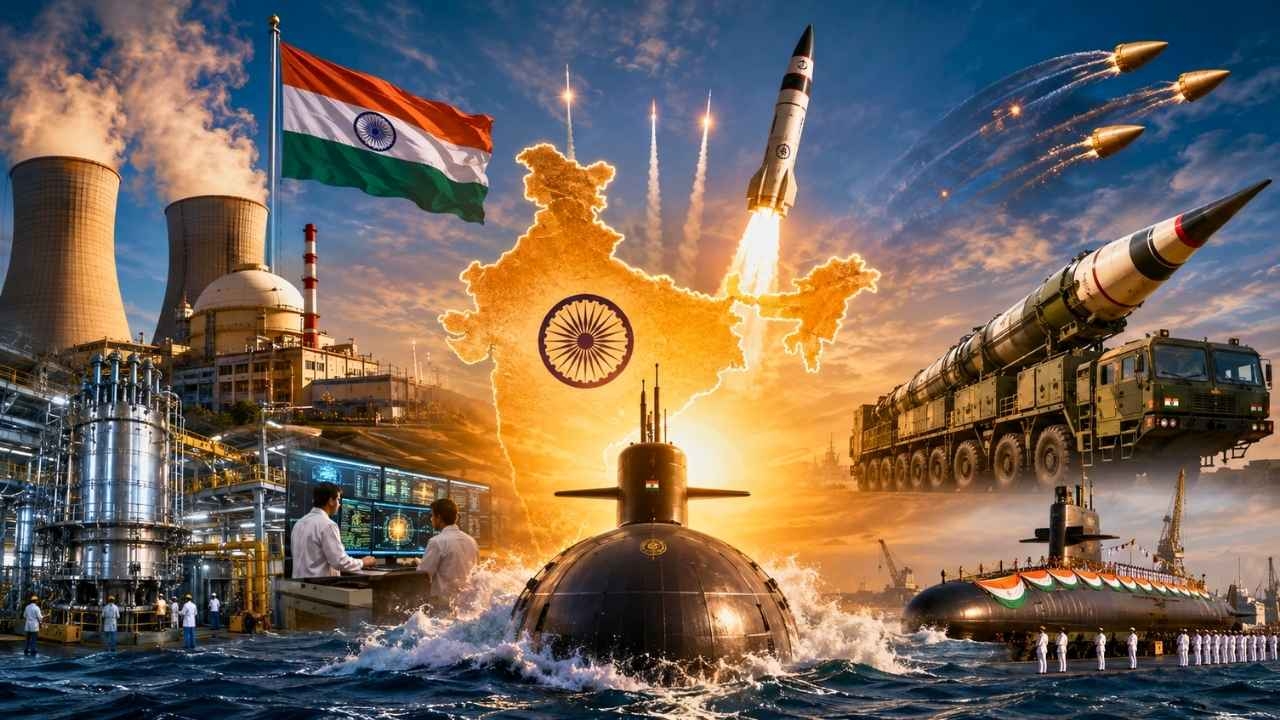
On 8 June 2026, the latest assessment by the Stockholm International Peace Research Institute (SIPRI) placed Bharat among the world's foremost nuclear powers, estimating its nuclear arsenal at 190 warheads, ahead of Pakistan's 170 warheads. Simultaneously, Bharat's defence expenditure reached $92.1 billion in 2025, reaffirming its position as the world's fifth-largest military spender.
These numbers are not merely statistics. They reflect a decade-long transformation in Bharat's strategic capabilities, driven by sustained investments in indigenous defence technologies, nuclear modernisation, fuel security, reactor expansion, and a credible deterrence posture.
Between 2014 and 2026, Bharat moved decisively from being a nuclear weapons state with limited delivery options to a technologically sophisticated nuclear power possessing an increasingly mature nuclear triad, advanced missile systems, expanded civilian nuclear infrastructure, and stronger long-term energy security.
A Decade of Strategic Transformation
For decades, Bharat's nuclear doctrine has been rooted in restraint, responsibility, and credible minimum deterrence. However, deterrence is only effective when backed by technological capability and operational readiness. The period between 2014 and 2026 witnessed some of the most consequential developments in Bharat's nuclear journey since the Pokhran-II tests of 1998.
From indigenous nuclear submarines and MIRV-capable missiles to breeder reactors and uranium supply agreements spanning continents, Bharat systematically strengthened every pillar of its nuclear architecture.
1. INS Arihant Sea Trials Opened a New Era (2014)
On 15 December 2014, Bharat achieved a historic breakthrough when INS Arihant commenced sea trials from Visakhapatnam under the Advanced Technology Vessel (ATV) programme.
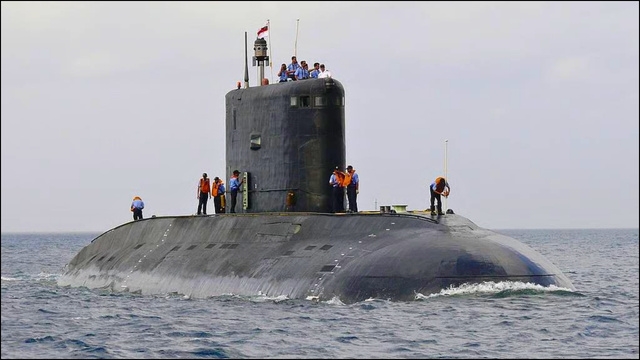
Powered by an indigenous 83 MW nuclear reactor developed by BARC in collaboration with the Indian Navy, Arihant represented the culmination of decades of scientific effort.
Strategic Significance
The success of Arihant established Bharat among the select nations capable of designing and operating indigenous nuclear-powered ballistic missile submarines. More importantly, it laid the foundation for a survivable sea-based nuclear deterrent, an essential component of any credible nuclear triad.
2. Fleet-Mode Expansion of Indigenous Nuclear Reactors (2017)
In May 2017, the Union Cabinet approved the construction of ten indigenous 700 MWe Pressurised Heavy Water Reactors (PHWRs). The decision added 7,000 MW of planned nuclear generation capacity and represented one of the largest expansions of Bharat's civilian nuclear programme.
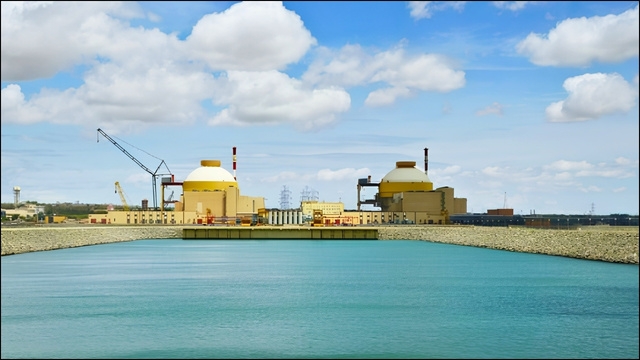
The reactors were earmarked for sites across Karnataka, Haryana, Madhya Pradesh, and Rajasthan.
Strategic Significance
The approval signalled confidence in Bharat's indigenous reactor technology and advanced the vision of energy self-reliance. It also strengthened domestic manufacturing under the Make in India initiative and created a long-term foundation for clean and reliable electricity generation.
3. Australian Uranium Reached Bharat (2017)
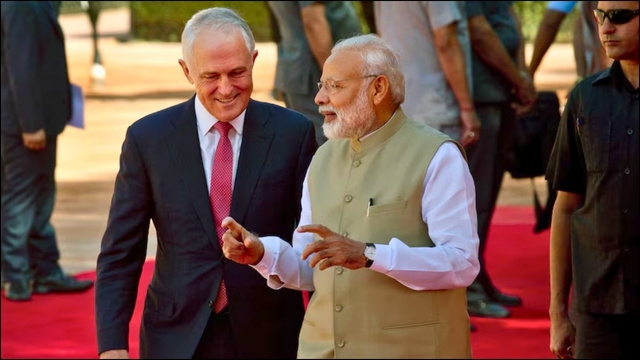
A major diplomatic and strategic milestone arrived in July 2017 when Australia dispatched its first uranium shipment to Bharat. The shipment marked the operationalisation of the India-Australia Civil Nuclear Cooperation Agreement.
Strategic Significance
For decades, Bharat's nuclear programme faced fuel constraints. Australian uranium supplies diversified procurement channels and reinforced global confidence in Bharat's responsible nuclear record. The agreement also reflected the growing strategic convergence between New Delhi and Canberra.
4. Long-Term Uranium Security Through Uzbekistan (2019)
In January 2019, Bharat secured another important source of nuclear fuel by signing a long-term uranium supply contract with Uzbekistan. The agreement ensured the supply of 1,100 metric tonnes of uranium ore concentrate between 2022 and 2026.
Strategic Significance
The deal reduced dependence on a limited number of suppliers and strengthened Bharat's ability to support future reactor expansion. Reliable fuel access remains one of the most critical components of sustainable nuclear growth.
5. Kakrapar Unit-3 Validated Indigenous Reactor Excellence (2023)
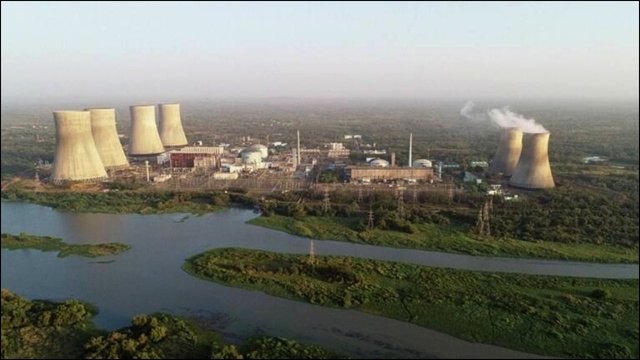
June 2023 marked another landmark achievement when Kakrapar Atomic Power Project Unit-3 commenced commercial operations. With a capacity of 700 MWe, it became Bharat's first indigenously developed reactor of its class.
The successful commissioning demonstrated Bharat's capability to design, construct, and operate advanced PHWRs without external dependence.
Strategic Significance
Kakrapar Unit-3 became the template for Bharat's fleet-mode reactor expansion and strengthened confidence in indigenous nuclear engineering and manufacturing capabilities.
6. Mission Divyastra and Bharat's MIRV Breakthrough (2024)
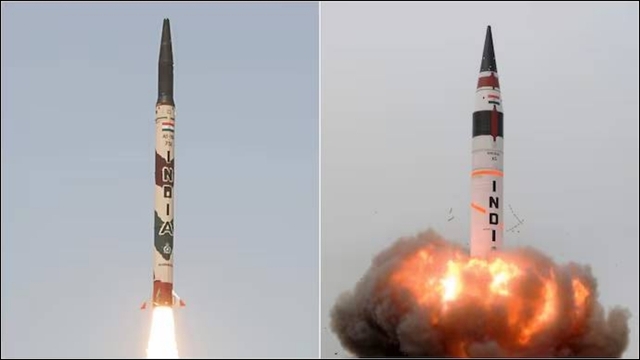
On 11 March 2024, Bharat entered an elite strategic club through the successful testing of the Agni-5 ballistic missile equipped with Multiple Independently Targetable Re-entry Vehicle (MIRV) technology. The mission demonstrated Bharat's ability to deploy multiple warheads from a single missile against separate targets.
Strategic Significance
MIRV capability dramatically increases deterrence effectiveness. It enables a single missile to engage multiple targets while complicating enemy missile defence systems.
7. SHANTI Act and Reform of the Civilian Nuclear Sector (2025)

One of the most significant policy developments occurred in December 2025 with Parliament's approval of the Sustainable Harnessing and Advancement of Nuclear Energy for Transforming India (SHANTI) Act. The legislation sought to modernise Bharat's civilian nuclear ecosystem by encouraging greater participation from private industry while maintaining government oversight.
Strategic Significance
The reforms aim to accelerate reactor construction, attract investment, foster innovation, and help Bharat move towards its ambitious target of 100 GW of nuclear capacity by 2047.
8. Operational K-4 Missile Test Strengthened Sea-Based Deterrence (2025)
In December 2025, Bharat successfully conducted an operational test of the K-4 submarine-launched ballistic missile from INS Arighaat.
With a strike range of approximately 3,500 kilometres, the missile significantly extends the reach of Bharat's sea-based deterrent.
Strategic Significance
The test moved Bharat closer to deploying long-range nuclear missiles aboard its SSBN fleet, enhancing survivability and strengthening second-strike capability, which is an indispensable feature of nuclear deterrence.
9. Prototype Fast Breeder Reactor Achieved First Criticality (2026)
April 2026 witnessed a milestone that Indian nuclear scientists had pursued for decades.
The 500 MWe Prototype Fast Breeder Reactor (PFBR) at Kalpakkam achieved first criticality, initiating a self-sustaining nuclear chain reaction.
The sodium-cooled reactor forms the centrepiece of the second stage of Bharat's unique three-stage nuclear programme.
Strategic Significance
Fast breeder technology offers the potential to generate more fissile material than it consumes, greatly enhancing fuel efficiency and supporting Bharat's long-term objective of utilising its vast thorium reserves.
10. Kazakhstan Reinforced Bharat's Fuel Security (2026)
In February 2026, Bharat strengthened cooperation with Kazakhstan through a fresh uranium supply agreement.
As the world's largest uranium producer, Kazakhstan remains a vital partner in supporting Bharat's expanding reactor fleet.
Strategic Significance
The agreement guarantees continued fuel access for Bharat's safeguarded reactors while reducing vulnerabilities associated with supply disruptions.
It also deepens strategic cooperation between New Delhi and one of the world's most important uranium-exporting nations.
11. INS Aridhaman Strengthened Bharat's Nuclear Triad (2026)
The commissioning of INS Aridhaman in June 2026 marked the latest milestone in Bharat's nuclear modernisation.
The third submarine in Bharat's indigenous SSBN programme possesses enhanced stealth characteristics, greater endurance, and a larger missile payload than its predecessors.
Capable of carrying K-4 ballistic missiles, Aridhaman significantly increases Bharat's ability to maintain a continuous at-sea deterrent.
Strategic Significance
Aridhaman strengthens the most survivable leg of Bharat's nuclear triad and enhances strategic stability through a more credible second-strike capability.
Its induction reflects the steady maturation of Bharat's indigenous submarine-building and nuclear propulsion expertise.
The Bigger Picture: A Stronger and More Self-Reliant Nuclear Bharat
Taken individually, each of these developments is significant. Taken together, they reveal a broader strategic transformation.
Between 2014 and 2026, Bharat:
- Expanded its nuclear arsenal and deterrence capabilities.
- Strengthened all three legs of the nuclear triad.
- Demonstrated MIRV technology.
- Advanced submarine-launched nuclear missile deployment.
- Expanded indigenous reactor manufacturing.
- Secured long-term uranium supplies from multiple countries.
- Achieved a breakthrough in fast breeder reactor technology.
- Undertook major legislative reforms to accelerate nuclear energy growth.
The result is a nuclear ecosystem that is more resilient, technologically advanced, and strategically credible than at any point in Bharat's history.
Written by

Kewali Kabir Jain
Journalism Student, Makhanlal Chaturvedi National University of Journalism and Communication