Illegal Bangladeshi Infiltrators Flee Towards Border as West Bengal Launches 3D Crackdown
Videos and interviews from border areas show illegal Bangladeshis leaving West Bengal after the state announced its Detect, Delete and Deport policy.
Total Views |


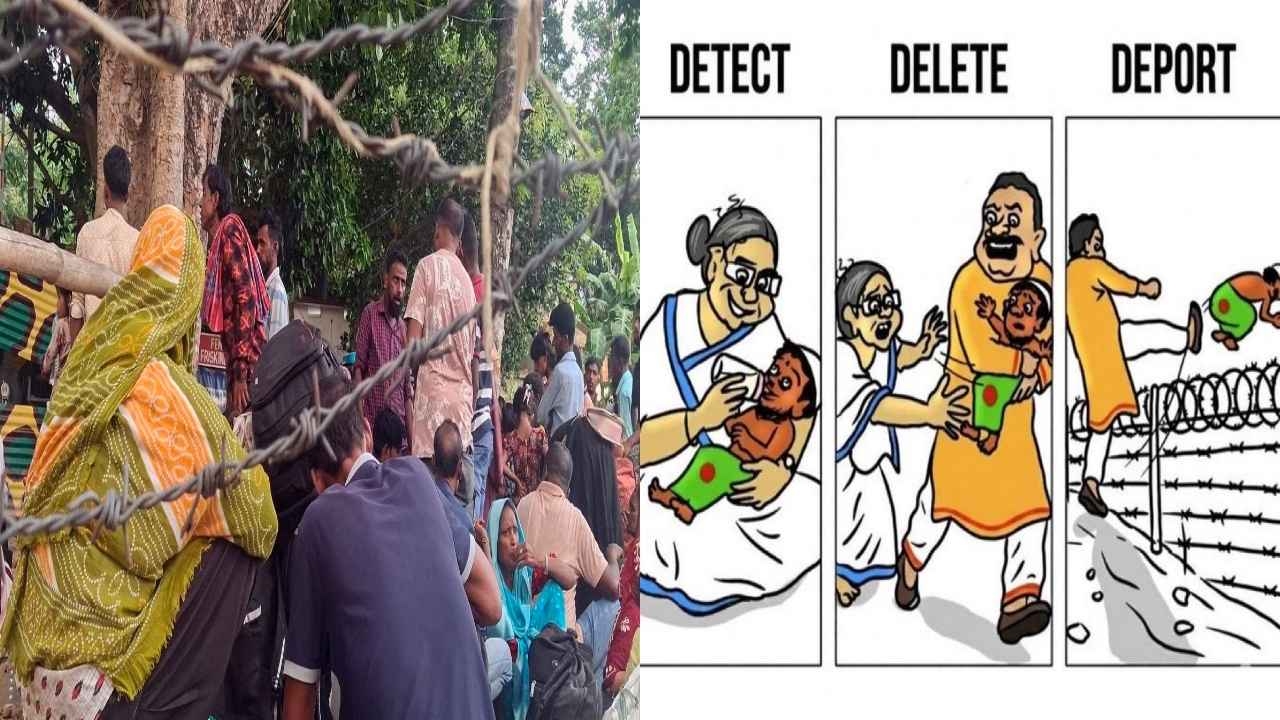
An unprecedented movement of suspected illegal Bangladeshi migrants towards the India-Bangladesh border has emerged as one of the most significant developments following the political transition in West Bengal. Multiple videos, media reports, and ground interviews have surfaced showing hundreds of individuals gathering near border points in North 24 Parganas, Basirhat, Hakimpur, and other frontier regions, allegedly preparing to return to Bangladesh.
The sudden rush coincided with the West Bengal Government's announcement of a strict "Detect, Delete and Deport" (3D) policy aimed at identifying illegal foreign nationals, removing fraudulent documentation, and facilitating deportation proceedings.
Border Areas Witness Unusual Activity
Videos circulating on social media showed large groups of men, women, and children carrying luggage, household utensils, and personal belongings while waiting near border checkpoints. Several clips reportedly captured migrants openly admitting that they had been residing in Bharat without legal authorisation and were now returning to Bangladesh due to fears of administrative action.
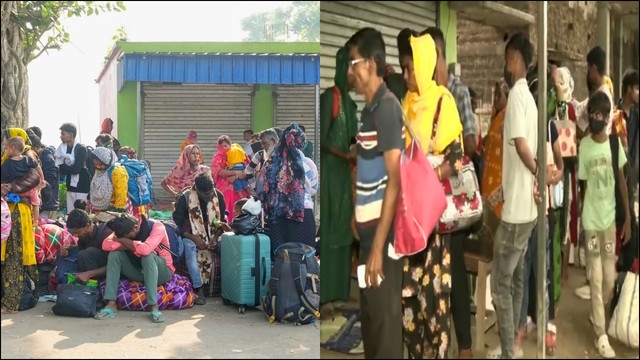
The Hakimpur border region in North 24 Parganas emerged as one of the focal points of the movement. Reports indicated that many individuals had lived for years in Kolkata, New Town, Dum Dum, Khardah, and surrounding urban areas before deciding to leave.
The visuals presented a striking contrast to the traditional narrative of infiltration into Bharat. Instead of attempting entry, large numbers appeared to be moving in the opposite direction.
Admissions on Camera
One of the most discussed aspects of the episode has been the series of interviews conducted by television channels, digital media platforms, and local reporters.
Several individuals identified themselves as Bangladeshi nationals and claimed they had entered Bharat years earlier through informal routes. Many stated that they worked as labourers, construction workers, domestic workers, or beggars.
A woman identified as Mafuja Khatun reportedly claimed that she had entered Bharat as a child with her father and had subsequently obtained Indian identity documents. She further alleged that she had voted in multiple elections.
Another individual, Moniruzzaman, claimed that he had been residing in New Town for the past three years while working as a labourer. He displayed Bangladeshi documents during media interactions and stated that he was now returning due to changing circumstances.
Such statements, if independently verified, would raise serious concerns regarding the integrity of identity verification systems and electoral documentation mechanisms.
Allegations of Political Patronage
The controversy has intensified because several migrants alleged that local political intermediaries helped them obtain government documents.
According to interviews aired by various media organisations, some individuals claimed that Aadhaar cards, voter identity cards, and ration cards were arranged after their arrival in West Bengal.
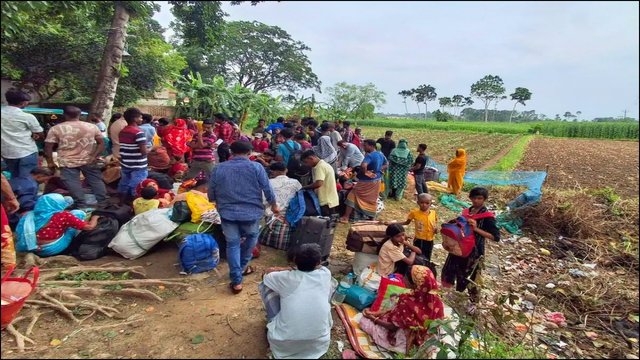
Particularly significant were allegations made by migrants who claimed that local political workers associated with the ruling dispensation in previous years facilitated documentation processes in exchange for money.
One individual alleged that specific amounts were charged for obtaining Aadhaar cards, voter cards, and ration cards. Another claimed that political workers informed migrants that voting was expected in return for assistance in securing residence and documentation.
These allegations remain matters requiring formal investigation. However, the consistency of such claims across multiple interviews has generated intense political debate.
The 'Holding Centre' Factor
Another recurring theme in the videos was the fear of proposed holding centres or detention facilities intended for illegal foreign nationals.
According to reports, district administrations in certain border districts have begun preparations to identify suspected illegal immigrants and process their cases. The prospect of verification drives, detention, and eventual deportation appears to have triggered anxiety among undocumented migrants.
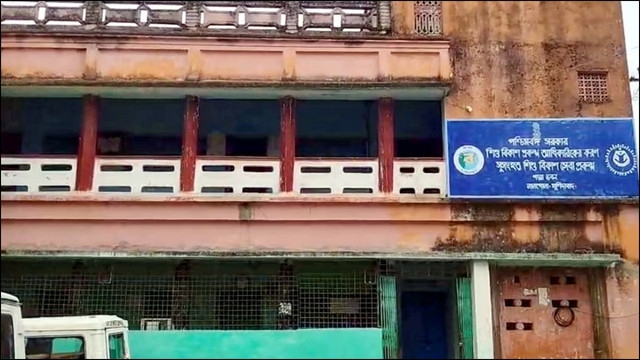
Many of those interviewed stated that they feared being detained and therefore preferred to leave voluntarily before legal proceedings commenced.
The situation highlights the effectiveness of enforcement signalling. Even before large-scale deportation operations begin, the perception of imminent action can significantly alter migration behaviour.
The Voter-Bank Debate Returns
For decades, opposition parties have accused successive governments in West Bengal of treating illegal immigration as a political resource rather than a national security concern.
The latest developments have once again brought the voter-bank debate to the forefront.
The demographic changes in several districts, particularly along the border belt, cannot be understood without examining patterns of illegal migration. Political incentives allegedly encouraged weak enforcement and enabled the creation of fraudulent identities for Bangladeshi Muslims.
Security Implications
The issue extends beyond politics and enters the realm of national security.
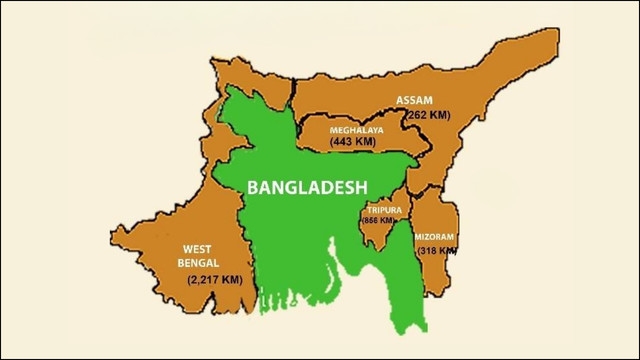
Bharat shares a porous and densely populated border with Bangladesh, making infiltration a recurring challenge for security agencies. Illegal migration can create difficulties in citizenship verification, law enforcement, welfare distribution, and electoral management.
Security experts have long argued that systematic documentation fraud poses a greater threat than physical border crossings because it enables illegal entrants to blend into the administrative system.
Welfare Benefits Under Scanner
Another significant allegation emerging from the interviews concerns access to government welfare schemes.
One woman reportedly claimed that she had been receiving benefits under the Lakshmi Bhandar scheme while residing illegally in the state. Similar allegations regarding ration cards and other welfare benefits also surfaced.
These claims have strengthened demands for comprehensive audits of beneficiary databases to ensure that taxpayer-funded schemes reach only eligible recipients.
The controversy has also raised questions regarding the mechanisms used for beneficiary verification and periodic review.
A Turning Point in West Bengal's Immigration Debate?
Whether the current movement represents a temporary reaction or the beginning of a larger trend remains uncertain. What is clear, however, is that the events of 27-28 May 2026 have transformed the conversation on illegal immigration in West Bengal.
For years, infiltration remained a subject of political rhetoric and statistical disputes. The emergence of videos showing individuals allegedly admitting illegal residence, claiming possession of Indian documents, and voluntarily moving towards Bangladesh has given the issue unprecedented visibility.
As the state embarks on what could become one of the largest verification exercises in its history, the questions that remain unanswered are how many illegal migrants entered the system, who facilitated their settlement, and what mechanisms allowed them to acquire official recognition.
Written by
Kewali Kabir Jain
Journalism Student, Makhanlal Chaturvedi National University of Journalism and Communication