The Rise in Female Recruitment by Pakistan-Based Terror Networks
What is driving the growing recruitment of women by Pakistan-based terror networks across Pakistan and Pakistan-occupied Kashmir?
Total Views |


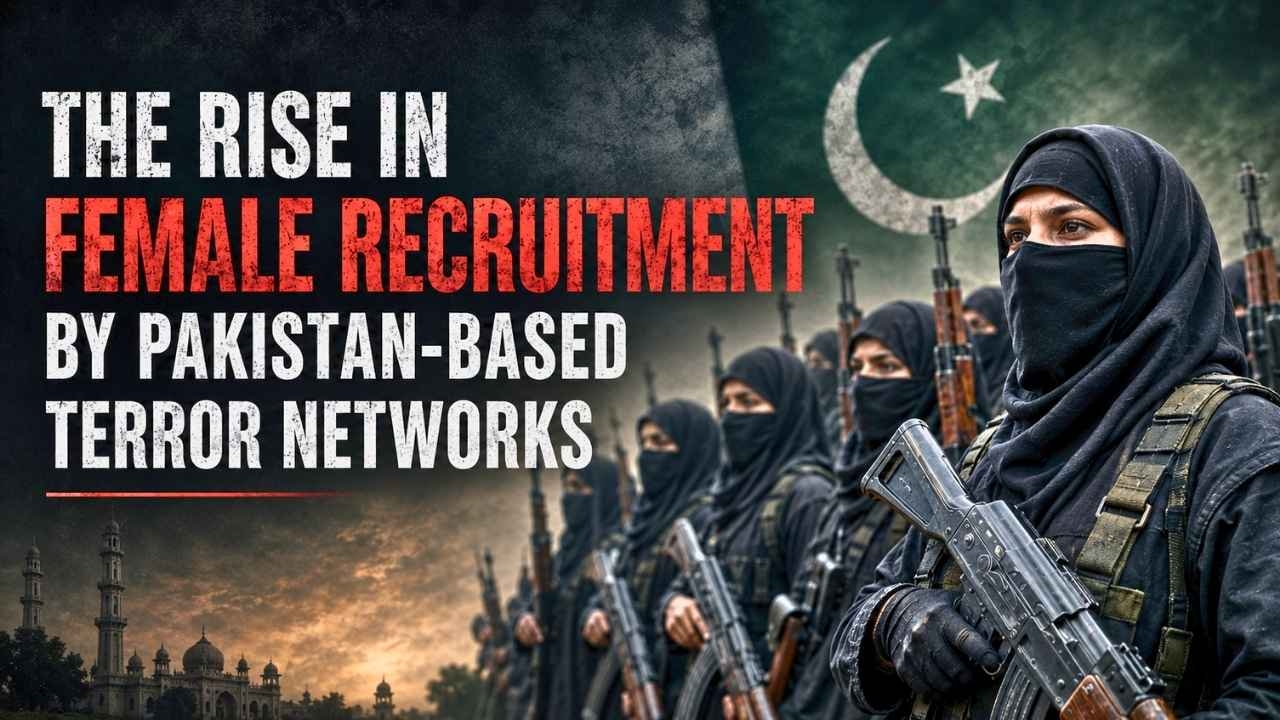
Pakistan-based terror organisations are increasingly expanding their recruitment strategies by targeting women for a variety of roles within their networks. Intelligence assessments indicate that groups such as Jaish-e-Mohammed (JeM) and Lashkar-e-Taiba (LeT) are actively using women as recruiters, propagandists, fundraisers and ideological influencers.
For decades, women in terror ecosystems were largely viewed as passive supporters operating within domestic spaces. However, recent intelligence findings suggest that Pakistan-based terror organisations are attempting to transform that role by bringing women into more organised and structured support networks.
Both Jaish-e-Mohammed (JeM) and Lashkar-e-Taiba (LeT) are Pakistan-based terror organisations. JeM was founded by Maulana Masood Azhar in 2000, while LeT emerged during the late 1980s under the leadership of Hafiz Mohammad Saeed.
A major development in this evolving strategy came when Jaish-e-Mohammed officially established its first dedicated women's wing, Jamaat-ul-Mominaat. Recruitment drives and foundational meetings were organised at Markaz Usman-o-Ali, also known as Jamia Usman-o-Ali, in Bahawalpur, Pakistan. This marked the first formal attempt by JeM to create a structured female recruitment network.
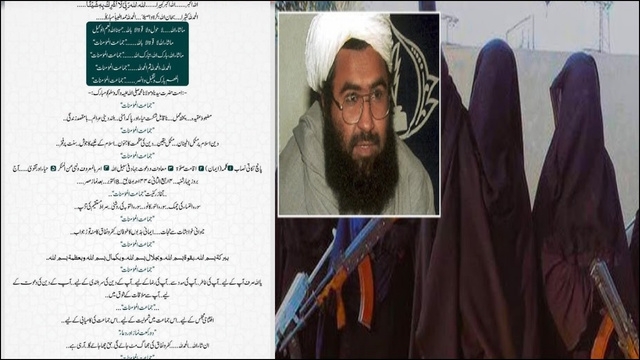
JeM officially launched Jamaat-ul-Mominaat in October 2025. Within just two months, by December 2025, Masood Azhar claimed that more than 5,000 women had been recruited into the organisation. According to intelligence reports, many of these recruits include the wives of militant commanders as well as women from economically vulnerable backgrounds in Bahawalpur, Karachi and Pakistan-occupied Kashmir.
Security experts believe that these women are being exposed to ideological indoctrination and are being prepared to support overground networks that assist extremist activities. Concerns have also been raised about the possibility of some recruits being groomed for future suicide missions.
The women's wing, Jamaat-ul-Mominaat, is headed by Sadiya Azhar, the sister of JeM founder Masood Azhar. Under her leadership, the organisation has expanded its outreach through structured online programmes specifically designed for women.
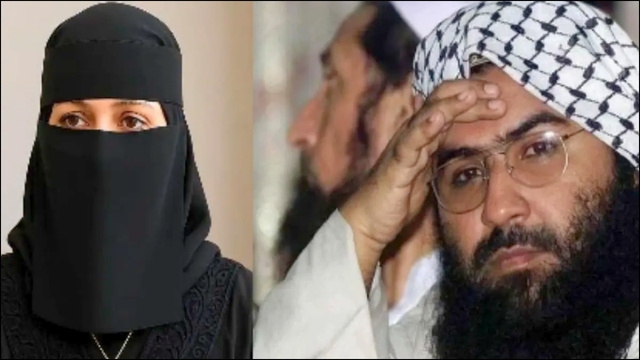
One such programme, titled Tufat al-Muminat, combines religious instruction with fundraising activities. Participants are encouraged to enrol through nominal donations while receiving ideological training remotely, allowing JeM to expand its influence beyond physical recruitment centres.
Counter-terrorism analysts note that recruitment often begins within familiar and trusted environments. Homes, family gatherings, religious classes, women-only study circles and charity networks are increasingly being used as entry points for radicalisation. It is this gradual transition from domestic life into extremist activity that has led observers to describe the trend as moving women "from the kitchen to the battlefield".
Intelligence reports further suggest that the recruitment effort is no longer limited to vulnerable communities alone. Educated women and professionals are also being targeted, particularly those connected to existing terror networks. In some cases, the wives of commanders are being prepared to manage underground logistical operations, communication channels and support structures.
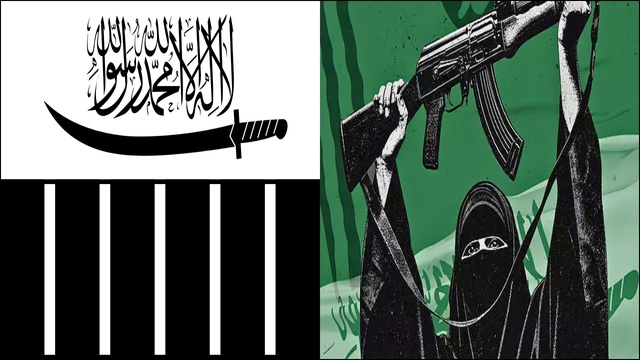
Lashkar-e-Taiba has also expanded its engagement with women over the years. Defence and intelligence records indicate that the organisation has recruited or trained thousands of women through various domestic and social outreach mechanisms. While the group's operational activities remain highly secretive, security records have historically documented at least 80 highly trained female operatives linked to its combat-oriented structures.
Investigators trace this strategic shift back to 2006, when Indian security agencies first uncovered evidence suggesting that LeT was systematically exploring the use of female operatives as part of its broader operational framework.
Conclusion
The increasing recruitment of women by Pakistan-based extremist organisations reflects a significant evolution in the way these groups operate and expand their influence. By leveraging domestic spaces, online platforms and community networks, terror organisations such as Jaish-e-Mohammed (JeM) and Lashkar-e-Taiba (LeT) appear to be broadening their recruitment base beyond traditional male-dominated structures. Security agencies view this trend as a growing challenge, as women are being positioned not merely as supporters but as active participants in propaganda, logistics, fundraising and potentially future terror operations.
Written by
Mokshi Jain
Sub-editor, The Narrative