INSIDE DU’S CONVERSION NETWORK : STEP-BY-STEP METHOD EXPOSED
A DU student alleges a gradual conversion strategy involving friendship, financial and academic assistance, free meals, movies, prayer sessions and pressure through already-converted students
Total Views |



A Delhi University student has alleged that some individuals are targeting students through friendship, assistance, social gatherings and prayer sessions, gradually introducing Christian teachings and mentally pressuring students to convert.
DU student has alleged that attempts to facilitate religious conversion are taking place around the university campus. In an interview reported on August 26, 2026, the student described what he claimed was a gradual strategy used to approach students, build trust and eventually persuade them towards Christianity.
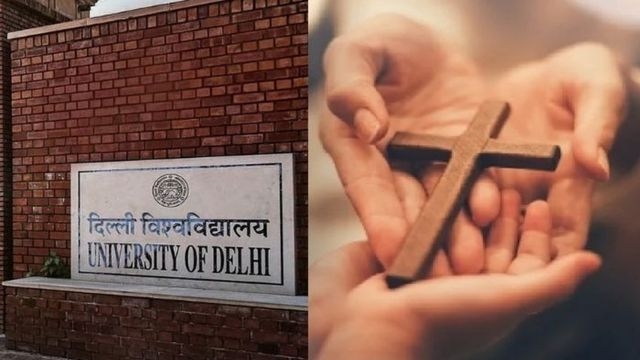
According to the student, the approach begins with friendship rather than a direct appeal for conversion. Students are approached both on and around the campus, including areas near the Arts Faculty. The individuals first establish friendly interactions, ask students about their personal, academic and financial difficulties, and then offer to help them deal with those problems.
The student shared that the process gradually moves beyond casual interaction. Students are invited to gatherings, particularly on Sundays, weekends and holidays, where social activities are combined with christian religious engagement. Students are taken out for movies, offered free food or meals, and invited to prayer sessions. The student described these prayer sessions as a constant feature of the outreach.

The gatherings are not limited to Delhi University students but students from other universities also attend such programmes. He further claimed that Korean and American Christians are also present at some gatherings, specifically mentioning Korean and American Christians depending on the group organising the programme.
The strategy, according to the student, is to identify students facing difficulties and subsequently offer them forms of assistance. Academic support is presented as one form of help, while financial assistance is also promised.
From Friendship to Faith-Based Persuasion
The student claimed that those involved do not initially directly ask students to convert. Instead, they introduced Christianity gradually after a relationship of trust had been established.
Christian beliefs are presented favourably, with the religion portrayed as superior to other faiths or as offering solutions to the problems students are facing. The pitch combines religious persuasion with promises of financial support, academic assistance and a better or more comfortable lifestyle, thereby making vulnerable students more receptive.

Individuals involved do not openly demand conversion at the beginning. Instead, the process relies on repeated interactions, social outings, food, assistance and prayer sessions before students are gradually encouraged to embrace Christianity.
Some students eventually become caught in this process and convert. Those who refuse, face continued persuasion, mental pressure and harassment to convert in Christianity.
How Converted Students Are Used
The student’s allegations go a step further: students who have already converted can subsequently become part of the effort to persuade others.
Newly recruited converted students approach their friends or fellow students who have resisted conversion and attempt to convince them. Personal problems are linked directly to their existing faith and religion, and their difficulties persist in their life because they have not yet converted to Christianity.

This creates a cycle in which a student who was initially approached through friendship and assistance can later become part of the same outreach directed at another student.
Therefore, this incident raises questions not merely about individual religious interactions, but about whether friendship, financial assistance, academic support, lifestyle incentives and religious gatherings are being combined as a systematic means of influencing vulnerable students.
The Repeated Element : Prayer Sessions
One element remains constant throughout i.e prayer sessions. What begins as friendship, free food, movies or assistance eventually introduces students to Christian religious practices through these gatherings. The student claimed that Christian teachings are gradually incorporated rather than being presented as the purpose of the first interaction.
The allegations made by the DU student present a disturbing picture of a gradual recruitment model beginning with friendship and assistance, moving through food, movies and prayer sessions, and progressing towards religious persuasion and pressure.
Written by

Mokshi Jain
Sub-editor