Shaheedi Saptah Fades as a New Bastar Emerges!
Once gripped by Maoist threats and enforced shutdowns, Bastar is now witnessing the steady return of security, mobility and everyday life.
Total Views |


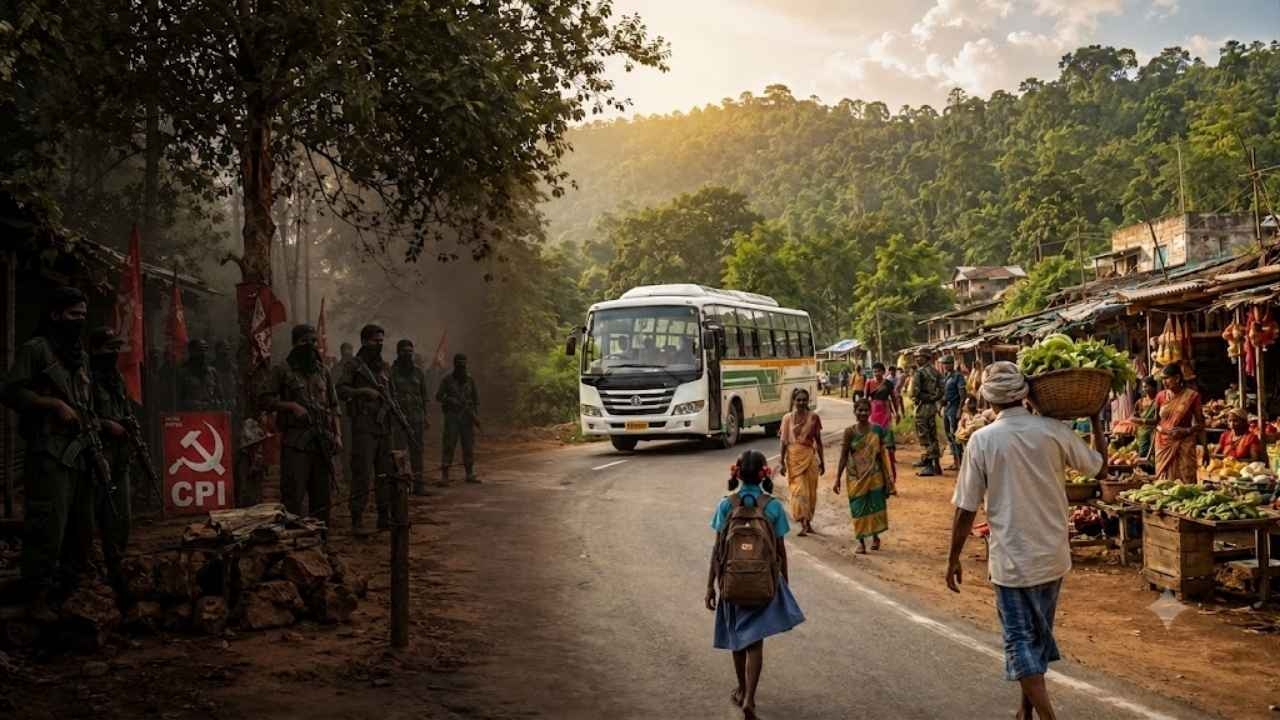
For six decades, Shaheedi Saptah was observed by Maoist groups from 28 July to 3 August, bringing fear and uncertainty to Bastar.
Roads would fall silent, buses would stop running, markets would remain closed and families would avoid unnecessary travel. Schools, healthcare services and development work were often disrupted. Security forces remained on high alert because roads, camps, mobile towers and public spaces became targets.
The silence of Bastar during the naxalite period was not peaceful. It was the silence of fear.
A Maoist poster, warning or just a single message could influence and threaten the life of entire villages. Shopkeepers hesitated to open their businesses, transport operators feared attacks and farmers struggled to take their produce to weekly markets. Ordinary citizens were forced to plan their lives around the possibility of violence.
For nearly six decades, parts of Bastar remained among India’s strongest centres of Left-Wing Extremism (LWE). Dense forests and difficult terrain made a way for Maoist groups to establish their influence over remote communities.
Their control extended beyond armed attacks. It included forced shutdowns, extortion, recruitment, threats and opposition to roads, schools and public infrastructure.
A different Bastar today
Bastar feels remarkably different today. Following the central government’s 31 March 2026 declaration marking a major milestone toward a Naxal-free India, the transformation across the region is now clearly visible.
Markets functioned with zero disruptions. Public transport has moved completely normally. Roads remained active and development work continued across much of the region. Maoist influence, once spread across large areas, appeared increasingly restricted.
The transformation is visible in everyday life, with buses now travelling along routes once scarred by Naxalite violence, a shopkeeper opening his shop without fear, a child peacefully attending their schools and a farmer reaching the market safely.
For Bastar, these are not small changes. They represent the return of individual freedom.
Peace here does not mean the absence of gunfire now. It means being able to travel, work, study, seek treatment, return home and live a basic life without armed groups deciding when daily life must stop.
The cost of restoring peace
This change followed years of sustained operations and intelligence-led action by the CRPF, CoBRA, Chhattisgarh Police, District Reserve Guard and other security personnel.
Many worked in extremely difficult conditions, facing ambushes, explosives and attacks in dense forests. Several personnel, tribal civilians, elected representatives and local residents lost their lives during the Naxal violence.
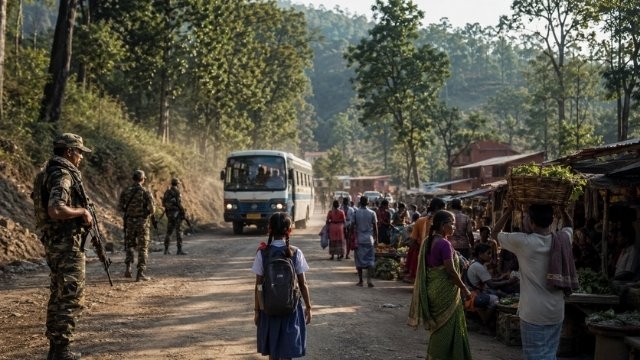
According to government data, Naxal-related violent incidents declined from 870 in 2014 to 126 in 2026. The Centre declared India effectively free from Left-Wing Extremism on 31st March 2026 after combining security operations with development, rehabilitation and improved governance.
MUST READ - Urban Naxals: Ideological Subversion, Institutional Capture, and the Assault on Bharat's Civilisational Core
However, statistics alone cannot capture the full meaning of this change. Its real impact is visible in the gradual disappearance of fear from everyday life.
From security to development
Security camps that once functioned mainly as protective installations are increasingly helping the administration bring banking, Aadhaar services, healthcare, welfare schemes and skill-development opportunities closer to tribal communities.
Roads, mobile connectivity, schools and public services are reaching areas that remained isolated for years due to Naxal violence.
Security creates the space for peace, but development makes peace sustainable.
The return of ordinary life
Shaheedi Saptah once demonstrated the Maoists ability to bring Bastar to a standstill. Closed markets, empty roads and cancelled buses reflected maoist influence.
Today, the quieter and more normal atmosphere tells a whole different story.
The region is no longer defined only by encounters, operations and violence. It is being recognised through its people, traditions, aspirations and opportunities.
The true success of a Naxal-free Bastar will not be measured by the absence of Maoist cadres. It will be measured by the presence of schools, hospitals, roads, jobs, responsive governance and hope.
The people of Bastar, peace is not merely a government declaration. It is the freedom to live an ordinary life without fear.
Written by

Mokshi Jain
Sub-editor