Foreign Funds Under Scrutiny: FCRA, Proselytisation and NGO Accountability
New FCRA rules exclude proselytisation from permitted religious activities, tightening India’s oversight of foreign funding and its utilisation by registered organisations.
Total Views |


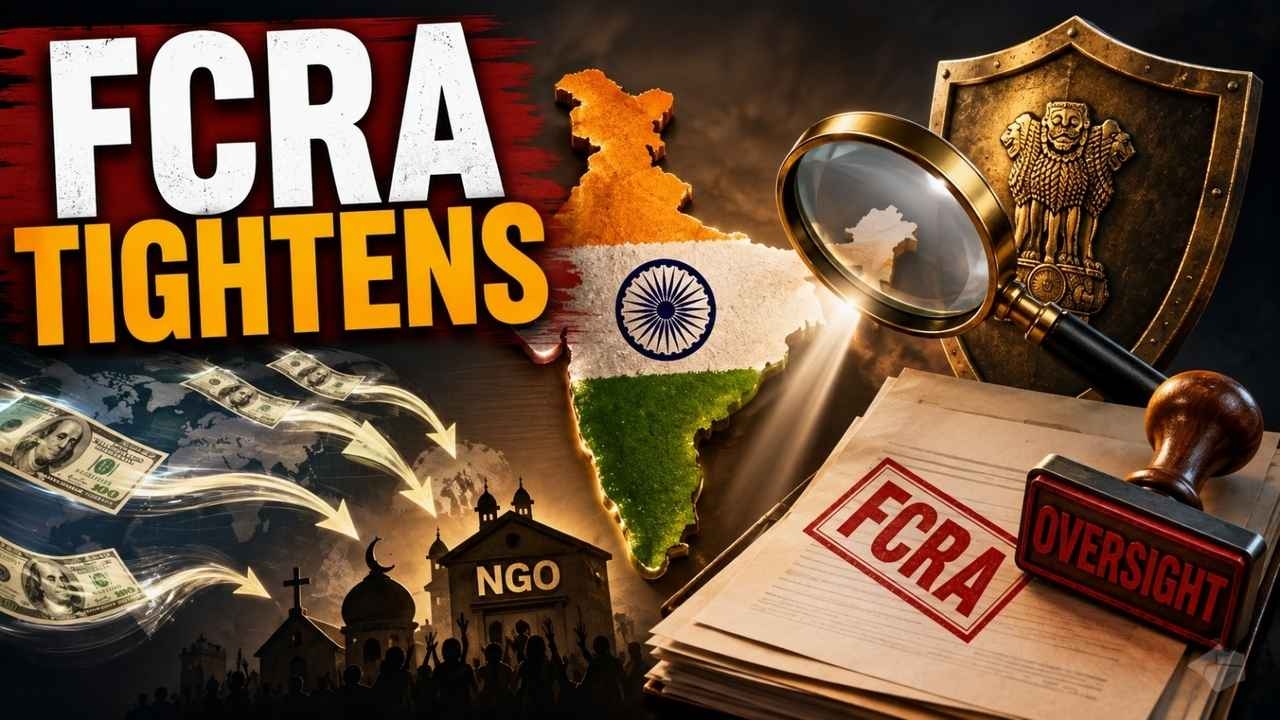
India tightened foreign-funding oversight on 22 June 2026 as the Home Ministry notified new FCRA rules, requiring clearer disclosures and excluding proselytisation from permitted religious activities financed through foreign contributions.
Foreign contributions have long supported education, healthcare, disaster relief, social welfare and religious institutions in India. At the same time, successive governments have raised concerns over diversion of foreign funds, regulatory violations and activities considered contrary to India's national interest.
The debate intensified in 2026 after the Ministry of Home Affairs notified the Foreign Contribution (Regulation) Amendment Rules, 2026 on 22 June.
The new framework requires organisations to provide more specific information about the purpose, geographical area and utilisation of foreign contributions. Most significantly, proselytisation has been explicitly excluded from activities that can qualify as permitted religious purposes under FCRA.
Proselytisation broadly refers to organised efforts to persuade people to adopt another religion. The new rule does not impose a general ban on religious preaching or conversion. Rather, it restricts the use of foreign contributions for proselytisation under an FCRA-approved religious activity. This distinction is important.
What is FCRA?
The Foreign Contribution (Regulation) Act regulates the receipt and utilisation of foreign contributions in India. The present law, enacted in 2010 and operational since 2011, replaced the earlier FCRA of 1976.
Organisations receiving foreign contributions must register under FCRA or obtain prior permission, maintain designated bank accounts, disclose donors and utilisation, submit annual returns and comply with prescribed financial rules.
The objective is not to prohibit foreign philanthropy, but to ensure that overseas funds are traceable and used for their declared purpose.
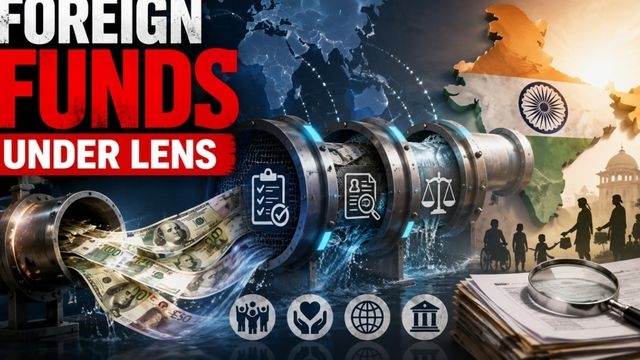
According to the government's 2026 FCRA backgrounder, around 16,200 associations received approximately ₹22,963 crore in foreign contributions during 2024-25.
Conversion and FCRA
Concerns regarding religious conversion are not entirely new to FCRA. Section 12 of the FCRA, 2010 already provides that an applicant should not have been prosecuted or convicted for conversion through inducement or force.
MUST READ - The Christianisation of Nagaland
The 2026 Rules go further by making it clear that proselytisation itself cannot be treated as an approved religious purpose for foreign funding.
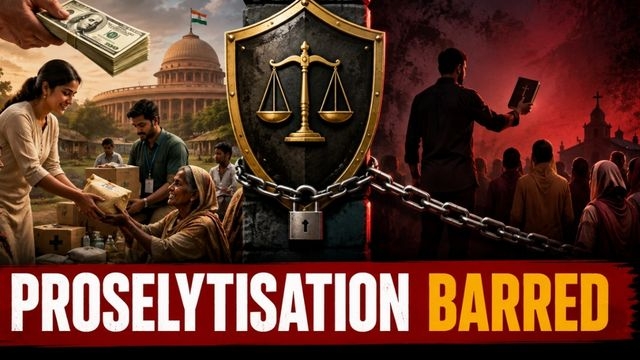
In 2020, the Home Ministry suspended the FCRA licences of 13 organisations following intelligence inputs alleging involvement in religious conversion activities, particularly in tribal-dominated areas including Jharkhand.
However, claims that more than 20,000 FCRA registrations were cancelled because of forced conversions are inaccurate.
Government records show that nearly 22,000 registrations have been cancelled over the years, but these cancellations resulted from multiple causes. Large numbers were cancelled for regulatory violations such as failure to submit mandatory annual returns.
Therefore, the total number of FCRA cancellations cannot be equated with conversion-related cases.
The Greenpeace Case

Foreign-funded activism has also been scrutinised outside the religious sphere. A 2014 Intelligence Bureau report alleged that foreign-funded NGOs, particularly Greenpeace, were supporting campaigns against nuclear, coal, mining and infrastructure projects and adversely affecting India's economic interests, but Greenpeace rejected those allegations.
In 2015, the government cancelled Greenpeace India's FCRA registration, citing several alleged violations, including transfer of foreign contributions to non-designated accounts, under-reporting of funds and breaches of FCRA expenditure rules.
The Enforcement Directorate (ED) later investigated financial transactions involving Direct Dialogue Initiatives India Private Limited, which authorities alleged had links with Greenpeace operations. Greenpeace contested the allegations, and the Karnataka High Court later quashed an ED order freezing bank accounts.
The episode demonstrates why allegations, regulatory findings and judicial conclusions must be distinguished carefully.
FCRA Amendment Bill, 2026
The Foreign Contribution (Regulation) Amendment Bill, 2026, introduced in the Lok Sabha on 25 March 2026, is separate from the already notified Rules.
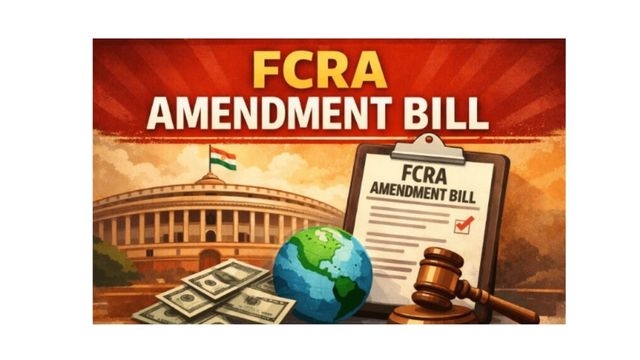
The Bill primarily deals with foreign contributions and assets created from foreign funds when an organisation's registration is cancelled, surrendered or not renewed.
It proposes a Designated Authority to supervise such assets until the legal status of the organisation is determined.
This does not mean that all properties belonging to churches, NGOs or religious organisations would automatically pass to the government. The provisions relate specifically to foreign contributions and assets created wholly or partly from such contributions.
Why the Opposition?
Several Christian organisations and civil-society groups have criticised the new framework, arguing that it could increase government control over religious and charitable institutions.
Criticism has also come from abroad, including from a U.S. Congressman. India’s Ministry of External Affairs rejected such criticism, maintaining that regulation of foreign contributions is India’s internal matter.
However, opposition to FCRA regulations cannot by itself be treated as proof of illegal activity.
The central issue is simpler: should foreign money entering India be subject to clear disclosure, accountability and restrictions on its permitted use? Indian law answers that question in the affirmative.
Foreign-funded hospitals, schools, charities and religious organisations can continue operating within the FCRA framework. But foreign contributions cannot be treated as an unrestricted financial channel.
The 2026 Rules strengthen this principle by making funding purposes more specific and explicitly excluding proselytisation from permitted religious activities.
The debate, therefore, is not merely about charity or religion. It is about the boundary between legitimate foreign-funded social work and activities that the Indian State does not permit overseas money to finance.
Written by

Kewali Kabir Jain
Journalism Student, Makhanlal Chaturvedi National University of Journalism and Communication