BRICS New Delhi Declaration: Bharat Bridges Global Divides
New Delhi Declaration reflects BRICS unity on counter-terrorism, West Asia and a multipolar world.
Total Views |


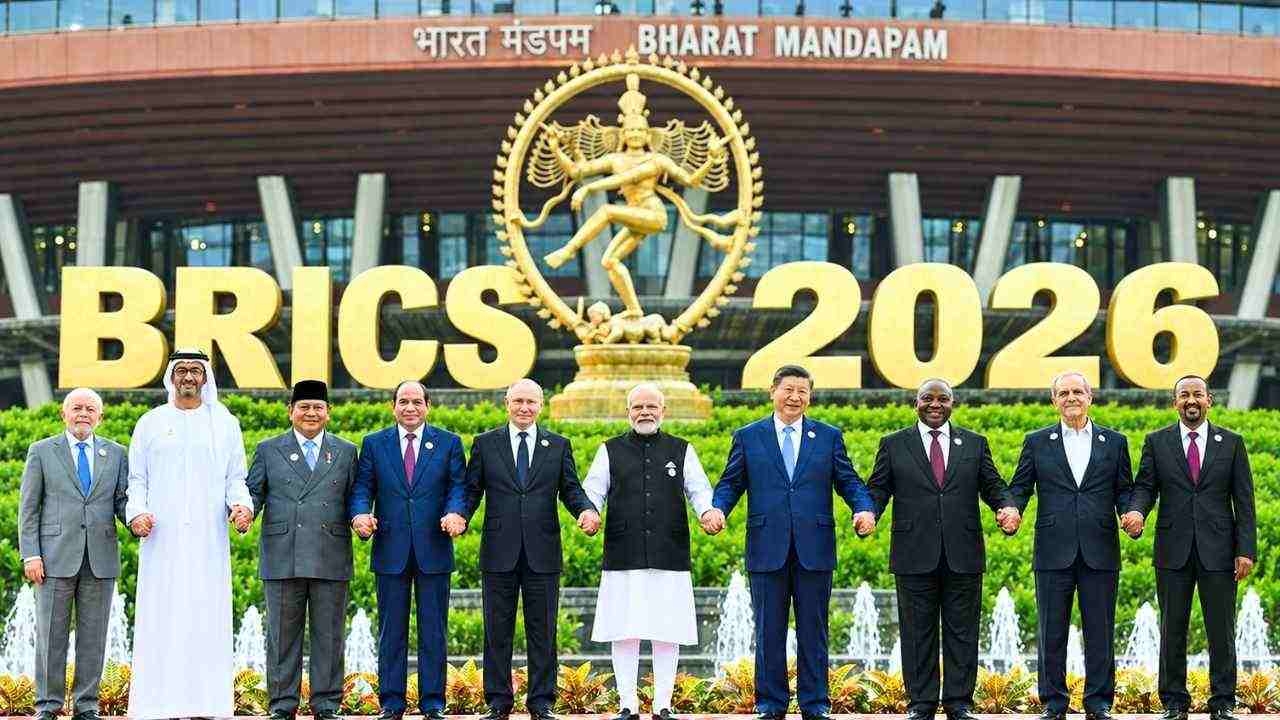
At the 18th BRICS Summit in New Delhi, Bharat secured unanimous backing for a declaration addressing terrorism, West Asia, Global South reforms and deeper cooperation across the expanded grouping.
In a significant diplomatic achievement under Bharat’s chairmanship, the expanded BRICS nations have unanimously adopted the New Delhi Declaration at the 18th BRICS Summit held at Bharat Mandapam on September 12-13, 2026. The consensus, reached after intensive overnight negotiations, underscores India’s capacity to forge unity among members with divergent positions on geopolitical flashpoints, particularly West Asia and Ukraine.
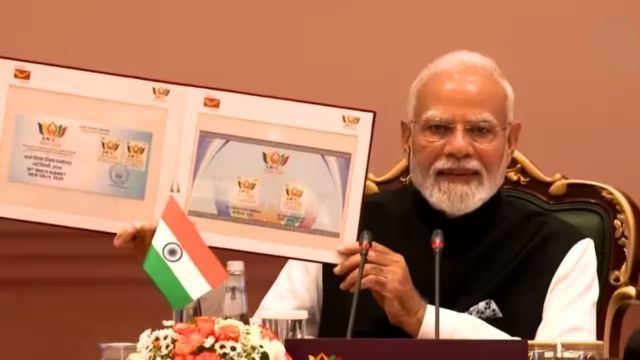
The summit, themed “Building for Resilience, Innovation, Cooperation and Sustainability,” marks two decades of BRICS. The declaration outlines cooperation across three pillars: “political and security, economic and financial, and cultural and people-to-people exchanges”. It reflects Bharat’s consistent emphasis on giving the Global South a stronger voice in global governance while advancing national priorities such as counter-terrorism.
Strong stance on West Asia and Gaza
BRICS leaders expressed deep concern over escalating tensions in West Asia and called for maximum restraint, protection of civilians and civilian infrastructure, and dialogue for lasting peace. On Gaza, the declaration urges continuation of the ceasefire, unhindered humanitarian access, and opposes policies aimed at displacing Palestinians. It reaffirms support for a two-state solution based on the 1967 borders, with East Jerusalem as the capital of a sovereign Palestine alongside Israel, and backs Palestine full United Nation membership.
The leaders stressed respect for international humanitarian law, condemned attacks on civilians, healthcare facilities and infrastructure, and supported UNRWA’s role. They also called for upholding the Lebanon ceasefire and full implementation of UNSC Resolution 1701.
Unequivocal condemnation of terrorism
A key outcome for Bharat is the declaration of strong condemnation of the April 22, 2025 terrorist attack in Jammu and Kashmir, in which 26 people were killed, mostly Hindu tourists. Hindus were targeted and killed on religious grounds, with many others injured. BRICS leaders denounced the attack in the strongest terms and affirmed that terrorism must be fought in all its forms and manifestations, irrespective of religion, nationality, civilisation or ethnicity.
The declaration calls for action against cross-border terrorist movement, financing, and safe havens, and for holding perpetrators and their supporters accountable. It further seeks enhanced cooperation against organised crime, money laundering, financial fraud, illegal virtual-asset flows and scam networks through greater information sharing among financial intelligence units, law enforcement, customs and technology platforms.
Amplifying the Global South’s voice
At the core of the New Delhi Declaration is the demand for reforms in global institutions to better reflect the weight of developing countries from Africa, Asia, Latin America and the Caribbean. BRICS reiterated the need for UN Security Council reform and greater representation of the Global South. China and Russia, as permanent members, reaffirmed support for the aspirations of Brazil and India to play enhanced roles in the UN, including the Security Council.
The grouping also pressed for reforms in the International Monetary Fund (IMF), World Bank and Bretton Woods institutions so that voting and governance structures mirror the changing global economy. It backed a stronger voice for developing nations in the World Trade Organization (WTO) and restoration of a fully functional two-tier dispute settlement system.
Trade, local currencies and development finance
BRICS criticized unilateral tariffs and non-tariff measures that disrupt global trade and supply chain, advocating an open, fair and predictable trading system centred on the WTO. It supported the WTO membership bids of Ethiopia and Iran and noted China’s expansion of zero-tariff treatment to 53 African countries.
Discussions continue on easing cross-border payments and exploring greater use of local currencies for trade and investment, while respecting national priorities and differing paces of adoption. The New Development Bank is expected to expand local-currency financing, mobilise resources and support infrastructure, sustainable development and economic integration across emerging economies.
Food, energy, technology and climate cooperation
With BRICS accounting for a major share of global agricultural output, the declaration prioritises cooperation to address food-price volatility, supply disruptions and shortages of inputs. Work continues on a BRICS Grain Exchange, the farmer-focused BRICS AGRIN network and a Global Forum on Farmers’ Rights in Seed Systems.
Energy security features prominently, with calls for stable markets, secure supply chains and protection of critical infrastructure, alongside energy transitions that account for the differing circumstances of developing countries. Cooperation on critical minerals essential for clean-energy technologies is also highlighted.
On technology, Artificial Intelligence is recognised as a major opportunity for growth and sustainable development, provided it prioritises safety, security, reliability, inclusion and risk reduction. BRICS is advancing digital public infrastructure, skills, cybersecurity and studies on a high-speed submarine cable network. The BRICS Incubator Network and a proposed Startup Innovation Fund received welcome, while Bharat has established the India Centre for BRICS Industrial Competencies to promote advanced manufacturing and Industry 4.0.
Healthcare cooperation covers universal coverage, disease surveillance, pandemic preparedness and medical research, with special focus on tuberculosis. A BRICS Mission for Healthy Lifestyle and a 2026-2029 roadmap were endorsed, alongside plans for Centres of Excellence on mental health coordinated by NIMHANS.
Leaders reaffirm commitment to the Paris Agreement, greater climate finance for developing countries, early-warning systems and climate-resilient infrastructure.
Bharat’s balancing act and diplomatic imprint
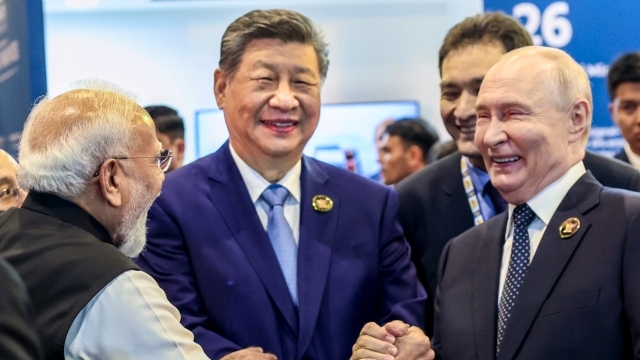
Prime Minister Narendra Modi held bilateral discussions with Russian President Vladimir Putin and Iranian President Masoud Pezeshkian, with talks involving Chinese President Xi Jinping closely watched amid efforts to stabilise ties. The declaration demonstrates Bharat’s ability to maintain constructive engagement with Russia, Iran and China while deepening partnerships with the United States and Europe.
_202609131250122375_H@@IGHT_360_W@@IDTH_640.jpg "BRICS - image 4 (1)")
India’s year-long chairmanship involved more than 400 meetings across 30 cities, engaging ministers, parliamentarians, officials, experts, businesses and civil society. The New Delhi Declaration credits this intensive process with strengthening cooperation on resilience, innovation and sustainable development while amplifying the Global South’s voice.
As China prepares to assume the chairmanship in 2027, the New Delhi outcomes set a benchmark for inclusive multilateralism. Bharat’s successful consensus-building at BRICS 2026, following its G20 presidency achievements, reaffirms its role as a bridge between divergent interests and a consistent advocate for a more representative global order rooted in partnership rather than privilege.
Written by

Kewali Kabir Jain
Journalism Student, Makhanlal Chaturvedi National University of Journalism and Communication