The Digital War Against Sanatan Dharma: Cyber Frauds Are Targeting Bharat’s Temples, Faith, and Pilgrims
01 Dec 2025 14:00:19

Bharat has in recent years witnessed an unprecedented digital assault on its most sacred institutions. Under the guise of providing prasad, darshan, accommodation or pooja services, organised cybercriminal networks have manipulated Hindu devotees to siphon off crores of rupees.
In today’s cyber landscape, the so-called digital donation scam has evolved into a sophisticated ecosystem of fake websites, phishing portals and manipulated social media handles. These operations have defrauded lakhs of devotees and taken advantage of the enormous rise in pilgrimage tourism, digital payments and online religious services.
Digital War on Devotion
In December 2023, only weeks before the grand consecration ceremony of the Ram Temple in Ayodhya, a digital fraudster launched the website khadiorganic.com and claimed to distribute prasad, coins and idols linked to the event. The portal was not operated by temple authorities but by a conman posing as a professor.
The website received more than six lakh orders from Indian and overseas devotees, each paying for facilitation and so-called free delivery. The scam accumulated ₹10.49 crore within weeks. Prasad delivery alone accounted for ₹3.85 crore.
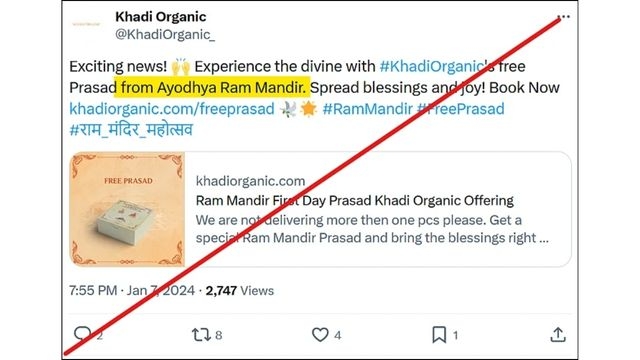
The fraud was exposed only after the Shri Ram Janmabhoomi Teerth Kshetra Trust flagged the site for suspicious activity. Police intervened, and the accused was arrested upon his return to India. Thanks to swift action, ₹2.15 crore was refunded to more than 3.7 lakh victims. This remains Uttar Pradesh’s largest cyber refund case to date.
Ayodhya is not the only target!!!
Several fake portals impersonated the Shri Mata Vaishno Devi Shrine Board and offered bogus helicopter tickets and related services. Devotees lost money after receiving fabricated confirmations and fake tickets. A similar incident occurred during the rush for the Kedarnath pilgrimage season. A Gujarat based devotee lost ₹1.91 lakh after booking 32 helicopter tickets through a fraudulent link that claimed to represent the legitimate operator Pawan Hans. The link, circulated via Facebook and WhatsApp, prompted police to freeze connected bank accounts, seize mobile phones and arrest four accused from Bihar and Odisha. The investigation uncovered a multi state cybercrime operation.
Counterfeit Websites and Fake Agents
Fraudsters have also created counterfeit websites to mislead devotees. One such case involved a fake portal imitating the official Kashi Vishwanath Temple site. Devotees were tricked into sharing personal information and making online payments for darshan, Rudrabhishek and puja bookings even when the official system had suspended bookings. After making payments, users were redirected to a so-called pandit and discovered the fraud only upon reaching the temple. The administration reported the scam to police, who took the site down.
A similar fraudulent portal targeted Shree Jagannath Temple devotees by advertising paid online darshan priced between ₹50 and ₹500, although darshan at the twelfth century shrine is always free. The impostor site simulated temple rituals and history to appear legitimate. Once the scam was detected, the temple administration filed a formal complaint and issued public warnings.
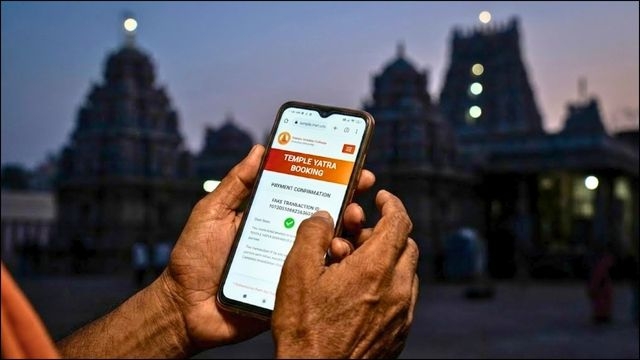
Another portal styling itself as Babadham Online Puja Services offered facilities for the Baba Baidyanathdham Temple in Deoghar. Five Hyderabad pilgrims paid ₹5,100 each expecting priority services and found nothing upon reaching the temple. Police investigations revealed that 9,117 people had registered on this fraudulent site before it vanished. An FIR was subsequently filed.
In Guruvayur in Kerala, an unauthorised WhatsApp group run by agents pretending to be linked to the Guruvayur Temple collected money for arranging visits and offerings. The Devaswom Board later clarified that no private agency is authorised to manage darshan or bookings and issued warnings on official platforms against such intermediaries.
Fake Booking Portals, Agents and Accommodation Rackets
The exploitation of devotees has also spread to counterfeit accommodation booking portals. Several bogus websites and sponsored listings claimed to offer guesthouse bookings for the Shri Somnath Temple. Pilgrims made payments via bank transfer or UPI and later discovered that no such reservations existed. The Somnath Trust warned that legitimate bookings are accepted only through the official website and urged visitors to avoid unauthorised links.
A fraudulent portal titled Karnataka Temple Accommodation was created to imitate the official booking platform for the Sri Mookambika Temple in Kollur. Devotees paid through WhatsApp QR codes and received fabricated receipts, only to realise the deception later. Police registered a case under Section 66(C) of the IT Act.

Multiple imitation websites also falsely offered room bookings at Bhakt Niwas near the Mahakaleshwar Temple in Ujjain. Online payments were taken for rooms that did not exist. Authorities blocked nine fake domains and issued alerts to the public.
A large scale operation further revealed a gang running a nationwide temple and tourism booking racket. Fake websites were created to impersonate portals for the Tirumala Tirupati Devasthanam, Srisailam Temple and Trimbakeshwar Temple, along with resorts such as Haritha Resorts. This network generated 127 complaints across 18 states. Nearly ₹50 lakh was recovered and the masterminds were eventually arrested.
Article by
Kewali Kabir Jain
Journalism Student, Makhanlal Chaturvedi National University of Journalism and Communication