Madhya Pradesh Declares Victory Over Armed Maoism, But the Lessons Remain Stark
The three-decade-long Naxalite crisis in Madhya Pradesh has finally come to an end. Following the surrender of two notorious Maoist commanders in Balaghat, the state declared itself "Naxal-free." This achievement marks not only a victory for the security operation but also a return to administrative confidence.



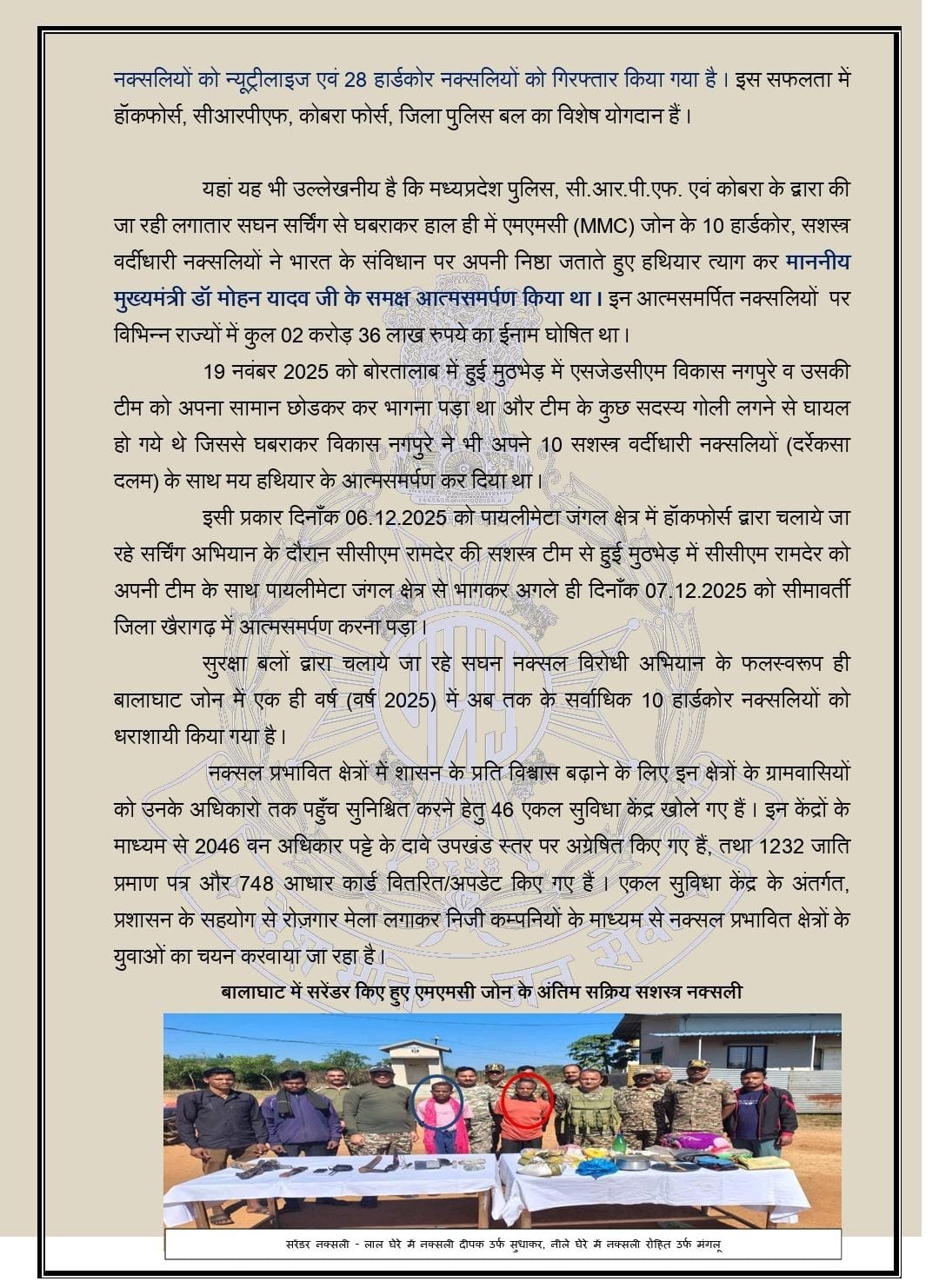
On December 11, 2025, the surrender of two wanted Maoist commanders (Sudhakar and Manglu) in Balaghat marked the formal end of organised armed Maoism in Madhya Pradesh. The announcement, confirmed through an official police statement, followed months of sustained security operations, intelligence-led tracking and a renewed governance push across the state’s tribal belt.
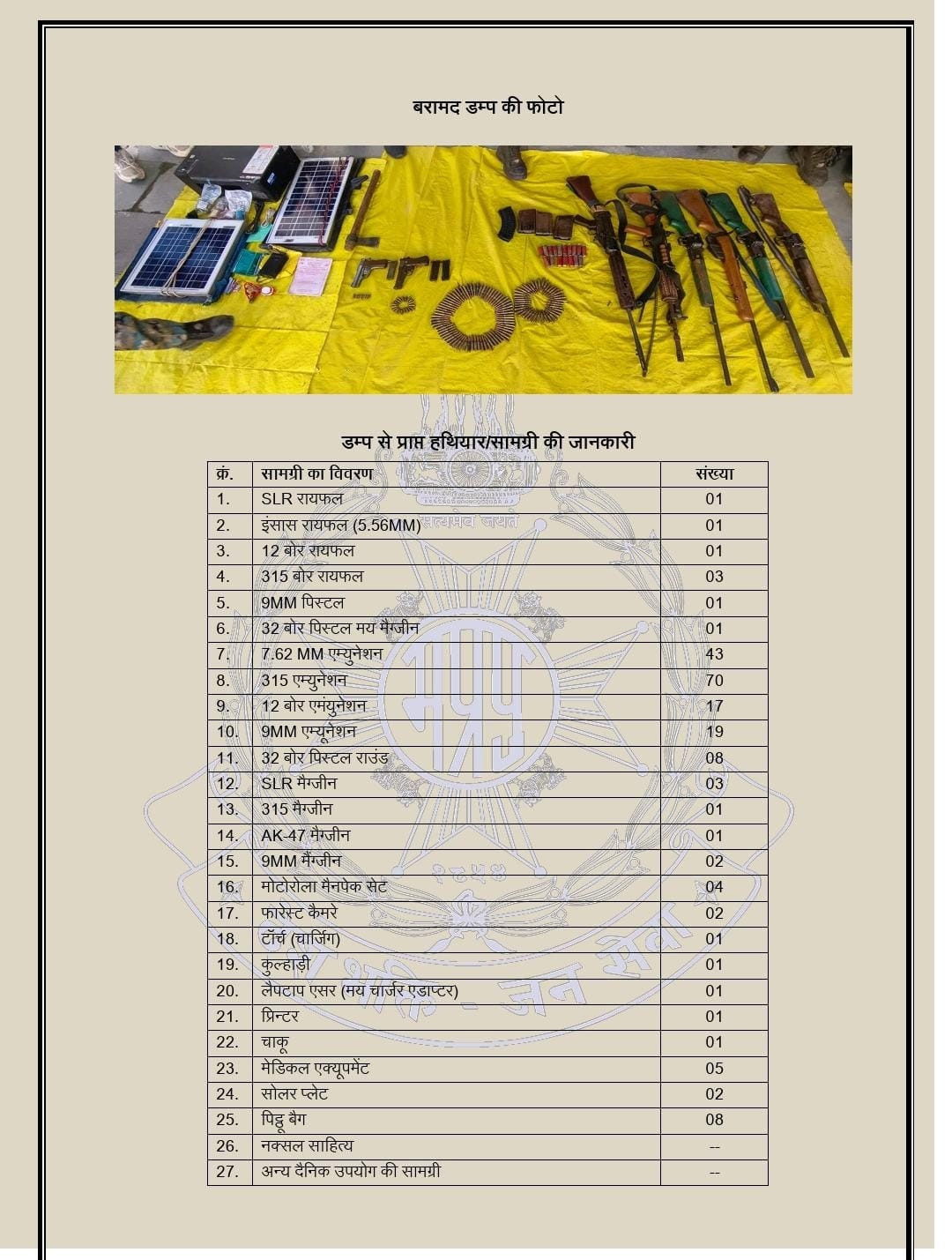
Officials describe the development not merely as a tactical breakthrough but as the culmination of years of methodical pressure. A detailed press note from Balaghat police lists an extensive recovery of buried weaponry and communications equipment, underscoring how deeply entrenched the insurgent network once was.
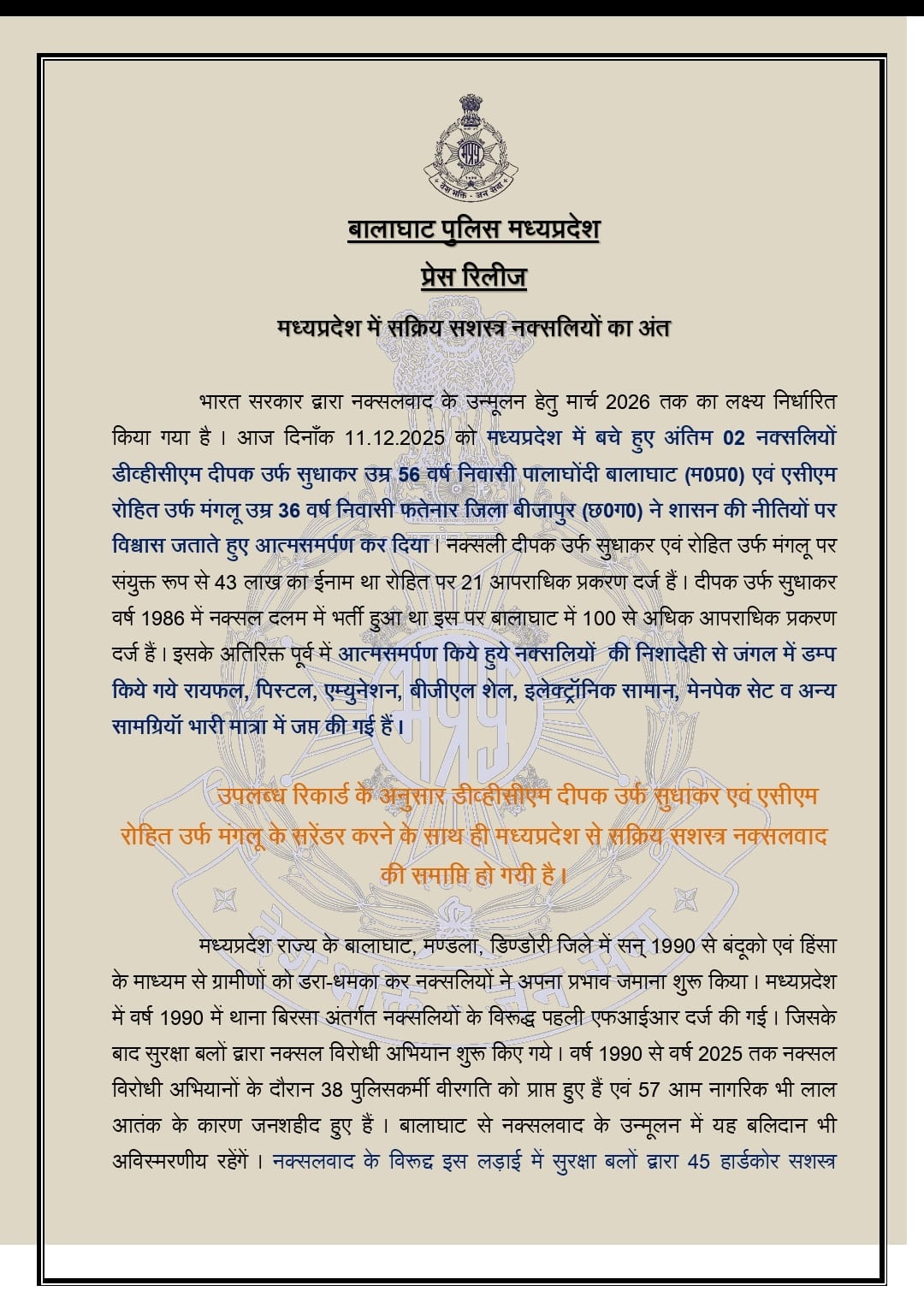
The note also highlights the recent administrative presence in remote hamlets through single-window service centres, updated identity documentation and the processing of forest rights claims, which helped restore confidence in the state and reduced the influence of Maoists long exercised over local populations.
The collapse did not occur in isolation. Over the past two years, the Red Corridor witnessed a wave of surrenders, arrests and leadership breakdowns. Open-source records and government briefings indicate a sharp contraction of Maoist activity, with hundreds of cadres across central India neutralised or persuaded to give up arms.
Analysts monitoring these trends point to a significant reduction in violent incidents, alongside a geographic shrinking of the insurgency’s operational spread.
Internal weaknesses hastened the Maoists’ decline. The CPI (Maoist) maintained its hold through coercion, extortion and a rigid parallel authority that often contradicted its proclaimed ideological mission of protecting the poor.
Investigations and court testimonies over the years reveal patterns of forced levies, intimidation and child recruitment, practices that weakened the organisation’s credibility among the very communities it claimed to defend.
Simultaneously, security forces targeted leadership nodes, disrupted supply lines and restricted movement across the MP-Maharashtra-Chhattisgarh tri-junction, leaving cadres with diminishing safe havens.
The toll of this decades-long conflict is substantial. Police records and public reports confirm dozens of police deaths and numerous civilian casualties since the early 1990s, losses that continue to weigh on families and communities across Balaghat, Mandla and Dindori. Officials emphasise that acknowledging these sacrifices is essential as the state transitions from counterinsurgency to long-term stabilisation.
Even so, the declaration of a “Naxal-free” Madhya Pradesh does not eliminate residual risks. Insurgent groups adapt, and interrogations of surrendered cadres suggest ongoing debates within the Maoist ranks about new tactics, including attempts at technological experimentation and continued influence through urban and legal-front networks.
Security planners warn that while armed presence may have been dismantled, the ideological ecosystem that supported recruitment for decades requires sustained attention.
Madhya Pradesh’s strategy of combining intelligence-driven operations with governance outreach, offers useful guidance but demands nuance. Successful counterinsurgency depends on calibrated force, credible administration and respect for civil rights.
Madhya Pradesh’s recent administrative interventions, especially the resolution of land and identity documentation issues and the expansion of essential services, further eroded the social space maoists once exploited.