The Dissolution of the Soviet Union: A Chronicle of Systemic and Ideological Failures
28 Dec 2025 16:06:22
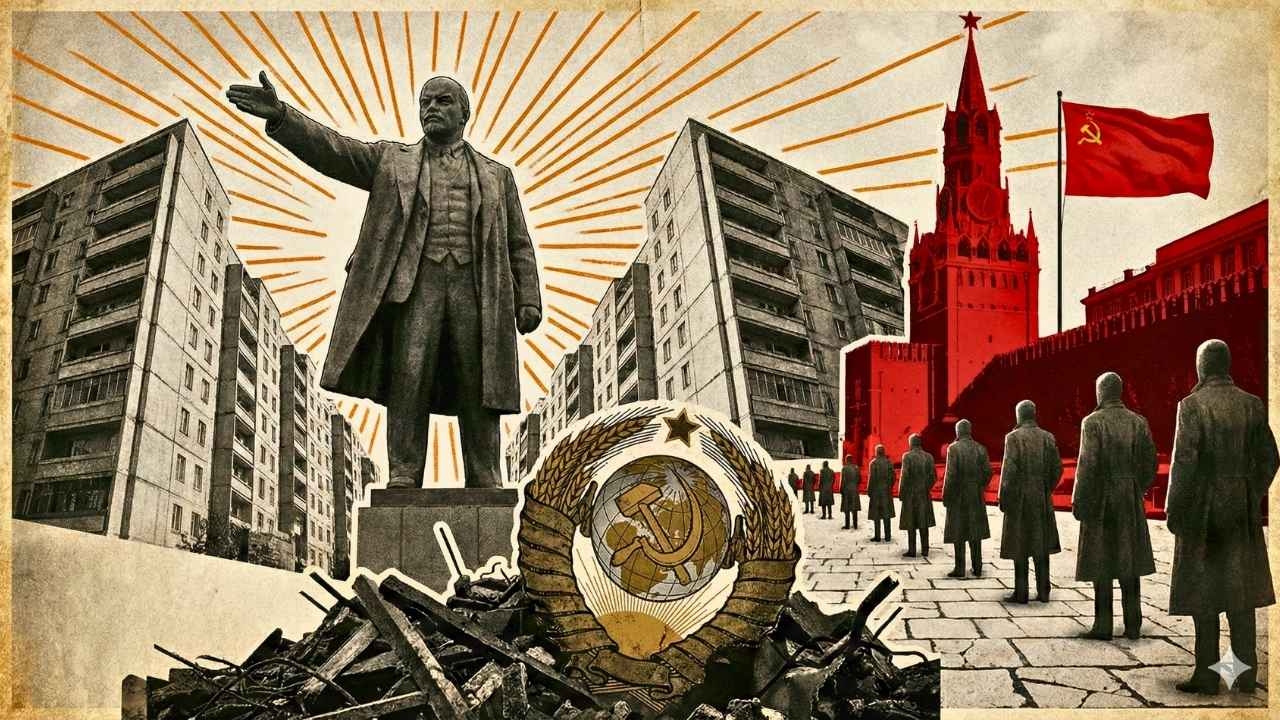
The collapse of the Soviet Union in December 1991 marked the disintegration of one of the most repressive political experiments of the twentieth century. Far from being an abrupt geopolitical rupture, the dissolution represented the logical culmination of decades of ideological rigidity, economic mismanagement, political repression, and moral decay. At its core lay the fundamental failure of communist ideology, which not only crippled societies economically and culturally but also inflicted unprecedented human suffering across vast regions of the world.
Communist ideology, as practised in the Soviet Union, operated through inherent authoritarianism and absolute intolerance of dissent. Rooted in the doctrine of class warfare and enforced through revolutionary violence, it legitimised repression as a central instrument of governance rather than a temporary necessity.
Institutionalised Terror and Human Cost
The Soviet state normalised terror as a mechanism of control. Mass arrests, forced labour camps known as Gulags, executions, engineered famines, and political purges became routine features of governance. Independent historians and scholars estimate that communist regimes worldwide were responsible for the deaths of tens of millions of people. The Soviet Union accounted for a substantial share through Stalinist purges, forced collectivisation, and state-induced famines, including the Holodomor.
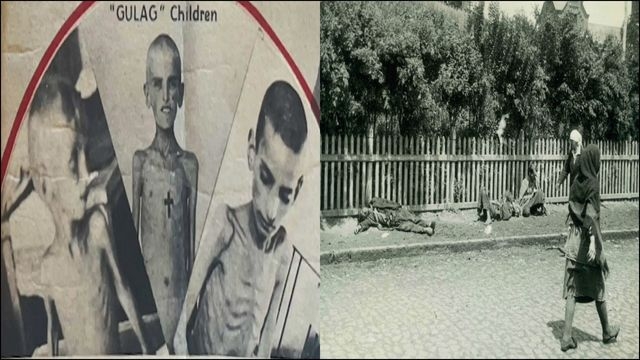
The regime criminalised independent thought and eliminated perceived threats with ruthless efficiency. Fear permeated society, discouraging dissent and ensuring obedience through violence rather than legitimacy.
Economic Centralisation and Systemic Failure
Economic policy under Soviet communism revolved around rigid centralisation and forced collectivisation. The state commanded the collectivisation of agriculture, which resulted in mass starvation, displacement, and death. Peasants lost their land, livestock, and autonomy, while the state requisitioned food supplies even as millions faced hunger.
The command economy failed to respond to human needs or market realities. Chronic shortages, rationing, inefficiency, and black markets became permanent features of daily life. Innovation stagnated, productivity declined, and the gap between official propaganda and lived reality widened steadily.
Political Repression and a Culture of Fear
The Communist Party of the Soviet Union functioned as an unaccountable ruling elite. It criminalised political opposition, religious belief, free media, and independent civil society. The state imprisoned or executed dissenters, writers, scientists, soldiers, and workers who challenged ideological conformity or exposed institutional failures.
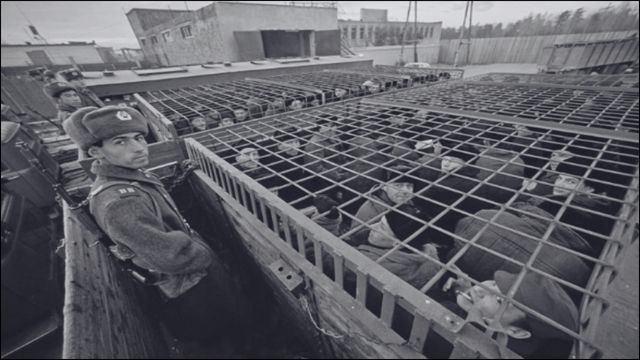
This culture of fear eroded trust within society and hollowed out the state itself. Loyalty replaced competence, and obedience replaced accountability, weakening governance at every level.
Expansionism and Ideological Imperialism
Communist ideology also manifested through aggressive expansionism. The Soviet Union imposed satellite regimes across Eastern Europe and crushed popular uprisings in Hungary in 1956 and Czechoslovakia in 1968. These interventions exposed the contradiction between the regime’s claims of liberation and its reliance on military coercion.
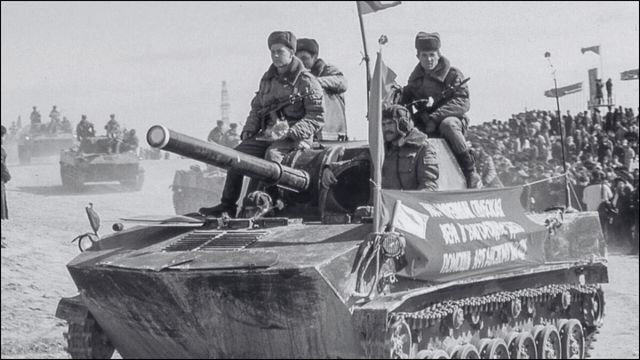
The invasion of Afghanistan further revealed the hollowness of ideological imperialism. The decade-long conflict inflicted immense civilian casualties, destabilised the region, and accelerated the Soviet Union’s internal decline by draining resources and undermining morale.
Reform Without Redemption
Mikhail Gorbachev’s initiatives of Glasnost and Perestroika, launched after 1985, aimed to revitalise the Soviet system. Instead, they exposed its irreparable decay. Glasnost dismantled decades of censorship and fear, granting citizens access to suppressed archives, banned literature, and historical truths. For the first time, the state officially acknowledged Stalinist purges, the Gulag network, mass executions, and man-made famines.
These revelations shattered the moral authority of the Communist Party, which had sustained its rule by denying or justifying its crimes. Public trust collapsed as citizens confronted the scale of deception embedded within the system.
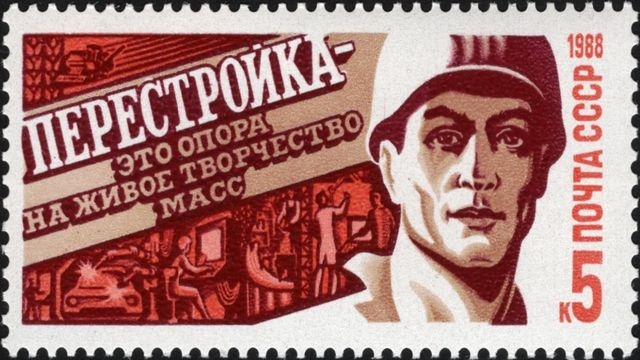
Perestroika introduced limited economic restructuring but destabilised an already fragile command economy. Partial market mechanisms emerged without dismantling central controls, resulting in supply chain breakdowns, inflation, and severe shortages of essential goods by the late 1980s. Industrial output declined, agriculture remained inefficient, and public frustration intensified.
Politically, reforms weakened the Communist Party’s monopoly without establishing stable democratic institutions. Competitive elections, freer media, and reduced repression emboldened nationalist movements across the Baltic states, Eastern Europe, and the Caucasus.
Once the barrier of fear collapsed, public compliance dissolved. The failed hardline coup attempt in August 1991 exposed the regime’s internal disintegration. Ultimately, Glasnost and Perestroika demonstrated that communism could not survive transparency. A system sustained by coercion, censorship, and historical falsehoods could not endure truth, making collapse inevitable.
Article by

Kewali Kabir Jain
Journalism Student, Makhanlal Chaturvedi National University of Journalism and Communication