Bharat’s Blue Economy Doubles in a Decade
With rising port capacity, record seafood exports, and millions of livelihoods supported, the Blue Economy now anchors Bharat’s trade and coastal prosperity.
Total Views |


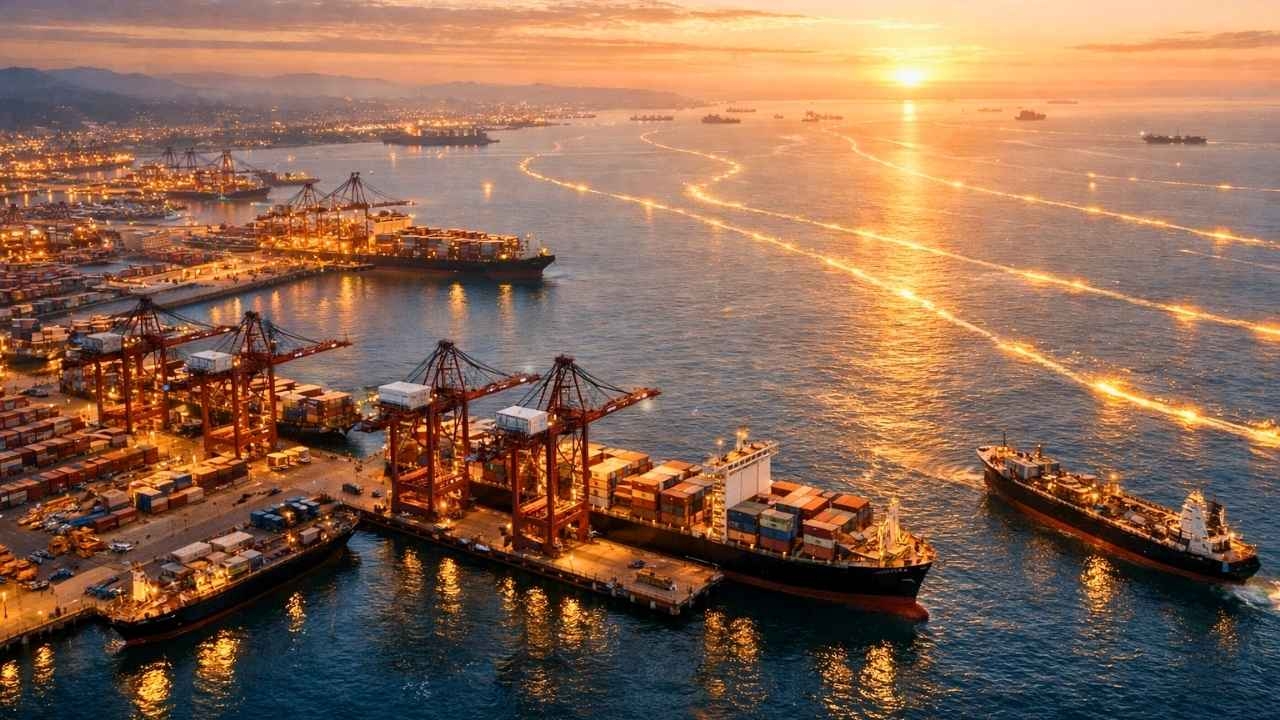
Over the past decade, Bharat’s maritime and coastal sectors have undergone a clear structural transformation. Policymakers once viewed the ocean economy largely through fisheries and port operations. Today, the sector functions as a strategic pillar of national growth, technological advancement, and geopolitical influence.
Since 2014, coordinated government initiatives have accelerated the expansion of Bharat’s Blue Economy, defined as the sustainable use of ocean resources for economic growth, employment generation, and ecosystem protection. This policy-driven momentum has delivered tangible outcomes. Bharat now ranks as the world’s third-largest fish producer, leads global shrimp exports, and operates as a rapidly expanding maritime logistics hub. During this period, port income and handling capacity have nearly doubled.
Official estimates indicate that the Blue Economy contributes around 4 percent of Bharat’s GDP and directly supports the livelihoods of nearly 28 million people. Maritime routes handle about 95 percent of Bharat’s trade volume, underscoring the sector’s critical role in national commerce and maritime security.
The latest push emerged on 17 January 2026, when Union Minister Jitendra Singh announced the development of the Andaman and Nicobar Islands as a major Blue Economy hub. This announcement marked a new phase in Bharat’s maritime ambitions and signalled a sharper focus on island-based ocean development.
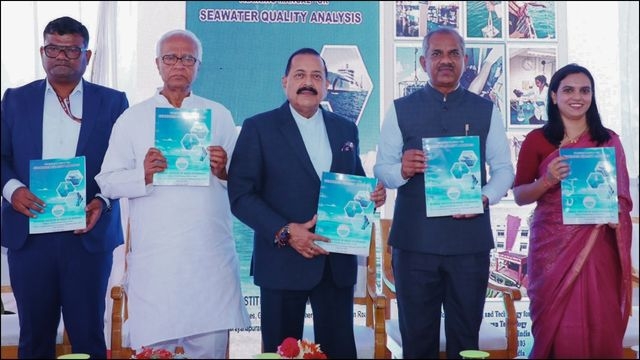
This report examines eleven major government initiatives that together explain the doubling of Bharat’s Blue Economy expansion in the post-2014 period.
The Economic Scale of Bharat’s Blue Economy
Bharat’s maritime growth story reflects strong economic indicators across multiple segments.
Seafood exports reached an all-time high of 17.82 lakh tonnes in FY2023–24, valued at ₹60,523.9 crore, driven primarily by frozen shrimp exports. Total port capacity rose to approximately 2,762 million tonnes per annum by 2025, nearly double the 1,400 million tonnes recorded in 2014. Major port income increased from ₹11,760 crore in FY2014–15 to ₹24,203 crore in FY2024–25, registering a decade-long compound annual growth rate of 7.5 percent. Fish production surged from 96 lakh tonnes in 2013–14 to nearly 195 lakh tonnes in 2024–25.
These outcomes did not occur by chance. Targeted interventions across fisheries, shipping, tourism, deep-sea exploration, shipbuilding, and maritime infrastructure drove this growth in a structured manner.
Eleven Key Government Initiatives Driving the Blue Economy
1. Open Sea Cage Fish Farming and Seaweed Cultivation
The launch of pilot-scale open sea cage fish farming and large-scale seaweed cultivation in the Andaman and Nicobar Islands marks a decisive shift towards high-value marine aquaculture. By transferring technology directly to local fishers, this initiative combines livelihood creation with biodiversity-based economic development. As a result, the islands now stand positioned as a future epicentre of Bharat’s Blue Economy, blending commercial mariculture with ecological sustainability.
2. Deep-Sea Polymetallic Sulphide Exploration
Bharat’s 15-year contract with the International Seabed Authority to explore polymetallic sulphides represents a strategic leap into deep-sea mineral resources. These deposits, rich in copper, zinc, gold, and silver, play a critical role in clean energy systems and advanced manufacturing technologies. With two active ISA contracts, Bharat now controls the world’s largest exploration area in this category, strengthening both its technological depth and geopolitical footprint.
3. Green Tug Transition Programme
The Green Tug Transition Programme reflects Bharat’s commitment to decarbonising maritime operations. By replacing conventional fuel-based harbour tugs with eco-friendly alternatives, the programme integrates sustainability into everyday port activity. Major ports, including Jawaharlal Nehru, Deendayal, Paradip, and V.O. Chidambaranar, have already initiated adoption, signalling a decisive move towards low-carbon maritime infrastructure.
4. Lighthouse Tourism Development Programme
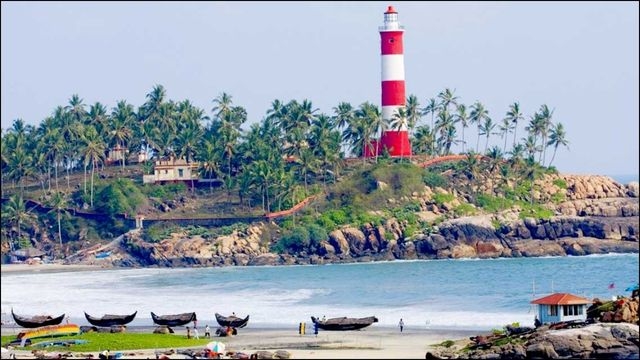
Under Maritime India Vision 2030 and Amrit Kaal Vision 2047, Bharat has reimagined its 205 historic lighthouses as tourism and cultural hubs. Authorities have equipped 75 lighthouses with modern amenities, museums, adventure activities, and cultural programming. Consequently, this initiative has generated local employment and increased tourist footfall by nearly five times in operational locations.
5. Cruise Bharat Mission
The Cruise Bharat Mission aims to position Bharat as a global cruise tourism hub by 2029. The programme proposes 51 new cruise circuits across 14 states and 3 Union Territories. It targets a threefold increase in river cruise passengers and a doubling of sea cruise traffic. Through terminal modernisation, international cruise partnerships, and regional circuit integration, the mission seeks to unlock Bharat’s extensive coastal tourism potential.
6. Deep Ocean Mission Samudrayaan
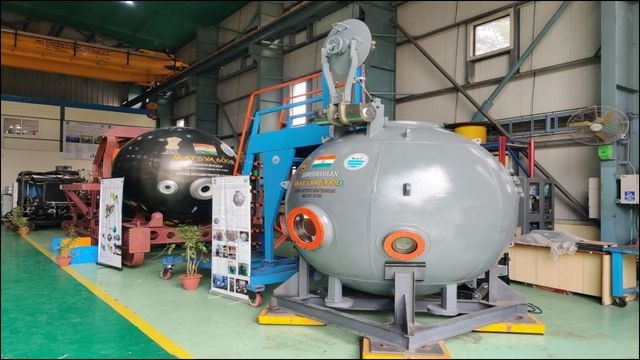
Launched with a budget of ₹4,077 crore, the Deep Ocean Mission marked Bharat’s formal entry into deep-sea exploration. The development of the Matsya 6000 submersible enables human dives up to a depth of six kilometres. This capability supports seabed mineral exploration, climate research, and comprehensive ocean mapping. The mission significantly strengthens Bharat’s scientific standing and strategic presence in the Indo-Pacific region.
7. Maritime India Vision 2030 and Amrit Kaal Vision 2047
Maritime India Vision 2030 provides a detailed roadmap to handle 2,600 million tonnes of cargo by 2030 through investments estimated at ₹3 to 3.5 lakh crore. Its long-term extension, Amrit Kaal Vision 2047, envisages investment of nearly ₹80 lakh crore to transform Bharat into a global maritime leader. Together, these frameworks integrate ports, logistics, inland waterways, shipbuilding, and green shipping into a unified national strategy.
8. Pradhan Mantri Matsya Sampada Yojana
The Pradhan Mantri Matsya Sampada Yojana has played a central role in Bharat’s fisheries transformation. With an outlay exceeding ₹20,000 crore, the scheme has created over 58 lakh jobs, empowered women entrepreneurs, and expanded fisheries infrastructure nationwide. By reducing post-harvest losses and boosting productivity, the programme has strengthened Bharat’s position in global seafood markets while promoting sustainable fishing practices.
9. India–Norway Task Force on Blue Economy
The India–Norway Task Force on Blue Economy represents a strategic international partnership focused on sustainable ocean development. Collaboration spans marine research, green shipping, fisheries management, ocean observation, and deep-sea technology. This partnership highlights Bharat’s expanding engagement in global maritime governance and innovation networks.
10. Shipbuilding Financial Assistance Policy
The Shipbuilding Financial Assistance Policy revitalised Bharat’s shipbuilding sector by providing targeted subsidies for modern vessel construction. Amendments introduced in 2024 enhanced incentives for hydrogen, methanol, and hybrid ships, aligning domestic shipbuilding with global sustainability standards. By FY2025, the policy had generated vessel orders worth ₹10,500 crore, reinforcing domestic manufacturing under the Make in India framework.
11. Sagarmala Programme
Sagarmala remains the cornerstone of Bharat’s port-led development strategy. By integrating port modernisation, multimodal connectivity, and coastal industrialisation, the programme has expanded port capacity and increased coastal and inland waterway cargo movement. Sagarmala 2.0, announced in 2025, aims to attract ₹12 lakh crore in investments over the next decade, reinforcing maritime infrastructure as a key driver of national growth.
Bharat’s Blue Economy expansion represents more than an economic trend. It carries strategic, environmental, and geopolitical significance. The doubling of this sector since 2014 reflects a deliberate shift from land-centric development towards ocean-driven growth. Through eleven interlinked initiatives, Bharat has built an integrated maritime ecosystem encompassing infrastructure, technology, sustainability, and international cooperation.
As Bharat advances towards Amrit Kaal Vision 2047, the Blue Economy stands poised not merely as a contributor to GDP, but as a foundational pillar of national capability and long-term strategic power.
Written by

Kewali Kabir Jain
Journalism Student, Makhanlal Chaturvedi National University of Journalism and Communication