ECI Hits Back: SIR Orders Were Unanimous, ‘Unilateral’ Claims Rejected
In a hard-hitting Supreme Court affidavit, the Election Commission of India exposes the Indian Express report as hollow, affirms that all three SIR orders were unanimous, and unmasks the Opposition’s desperate campaign of institutional sabotage led by Rahul Gandhi.
Total Views |


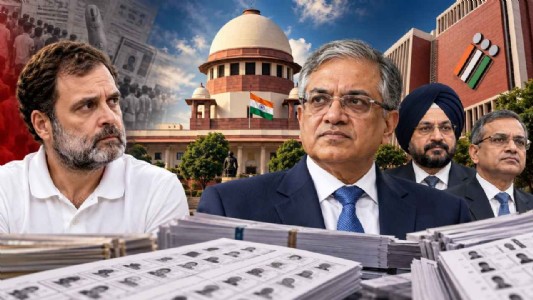
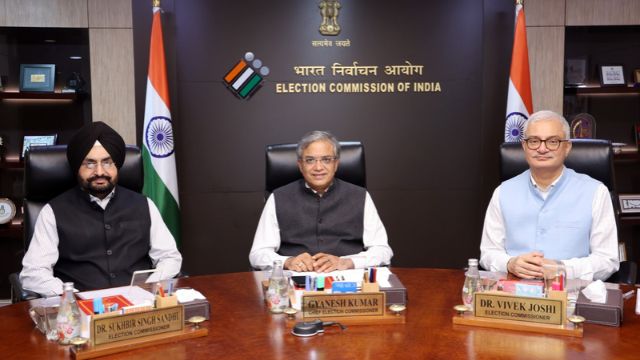
In a decisive counter-affidavit filed before the Supreme Court on October 26, 2026, the Election Commission of India has demolished the carefully constructed narrative that Chief Election Commissioner Gyanesh Kumar acted unilaterally in the Special Intensive Revision (SIR) of electoral rolls. The Commission has affirmed that all three key SIR orders dated June 24, 2025, October 27, 2025, and May 14, 2026 were unanimous decisions of the full three-member body. The affidavit itself was approved by CEC Gyanesh Kumar and Election Commissioners Sukhbir Singh Sandhu and Vivek Joshi.
This is not mere bureaucratic clarification. It is a categorical rejection of the September 23 Indian Express investigation that formed the sole foundation of the petitions seeking to restrain the CEC and halt the SIR process. A newspaper report, however elaborately packaged, does not constitute evidence against a constitutional authority. The ECI has rightly questioned the very maintainability of pleas built on such slender material and has denied releasing or authorising the release of any internal files to the media.
The Real Purpose of SIR: Cleaning Decades of Accumulated Rot
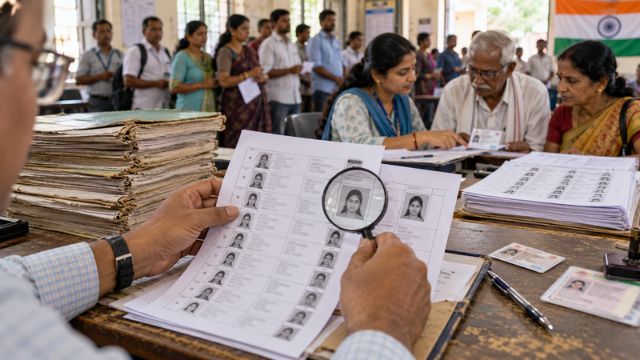
Special Intensive Revision is not a novel invention of Gyanesh Kumar. Electoral rolls require periodic intensive purification to remove the dead, the permanently shifted, duplicates, and those who never belonged. The last comparable national-scale exercise occurred roughly two decades ago. In the intervening years, India’s electorate ballooned while verification lagged. The result: inflated rolls that undermine the principle of one person, one vote.
SIR began in Bihar in June 2025 and expanded nationwide. Draft rolls across 30 states and Union Territories saw roughly 13 crore names marked for scrutiny or removal primarily under categories of deceased, shifted, absent, or duplicate. This is not “disenfranchisement”; it is elementary housekeeping. Eligible citizens retain the right to file claims, produce documents, and seek restoration. Booth Level Officers have been directed to collect documents from homes; personal hearings are reserved for exceptional cases, preferably online. On ECINet, no addition, deletion, or modification occurs without an order from the Electoral Registration Officer. A committee of independent technical experts was constituted on October 14 to examine compliance.
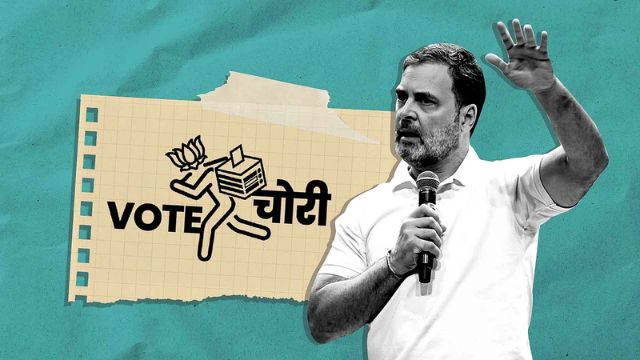
Opposition leaders and sympathetic media have transformed these figures into a conspiracy theory of “vote chori.” Yet the same forces that once demanded cleaner rolls now scream when the Commission actually cleans them. In Goa, of 97 reportedly left-out voters, 88 applications were already accepted; the remaining cases involved people abroad or holding foreign passports. In West Bengal, appeals filed by state officers pursuant to Supreme Court directions were not even placed before the full Commission. The pattern is clear: administrative diligence is recast as political malfeasance only when it inconveniences certain parties.
Internal Notes Are Not Dissent; Procedure Is Not Conspiracy
The Indian Express report highlighted 14 occasions on which Sandhu and Joshi recorded observations or questions. The ECI affidavit places this in proper context. Files ordinarily move from one Election Commissioner to the other before reaching the CEC. Questions raised during processing are not final decisions. In urgent matters, electronic approvals are obtained and later recorded. Section 18 of the 2023 law governing the Election Commission itself contemplates unanimous decisions where possible, with majority prevailing in case of difference. Internal deliberation is the hallmark of a multi-member body, not evidence of rupture.
On the July 28, 2026 office order concerning work allocation issued by an officer on deputation both Election Commissioners wrote to the Cabinet Secretary. The Commission states the order was never implemented after their joint intervention on July 30. That is how constitutional institutions resolve internal administrative friction: through discussion and correction, not through selective leaks and media trials.
Form 6, the statutory form for new voter enrolment, was never amended by the Commission. Only the Central Government can amend the form prescribed under the Registration of Electors Rules. The additional declaration linking applicants or their parents/grandparents to earlier electoral rolls was a separate document designed to facilitate single-OTP electronic processing. Online presentation may have created an impression of amendment; the Commission has since clarified that Form 6 and the SIR declaration appear separately. During the October 5 hearing, the Supreme Court itself noted it had not approved any modified Form 6. The ECI’s October 21 decision addresses precisely this operational point.
The Opposition’s Familiar Playbook: Attack the Umpire When Losing
Rahul Gandhi and the INDIA bloc have seized upon the Express report to revive their perennial charge of “vote chori.” Petitions have been filed, street protests organised, and demands raised for the CEC’s resignation or restraint. Gandhi has called the exercise treason and an assault on the Constitution. Other leaders have echoed the rhetoric. Yet these same parties celebrated electoral victories in states where rolls had undergone revision. The selective outrage is revealing.
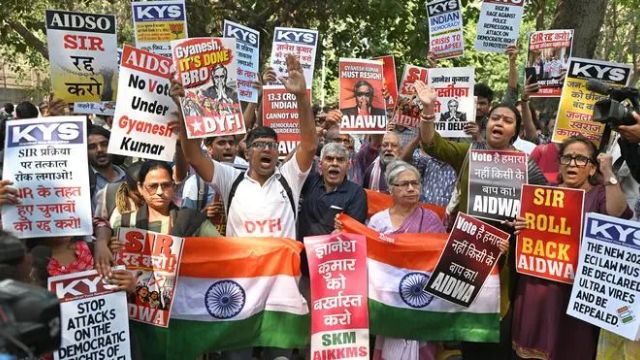
When the Opposition loses elections, the problem is never their own organisational failure, ideological bankruptcy, or disconnect with the electorate. It is always the EVMs, the rolls, the Commission, or some shadowy centralised software. The pattern has repeated across cycles. The current campaign simply updates the script with the SIR numbers and a newspaper investigation. The Supreme Court has already declined to suspend the CEC without hearing the respondents, citing the constitutional protection under Article 324(5) that places the CEC on the same footing as a Supreme Court judge for removal.
The ECI’s affidavit further notes that a newspaper report cannot, by itself, establish allegations against a constitutional authority. This is elementary. Yet the entire political and media offensive rests on precisely that foundation. Internal notes, procedural questions, and administrative corrections are being weaponised to undermine public confidence in the one institution that has conducted free and fair elections on a scale unmatched in the democratic world.
Institutions Must Be Strengthened, Not Subverted
The Election Commission of India is not above scrutiny. Robust debate over process, technology, and inclusion is healthy. What is not healthy is the conversion of every administrative exercise into a conspiracy narrative the moment it produces inconvenient numbers. Clean electoral rolls protect genuine voters. They prevent multiple voting, ghost entries, and the dilution of legitimate franchises. That is why intensive revision exists.
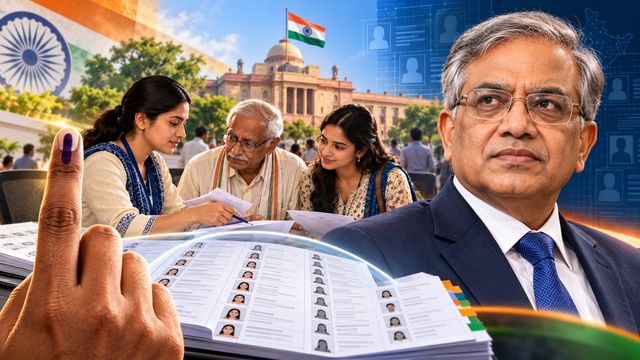
Gyanesh Kumar and the Commission have responded with facts, procedure, and constitutional fidelity. The three SIR orders were unanimous. Form 6 was not amended. Internal observations do not equal final decisions. Eligible voters retain avenues for inclusion. The Supreme Court will examine the matter further. Until then, the evidence on record points in one direction: the real threat to electoral integrity is not a diligent Commission cleaning the rolls, but a political class that prefers inflated, unverified lists when they serve its interests and screams foul when the lists are purified.
India’s democracy does not require the demolition of its institutions to satisfy the temporary political needs of any party. It requires accurate rolls, transparent process, and the courage to defend constitutional bodies against manufactured outrage. The ECI’s affidavit is a firm step in that direction. The rest is noise.
Written by

Kewali Kabir Jain
Journalism Student, Makhanlal Chaturvedi National University of Journalism and Communication