1976: Mao’s Cultural Revolution Ends, a Legacy of Terror and Trauma Remains
Mao’s death and the arrest of the Gang of Four ended a decade of Red Guard terror, mass struggle sessions, cultural destruction, and the persecution of millions.
Total Views |


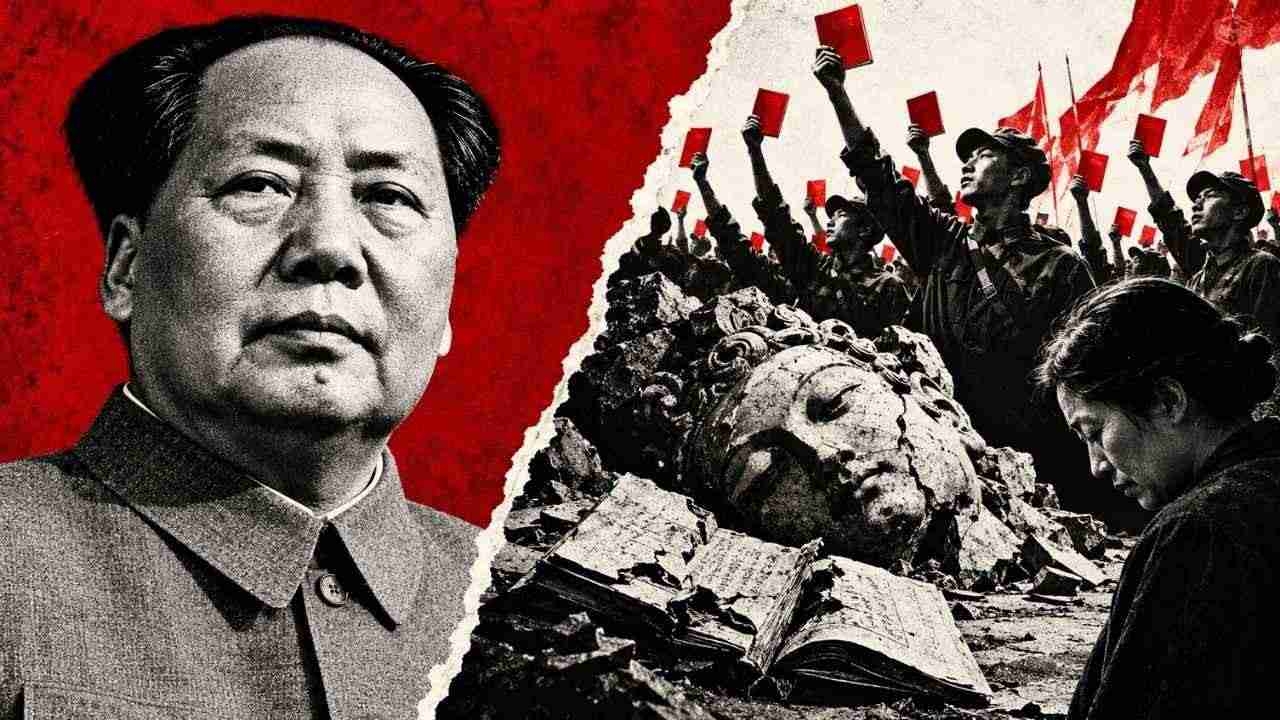
In 1976 the most destructive domestic campaign in modern Chinese history finally ended. Mao Zedong’s Cultural Revolution, a ten-year orgy of ideological violence, public humiliation, and engineered chaos, expired with its creator. What remained was a nation scarred by mass death, cultural erasure, and the systematic destruction of competence and tradition proof, once again, that communist power treats human beings as disposable raw material.
Mao launched the Cultural Revolution in 1966 to regain absolute control after the catastrophic failure of the Great Leap Forward. He mobilized millions of Red Guards, mostly fanatical students armed with the Little Red Book, and ordered them to smash the “Four Olds” old ideas, culture, customs, and habits.
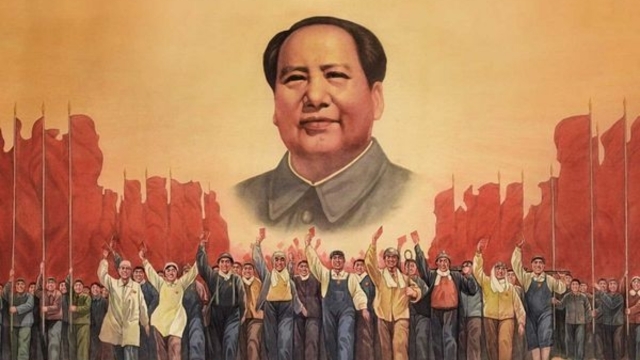
Teachers were beaten in their classrooms. Professors and writers were paraded through streets in dunce caps, forced to confess invented crimes, and often driven to suicide. Temples, ancestral halls, libraries, and irreplaceable artworks were burned or smashed. Families were torn apart as children were taught to denounce their own parents.
_202610071150539541_H@@IGHT_360_W@@IDTH_640.jpg "2 image (1)")
The methods were deliberately theatrical and sadistic. “Struggle sessions” turned ordinary people into public spectacles of degradation. Victims were forced to kneel for hours, wear placards listing their “crimes,” and endure beatings while crowds screamed revolutionary slogans. Intellectuals, officials judged insufficiently radical, and anyone with ties to the pre-communist past became targets.
Estimates of direct deaths during the Cultural Revolution range from one to two million; tens of millions more were imprisoned, sent to labor camps, or “sent down” to the countryside for re-education through back-breaking work and constant political indoctrination. An entire generation lost years of education. The economy stagnated. Traditional Chinese civilization was assaulted in the name of creating a pure socialist society.
This was a state-directed terror where Mao and the communist party leadership deliberately unleashed the chaos, then periodically reined it in when it threatened their own positions. The same regime that had already starved tens of millions during the Great Leap Forward now turned the country into a permanent political battlefield. Dissent was treated as mental illness or counter-revolutionary crime. Independent thought itself became dangerous.
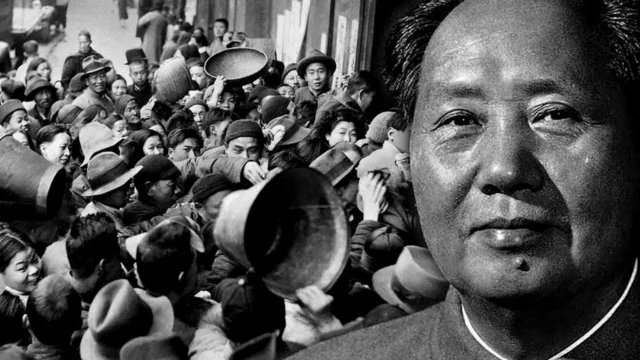
The end came only with Mao’s death on September 9, 1976. Within weeks the Gang of Four led by Mao’s widow Jiang Qing and the most extreme remaining radicals was arrested in a bloodless internal coup. Their fall marked the formal end of the Cultural Revolution. The Chinese people, exhausted by a decade of fear, scarcity, and forced denunciations, could finally begin to recover.
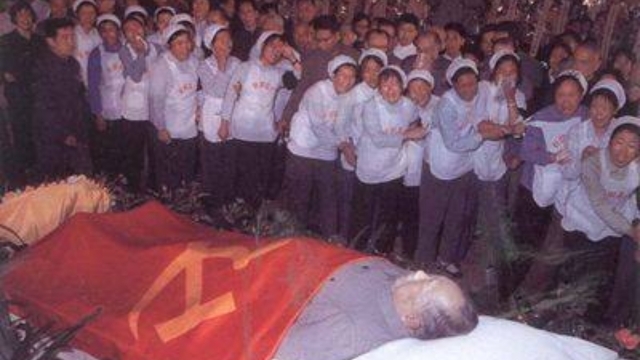
Yet the Communist Party never fully reckoned with the blood it had spilled. Official history was rewritten to protect the regime’s legitimacy, and open discussion of the era’s worst crimes remains tightly controlled inside China to this day.
The Cultural Revolution stands as a permanent indictment of communist rule. It demonstrated that when a regime elevates ideological purity above expertise, family, and basic human dignity, the result is not progress but graves, ruins, and a traumatized population.
_202610071152220481_H@@IGHT_360_W@@IDTH_640.jpg "5 image (2)")
The same patterns of public shaming, cancellation of the competent, and the mobilization of youth against their own society appear whenever radical egalitarianism gains unchecked power. In China the absence of any restraining institutions turned those patterns into mass atrocity.
Nineteen seventy-six closed one of the darkest chapters of the twentieth century. The death of the Cultural Revolution remains a warning against any ideology that treats an entire nation as an experiment in forced transformation.
Written by
Kewali Kabir Jain
Journalism Student, Makhanlal Chaturvedi National University of Journalism and Communication