Bharat’s Atmanirbhar Ecosystem: Make in India Enters Its Decisive Phase
Under PM Modi’s leadership, Bharat shifts from mere assembly to full-value manufacturing components, semiconductors, skills and global supply chains now in focus as Make in India 2.0 builds true Atmanirbhar depth.
Total Views |


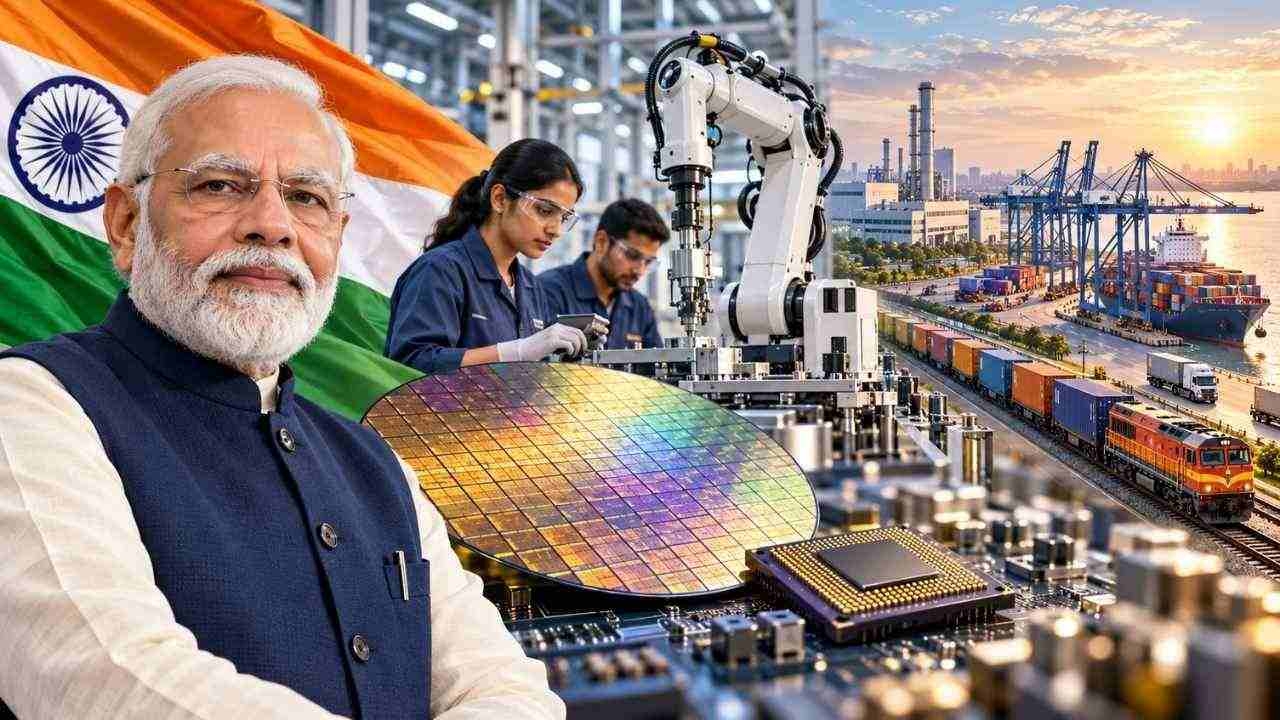
Twelve years after Prime Minister Narendra Modi launched Make in India on 25 September 2014, the initiative has moved far beyond the early goal of attracting factories. Under Make in India 2.0, covering 27 sectors including 15 core manufacturing areas, the focus has shifted decisively to building the full industrial ecosystem components, machines, skills, technology, logistics and domestic value chains that turns Bharat into a genuine global manufacturing powerhouse rather than a mere assembly destination.
The original vision was clear: transform Bharat from a large market for imported goods into a major centre of manufacturing, design, innovation and exports. Successive policy interventions Production Linked Incentive (PLI) schemes, PM GatiShakti, industrial corridors, the National Single Window System, the India Industrial Land Bank and sustained ease-of-doing-business reforms have laid the foundation. The next test is whether Bharat can capture more of the value that sits behind the finished product?
Electronics: The Flagship Transformation
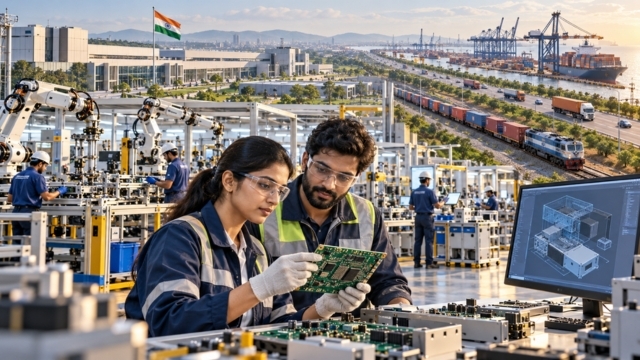
Nowhere is the shift more visible than in electronics. Production rose from roughly ₹1.9 lakh crore in 2014-15 to an estimated ₹13.11 lakh crore in 2025-26 nearly a seven-fold jump. Exports climbed from ₹38,263 crore to around ₹4.24 lakh crore in the same period.
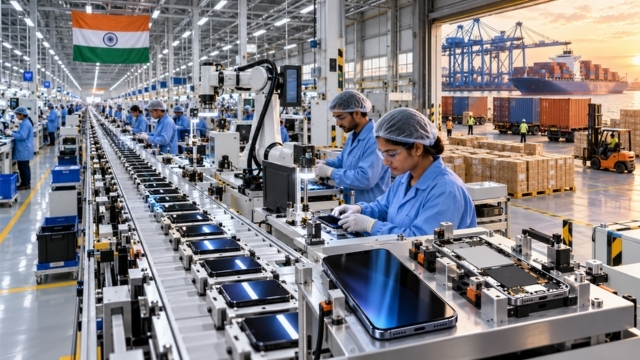
Mobile phones tell the story even more sharply. Production surged from ₹18,900 crore to ₹6.27 lakh crore; exports from a mere ₹1,566 crore to ₹2.60 lakh crore. India is now the world’s second-largest mobile-phone manufacturer by volume, and 99.2 per cent of phones used in the country are manufactured domestically. A decade ago Bharat depended heavily on imports. That dependence has been broken.
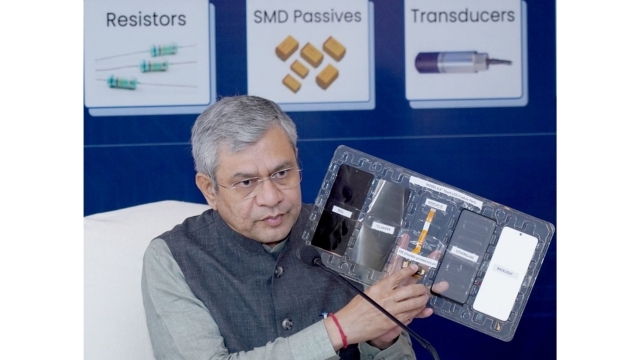
Yet the government is not content with assembly numbers. The Electronics Components Manufacturing Scheme (ECMS) is deliberately pushing deeper into the supply chain printed circuit boards, camera and display modules, connectors, capacitors, lithium-ion cells and other critical parts. After clearing 75 applications worth ₹61,671 crore, MeitY approved another 31 proposals involving ₹6,844 crore. In total, 106 projects covering 30 products across 15 states are expected to attract ₹69,548 crore in investment, generate ₹5.34 lakh crore in production and create 74,628 direct jobs.
A further ₹62,500-crore Mobile Phone
Manufacturing Scheme (2026-27 to 2030-31) aims to push production to around ₹39 lakh crore and create about 60,000 direct jobs while strengthening Indian brands, design and R&D. The message is unambiguous: assemble less, manufacture more of what goes inside the product.
Semiconductors and Broader PLI Gains
Semiconductor manufacturing represents the deepest layer of this ambition. India’s first fab is scheduled for commissioning in 2028. Semicon 2.0, approved with an outlay of ₹1.27 lakh crore, targets chip design, specialised equipment and materials, new fabs, advanced packaging, research and talent. Already 105 startups are developing chips and around 68,000 students have been trained in chip design across 315 universities.
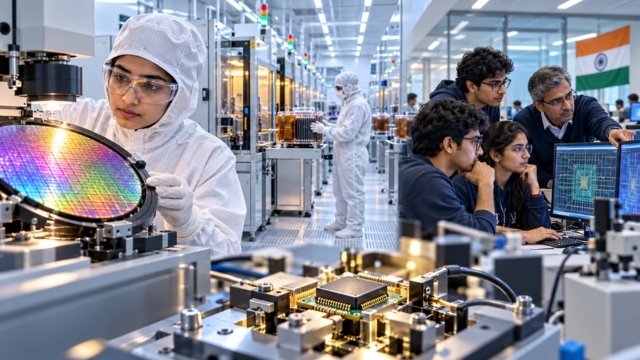
Across 14 PLI sectors electronics, pharmaceuticals, automobiles, solar modules, telecom, textiles, food processing and others actual investment had crossed ₹2.40 lakh crore by 31 March 2026, generating over 14.15 lakh direct and indirect jobs. Cumulative exports under the schemes reached ₹15.2 lakh crore by FY 2025-26.
Infrastructure, MSMEs and Global Competitiveness
A factory is only as strong as the ecosystem around it. PM GatiShakti, industrial corridors, the GIS-enabled India Industrial Land Bank and logistics reforms are connecting manufacturing to reliable power, roads, ports, warehouses and skilled manpower. MSMEs are being deliberately integrated into these value chains; more than 85 have already been supported under various MeitY schemes in electronics alone. A separate ₹10,000-crore container manufacturing scheme aims to build domestic capacity in yet another critical logistics segment.
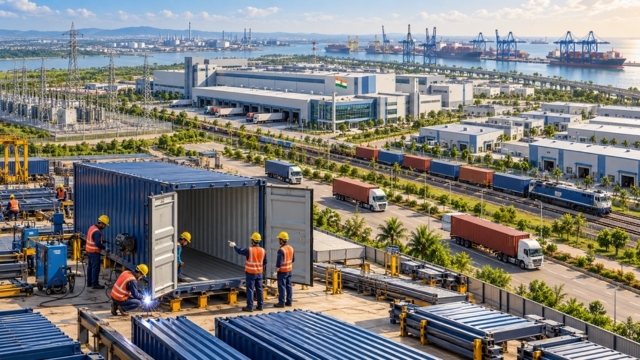
India is not operating in a vacuum. Established manufacturing nations, particularly China, spent decades constructing dense supplier networks. Bharat’s challenge is therefore not merely to host factories but to create the scale, depth and reliability that make global companies choose India as a long-term production and export base.
Recent policy moves, components schemes, the expanded mobile-phone programme, Semicon 2.0, multi-sector PLI support, infrastructure push and MSME integration shows that these are precisely the questions the government is answering.
The first chapter of Make in India created the conditions for companies to manufacture in Bharat. The second chapter is about capturing more of the technology, design, components, skills and value that sit behind the “Made in India” label.
If Bharat succeeds in deepening domestic value addition and building globally competitive supply chains, the manufacturing base constructed over the past decade will become broader, more resilient and genuinely Atmanirbhar not merely assembling products for the world, but building the industrial ecosystem the world needs.
Written by

Kewali Kabir Jain
Journalism Student, Makhanlal Chaturvedi National University of Journalism and Communication