Greece Exposes the Cost of Unchecked Migration
Greece’s experience mirrors challenges faced by India and Europe, warning that humanitarian ideals without enforcement can import crime and instability.
Total Views |


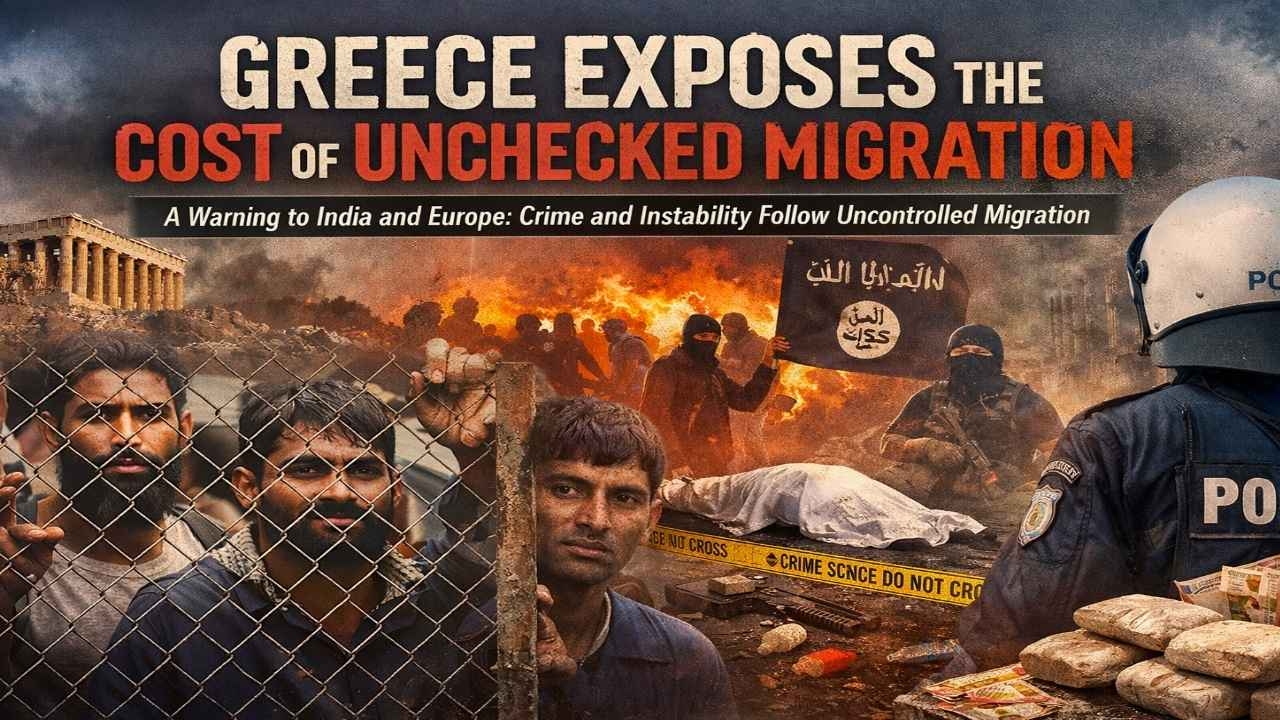
In an era where borders are porous and global migration is often romanticised as a humanitarian imperative, the reality of unchecked influx from certain regions presents a far more troubling picture. Nations such as Pakistan and Bangladesh, burdened by radicalisation, poverty and entrenched social dysfunctions, have increasingly become exporters not only of labour but also of crime, extremism and social instability. A recent report, documenting incidents between 2018 and 2026, exposes a recurring and deeply concerning pattern involving Bangladeshi and Pakistani Muslims engaged in serious illegal activities. While Greece stands at the centre of this investigation, the phenomenon reflects a broader crisis affecting host countries across Europe and beyond, including India, where migrant networks exploit hospitality while undermining law, order and social cohesion.
Greece at the Frontline of the Migration Crisis
Greece, often described as the cradle of Western civilisation, has remained on the frontline of Europe’s migration crisis since the mass influx of 2015. The Eastern Mediterranean route, largely via Turkey, has channelled thousands of migrants into Greek territory, with a significant proportion originating from Pakistan and Bangladesh. According to the report, this flow has been accompanied by persistent criminality rather than successful integration.

On 2 February 2026, Greece’s Immigration Minister Thanos Plevris ordered the closure of all illegal mosques in Athens, estimated at around 60 unlicensed sites, alongside the deportation of foreign operators, most of whom were Bangladeshi and Pakistani nationals. This decision followed sustained evidence linking these communities to organised crime, sexual offences, violent assaults, drug trafficking, migrant smuggling and counter-terrorism investigations. Authorities stressed that the move stemmed from security assessments rather than ideological prejudice.
In the same year, a Bangladeshi national was deported for operating an illegal mosque in the Agios Nikolaos area of Athens. Officials viewed this case as emblematic of a deeper problem, where unregulated religious spaces functioned as centres for radicalisation and illicit activity. Minister Plevris made the government’s position unambiguous, stating that anyone refusing to comply with Greek law would face automatic deportation.
Migrant Smuggling and Criminal Networks
The report highlights organised migrant smuggling as another major concern. In July 2025, police arrested a 19 year old Pakistani in Sykies for sheltering illegal migrants from Afghanistan and Eritrea. These individuals reportedly paid smugglers around $3,000 each to cross borders illegally. Investigators identified this operation as part of a broader network run primarily by Pakistani nationals, transforming Greece into a transit hub for further illegal movement into Europe.

Data from Frontex indicated a 14 per cent rise in such arrivals during this period, placing immense strain on Greek infrastructure, welfare systems and internal security.
Sexual Violence and Brutal Crimes
One of the most disturbing sections of the report focuses on sexual and violent crimes. In February 2024, a 21 year old Pakistani raped a 40 year old Indian woman in Avlonas, recording the assault and using the footage to blackmail her. Authorities described the crime as part of a recurring pattern rather than an isolated incident.

In 2022, a 30 year old Pakistani murdered his Greek partner Ioanna in Larissa following prolonged domestic abuse. Investigators noted elements consistent with coercive relationships and religious pressure, often referred to as Love Jihad, where Muslim men allegedly target non Muslim women for conversion through manipulation or violence. In another case, a Pakistani named Ahsan killed 17 year old Nicoletta in Peristeri after she allegedly insulted Islam. He attempted to flee the country with pre packed belongings, suggesting premeditation.
The report lists multiple additional cases. A Pakistani national received a seven year sentence in 2022 for assaulting 16 women. In 2021, a 20 year old Pakistani attempted to sexually assault a five year old child in Koropi. Another, aged 29, repeatedly raped a 17 year old girl in Attiki Square over several months. In 2020, two Pakistani men kidnapped and raped a 20 year old Greek woman in Thessaloniki. In yet another case, a Pakistani drugged and assaulted two underage girls, with narcotics recovered from his possession.
Greek investigators argue that these crimes reveal a profound disregard for local laws and societal norms, often rationalised through distorted religious or cultural justifications.
Terror Links and Drug Trafficking
The threat extends beyond conventional crime into terrorism and international trafficking. In March 2023, Greek authorities arrested two Pakistani nationals in Athens for plotting attacks on Jewish targets. Intelligence support from Mossad revealed links to Iranian networks, raising alarms about an emerging Iran Pakistan terror nexus operating within Europe.
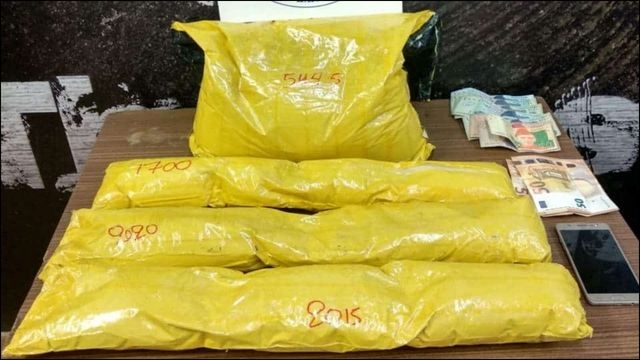
Drug trafficking further compounds the problem. In 2018, police intercepted a 43 year old Pakistani at Athens International Airport carrying 11 kilograms of heroin sourced from Lahore. In 2020, authorities deported 30 illegal Pakistani migrants from Crete after repeated incidents of harassment against a Greek woman. The deportations triggered riots and retaliatory attacks on mosques, reflecting rising public anger and social fracture.
Camps, Clashes and Radical Networks
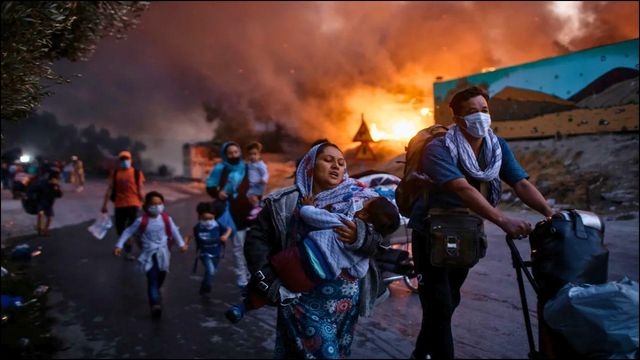
Unlicensed mosques and tightly knit community structures often conceal these activities. Following the 2020 fire at the Moria migrant camp on Lesbos, which displaced thousands, Greek authorities intensified monitoring of Pakistani and Bangladeshi groups amid violent clashes in areas such as Tympaki.
The state’s response, including deportations and closures, mirrors challenges faced by India with Rohingya and Bangladeshi infiltrators in Assam and West Bengal, where fake identity documents, cattle smuggling and radicalisation have become persistent security threats.
Root Causes and Global Implications
Why do Bangladeshi and Pakistani Muslims appear so prominently in such reports? The explanation lies in systemic failures within their home countries. Pakistan’s long standing patronage of jihadist infrastructure and Bangladesh’s population driven economic exodus foster a sense of impunity among migrants. Once abroad, many form insular enclaves, resist integration, exploit welfare systems and engage in criminal activities that erode the social fabric of host nations.
Europe witnesses similar patterns in France’s no go zones and Germany’s migrant crime surges. India confronts the same dynamics along its porous borders. Greece’s experience, as detailed in this report, therefore serves as a warning. Unchecked migration without accountability risks importing instability, radicalism and violence into societies already grappling with economic and social pressures.
The Greek case underscores the urgent need for stricter border controls, lawful integration policies and uncompromising enforcement of national laws. Without such measures, the cycle of exploitation and insecurity is likely to deepen, transforming humanitarian crises into enduring security threats.
Article by

Kewali Kabir Jain
Journalism Student, Makhanlal Chaturvedi National University of Journalism and Communication