The Virtual Trap: When Social Media Becomes Our Only Reality
When likes outweigh lived experience, families, schools and society must confront the rising cost of social media dependency among adolescents.
Total Views |


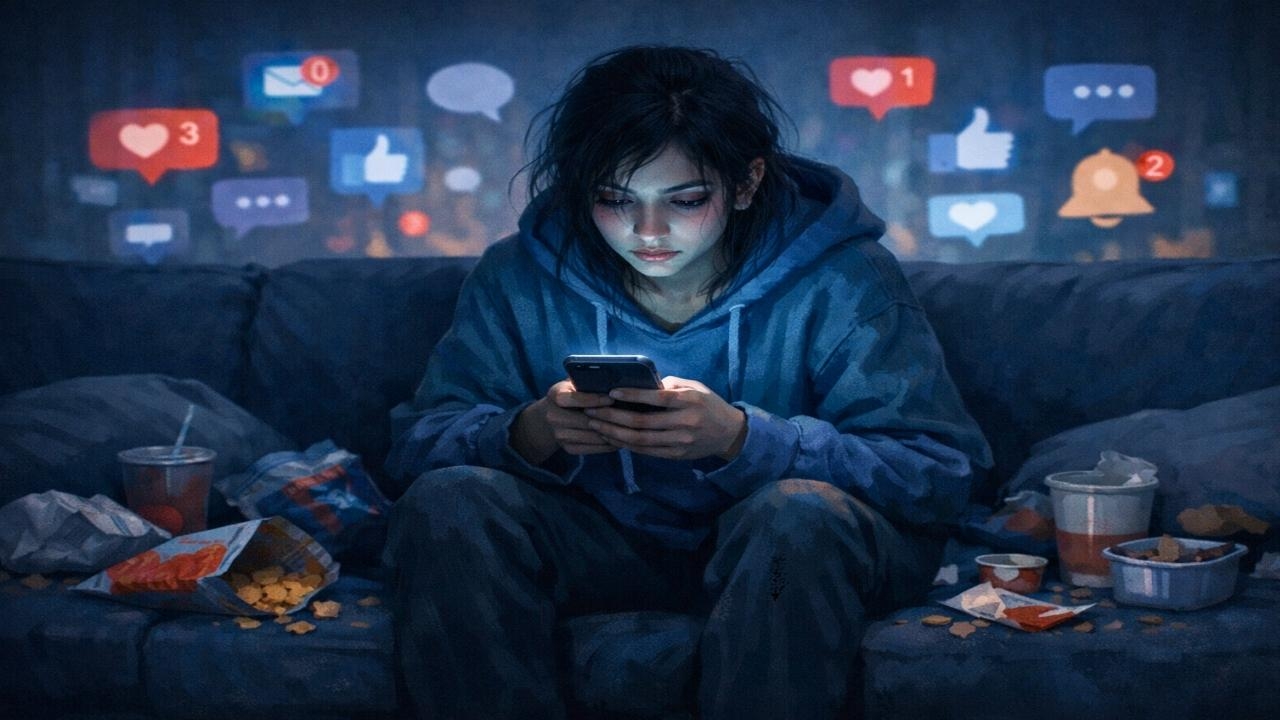
Today, almost everyone is active on social media. In many ways, another name for social media is distraction. The harsh reality is that many young people are not ready to accept the truth, as they hide their feelings within the vast network of digital platforms. They are surrounded by the notion that what they see online represents real life, whereas in reality, it is often only a curated illusion.
Social media has increasingly turned into a competitive marketplace. Those who maintain high standards of presentation and possess strong influence gain more followers. As a result, young people feel drawn towards this race for visibility and validation. Many attempt to match the lifestyle displayed online, investing in expensive equipment such as reel-making stands, high-quality cameras like iPhones, fashionable outfits and other accessories. In some cases, this pursuit places significant financial strain on their parents, especially when families cannot comfortably afford such expenses.
Recent studies suggest that Indian teenagers spend an average of four to six hours daily on social media platforms. Many report feelings of inadequacy when comparing themselves with influencers. The Economic Survey 2025–26 identifies digital addiction as a growing concern in India, particularly among individuals aged 15 to 29. Excessive digital consumption has been linked to mental health issues such as anxiety, depression and low self-esteem, especially among adolescents and young adults aged 15 to 24. The survey emphasises the importance of practising "digital hygiene" in view of the increasing risks associated with social media and app dependency.

While social media offers benefits such as networking opportunities and skill development, it also presents significant drawbacks. These include hacking risks, distorted perceptions of reality and growing concerns regarding body image and self-worth. Importantly, young people are not entirely to blame. Many have grown up in a digital environment where online interaction feels natural and constant. As a result, they may struggle with self-control and find it difficult to distinguish between curated digital narratives and authentic lived experiences.
A Tragedy That Shook Us All
To understand the seriousness of this issue, one may consider the heartbreaking incident that took place in Uttar Pradesh, where three minor sisters lost their lives after jumping from the ninth floor of a residential high-rise in Ghaziabad early one Wednesday morning. They were declared dead on arrival at a hospital in Loni. Reports indicated that the girls were deeply addicted to a game that assigned daily tasks as part of what appeared to be a virtual emotional relationship.
During the investigation, the police discovered that the children had dropped out of school in 2020 and had become heavily engaged with social media, cartoons, Korean television shows and music. In an attempt to address this addiction, their parents restricted their access to mobile phones for several days and reportedly warned them that they would arrange their marriages.

After their parents went to bed on Tuesday night, the three sisters stepped onto the balcony and jumped. According to the investigating officer, the note they left behind stated that they were not allowed to watch Shinchan, Doraemon or television serials and that they felt extremely lonely.
This information highlights a painful reality. The girls appeared to lack emotional support and open communication within their home. Immersed in the virtual world, they struggled to understand and process their real emotions. Their sense of belonging had become confined to the digital space. They were unable to explore or express their feelings in a healthy, real-world context.
Mental health experts warn that certain online games and platforms are designed to encourage prolonged engagement, which can lead to addictive behaviour. Data from the National Institute of Mental Health and Neurosciences indicates that digital addiction among adolescents in India has increased by 35 per cent since the pandemic, with one in four teenagers exhibiting symptoms of severe internet addiction.
This tragedy is not only about three young lives lost. It reflects a wider crisis in which thousands of young minds are gradually losing touch with reality. Addressing this issue requires a three-pronged approach.
For Parents: Emotional connection must come before digital restriction. Building emotional bridges is more effective than erecting digital barriers. Restriction without understanding can foster resentment and rebellion. Parents must communicate openly, listen patiently and seek to understand their children’s emotional world before imposing strict limitations.
For Young People: The filtered world displayed on a screen does not represent the complete truth. Self-worth cannot and should not be measured by likes, followers or virtual achievements. Genuine relationships, meaningful experiences and authentic emotions cannot be replaced by digital validation.
For Society: There must be greater awareness regarding healthy digital consumption. Schools, communities and mental health professionals should collaborate to promote digital literacy alongside emotional intelligence. Teaching young people how to navigate online spaces responsibly is just as important as teaching them academic subjects.
Social media is ultimately a tool. It has the power to create opportunities or cause harm, depending on how it is used. We must not wait for further tragedies to remind us that behind every screen is a human heart that seeks real connection, acceptance and love.
The three sisters from Ghaziabad were unable to find that connection. We must ensure that no other child feels compelled to choose between the virtual world and life itself.
It is time to ask ourselves a crucial question: are we raising a generation that truly lives, or one that merely performs the appearance of living?
Article by

Kashish Agarwal
BBA Business Analytics Student, Siva Sivani Degree College, Osmania University, Hyderabad